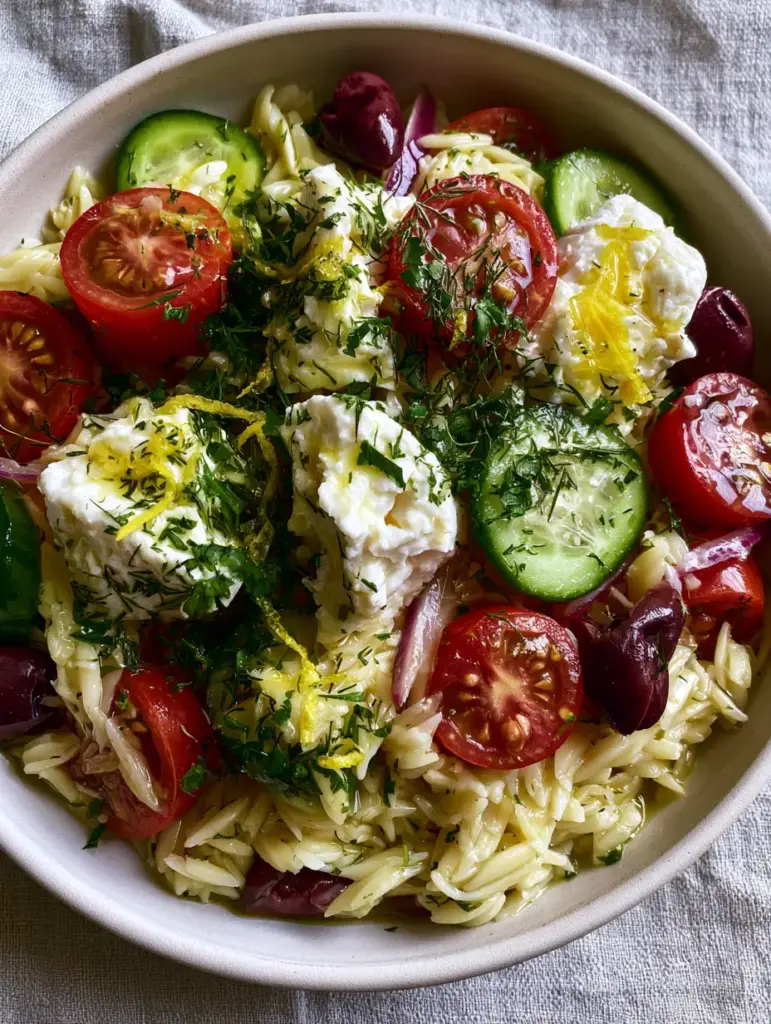
The perfect orzo pasta salad is more than just a side dish; it is a vibrant celebration of Mediterranean textures and bright, sun-drenched flavors. When you look at a bowl of this salad, you should see individual grains of pasta glistening under a translucent dressing, punctuated by the deep greens of fresh herbs and the rustic, craggy edges of premium feta cheese.
This recipe was developed to bridge the gap between high-end restaurant presentation and the approachable comfort of home cooking. By focusing on the “culinary forensics” of the ingredients—how the acid in the lemon interacts with the starch of the orzo—we have created a dish that stays fresh, bright, and visually stunning for hours.
Whether you are preparing this for a mid-week lunch or a sophisticated weekend gathering, the sensory experience remains the same. You will notice the snap of Persian cucumbers against the tender “al-dente” bite of the pasta, all tied together by a vinaigrette that sings with citrus and herbaceous depth.
Why This Refreshing Summer Orzo Pasta Salad Works
- Textural Contrast: We pair the soft, pillowy texture of perfectly boiled orzo with the crisp, high-moisture crunch of Persian cucumbers and the firm snap of halved cherry tomatoes.
- Visual Vibrancy: The color palette—ranging from the bright yellow of hand-peeled lemon zest curls to the deep purple of pitted kalamata olives—is designed to be a feast for the eyes before the first bite.
- Balanced Acidity: A dual-action lemon approach uses both fresh-squeezed juice for immediate tang and zest for long-lasting aromatic oils.
- Creamy Sophistication: By using large, hand-broken chunks of feta rather than pre-crumbled varieties, we maintain a luxurious mouthfeel that coats the palate.
The Mediterranean Pantry: Essential Ingredients for Success
To achieve the visual and flavor profile of an authentic Greek-style pasta salad, the quality of your produce is paramount. Each ingredient in this list serves a structural and aesthetic purpose.
Dried Orzo Pasta: 1 lb (450g). This rice-shaped semolina pasta is the canvas of our dish; we cook it just until the “white heart” disappears to ensure it holds its shape against the dressing.
Extra Virgin Olive Oil: 1/2 cup (120ml). Choose a high-quality, cold-pressed oil with peppery notes to create that signature glistening sheen on every grain of pasta.
Fresh Lemon Juice: 1/4 cup (60ml). The primary acid source that cuts through the richness of the feta and “wakes up” the starches in the orzo.
Fresh Lemon Zest Curls: 1 tbsp (6g). Use a channel knife or a fine microplane to create curls that provide concentrated bursts of citrus oil and a professional garnish.
Feta Cheese: 8 oz (225g). Look for a block of feta in brine; breaking it into large, craggy chunks by hand ensures a rustic appearance and a creamier texture than pre-crumbled options.
Cherry Tomatoes: 1 pint (280g). Halving these reveals the seeds and juice, which mix slightly with the vinaigrette to create a natural, secondary sauce.
Persian Cucumbers: 3 medium (approx. 250g). These are preferred over English cucumbers for their thinner skin and smaller seeds, providing a more consistent “half-moon” crunch.
Kalamata Olives: 1/2 cup (75g). Pitted and kept whole or halved, these provide the essential salty, fermented depth that defines Mediterranean cuisine.
Red Onion: 1/4 medium (40g). Slicing these into paper-thin slivers ensures the pungent flavor is distributed evenly without overpowering the delicate herbs.
Fresh Dill & Flat-Leaf Parsley: 1/4 cup (10g) each, finely chopped. These herbs provide the “vibrant green” visual cue and a refreshing aromatic finish that dried herbs simply cannot replicate.
Foundational Seasonings: 1 tsp (6g) Kosher salt and 1/2 tsp (1g) freshly cracked black pepper. These are the invisible workers that elevate the natural sugars in the tomatoes and the tang of the lemon.
Professional Tools for a Polished Presentation
While this is an easy-to-assemble orzo salad, using the right tools ensures that the vegetables are cut precisely and the dressing is perfectly emulsified. Precision in the kitchen leads to beauty on the plate.
You will need a large stockpot for boiling the pasta, a fine-mesh colander for rinsing, and a sharp chef’s knife for those clean cucumber slices. A glass mason jar is the secret weapon for shaking the vinaigrette into a cohesive, glossy emulsion.
For the final presentation, a shallow matte white ceramic bowl, as seen in our professional photography, allows the colors of the tomatoes and olives to pop against a neutral background. A channel knife is highly recommended for creating those elegant lemon zest curls.
A Step-by-Step Guide to the Perfect Al-Dente Orzo
1. Achieving the Perfect Pasta Texture
Bring a large pot of heavily salted water to a rolling boil. Add the 1 lb (450g) of orzo and stir immediately to prevent the grains from settling and sticking to the bottom.
Cook for approximately 8-9 minutes. Start tasting at the 7-minute mark; you are looking for a firm bite where the center is no longer crunchy but still offers resistance. This is the secret to an authentic pasta texture.
2. The Critical Rinse and Cool
Drain the orzo in a fine-mesh colander. Immediately rinse the pasta under cold running water for 30 seconds.
This stops the cooking process and removes excess surface starch. This step is vital to ensure that each grain remains individual and “glistening” rather than clumping together into a mass.
3. Crafting the Glossy Lemon-Herb Vinaigrette
In a small bowl or jar, combine the olive oil, lemon juice, salt, and pepper. Whisk vigorously or shake until the mixture is opaque and slightly thickened.
The emulsion should look translucent and glossy. This coating will act as a barrier, keeping the vegetables fresh and preventing the pasta from absorbing too much moisture and becoming mushy.
4. Preparing the Mediterranean Medley
Slice your Persian cucumbers into bright green half-moons about 1/4 inch thick. Halve the cherry tomatoes, ensuring the seeds are visible, as they provide a beautiful “handheld smartphone photo” aesthetic of freshness.
Sliver the red onion into nearly transparent pieces. The goal is for the onion to provide a subtle “purple pop” without the harsh bite of thicker chunks.
5. The Final Assembly and Garnish
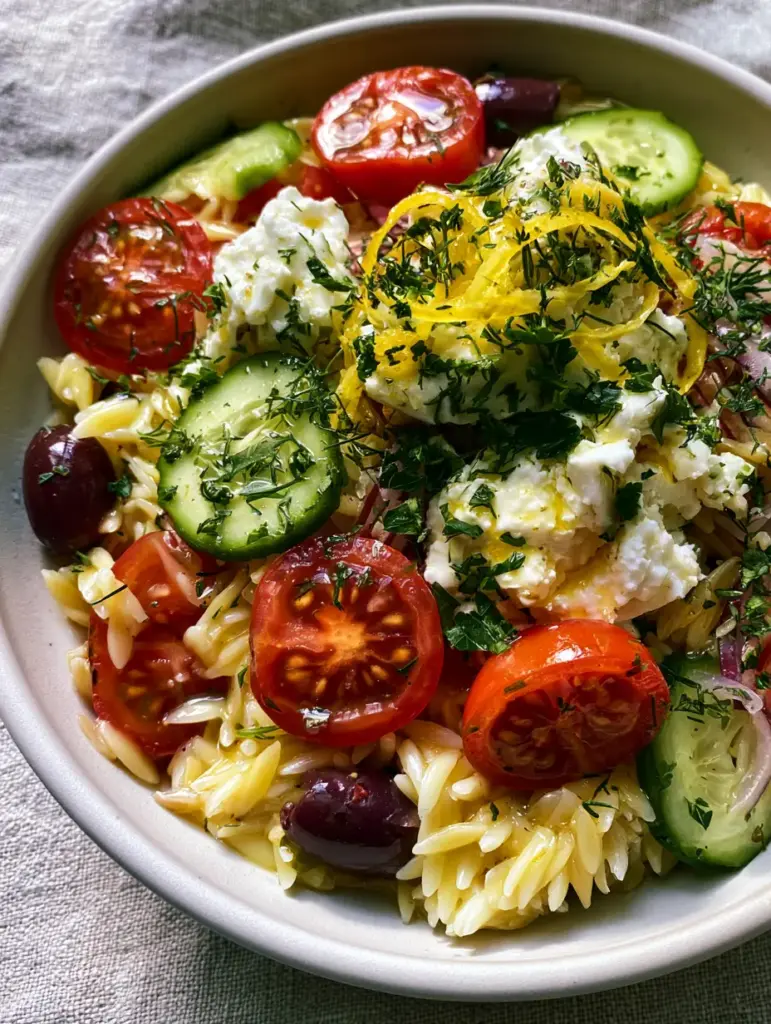
In a large mixing bowl, combine the cooled orzo, cucumbers, tomatoes, olives, and red onion. Pour the vinaigrette over the top and toss gently with a large spoon.
Now, add the large feta chunks and chopped fresh herbs. Fold them in carefully to avoid breaking the feta into small fragments. Top with a final dusting of dill and those bright yellow lemon zest curls for the ultimate visual finish.
Expert Tips for Culinary Excellence
- Temperature Control: Never dress the orzo while it is hot. If the pasta is warm, it will drink up the oil, leaving the salad looking dry and dull rather than glossy.
- The Feta Factor: Always buy feta in a block. The texture of pre-crumbled feta is often dry due to anti-clumping agents; block feta provides the “creamy white” chunks seen in the traditional Greek preparations.
- Herb Preservation: Only chop your dill and parsley right before serving. This prevents the edges from bruising and ensures the “generous dusting” of herbs looks vibrant and fresh.
- Salt Management: Remember that olives and feta are naturally salty. Season your vinaigrette conservatively, then do a final taste test once all components are combined.
The Best Ways to Store and Prep Ahead
This orzo pasta salad is a champion of meal prep. It can be stored in an airtight container in the refrigerator for up to 4 days.
If making this a day in advance, keep the dressing separate and toss it 30 minutes before serving. This ensures the cucumbers stay crisp and the herbs don’t wilt.
We do not recommend freezing this salad, as the high water content in the cucumbers and tomatoes will cause them to lose their structure and become mushy upon thawing.
Perfect Pairings: What to Serve with Orzo Salad
This salad is versatile enough to stand alone as a light lunch, but it also shines as a side dish for grilled proteins. The bright acidity pairs beautifully with lemon-herb grilled chicken or roasted salmon.
If you are hosting a larger gathering, consider creating a “Pasta Salad Flight.” This recipe pairs wonderfully alongside a classic Caprese pasta salad or even a more adventurous Mexican street corn pasta salad. For those who love bold flavors, serving it with a tangy dill pickle salad creates a fun, contrasting spread.
Frequently Asked Questions
Absolutely. This salad holds up well for 2-3 days in the fridge. For the best visual results, add the fresh herbs and lemon zest curls just before serving.
Yes, although the texture will change. Small shapes like acini di pepe or pearl couscous are the best substitutes for maintaining the spirit of the dish.
Yes, rinsing orzo under cold water is essential for pasta salad. It stops the cooking process to keep it al-dente and removes excess starch, preventing the grains from clumping together.
Use a block of Greek feta stored in brine. It has a much creamier texture and better flavor than pre-crumbled varieties, and allows you to create beautiful, rustic chunks.
If you dress the orzo while it’s still warm, it will absorb the dressing like a sponge. Ensure the pasta is completely cooled and rinsed before adding the vinaigrette.
The Ultimate Mediterranean Orzo Pasta Salad Recipe
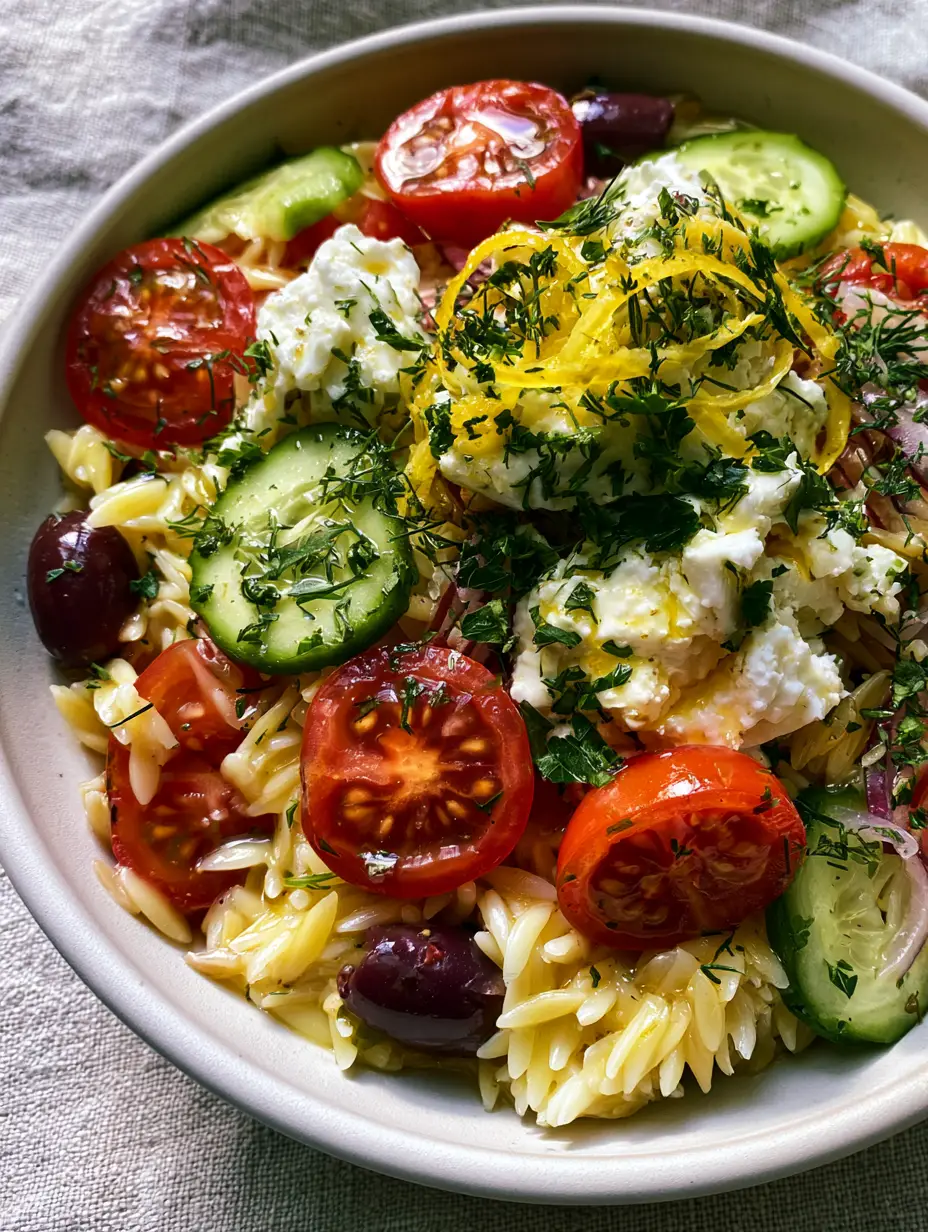
Orzo Pasta Salad with Zesty Lemon Vinaigrette and Creamy Feta
Ingredients
Equipment
Method
- Cook the orzo in salted boiling water for 8-9 minutes until al-dente. Drain and rinse with cold water immediately to prevent clumping.
- Combine olive oil, lemon juice, salt, and pepper in a jar. Shake vigorously until the dressing is glossy and emulsified.
- In a large bowl, toss the cooled orzo with cucumbers, tomatoes, olives, and red onions.
- Fold in the large feta chunks, fresh herbs, and lemon zest curls. Serve chilled or at room temperature.
Notes
Use block feta and break it by hand for the best texture and visual appeal.
Join the Table and Share Your Creations!
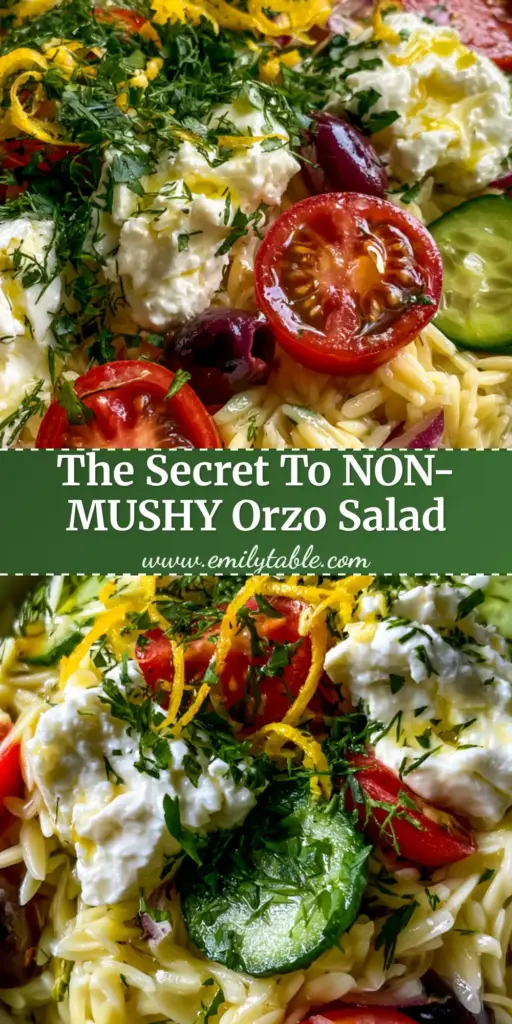
This orzo pasta salad is designed to be shared. The vibrant colors and fresh, Mediterranean flavors make it a guaranteed hit at any gathering or a bright spot in your weekly meal routine. If you make this recipe, we want to see it! Tag your photos and let us know how the lemon-herb vinaigrette turned out.
For more culinary inspiration and high-end home cooking tips, be sure to follow us on Pinterest and sign up for our newsletter. Happy cooking!