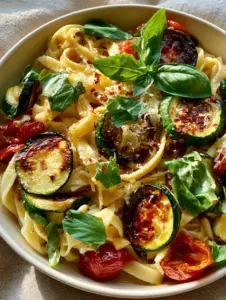
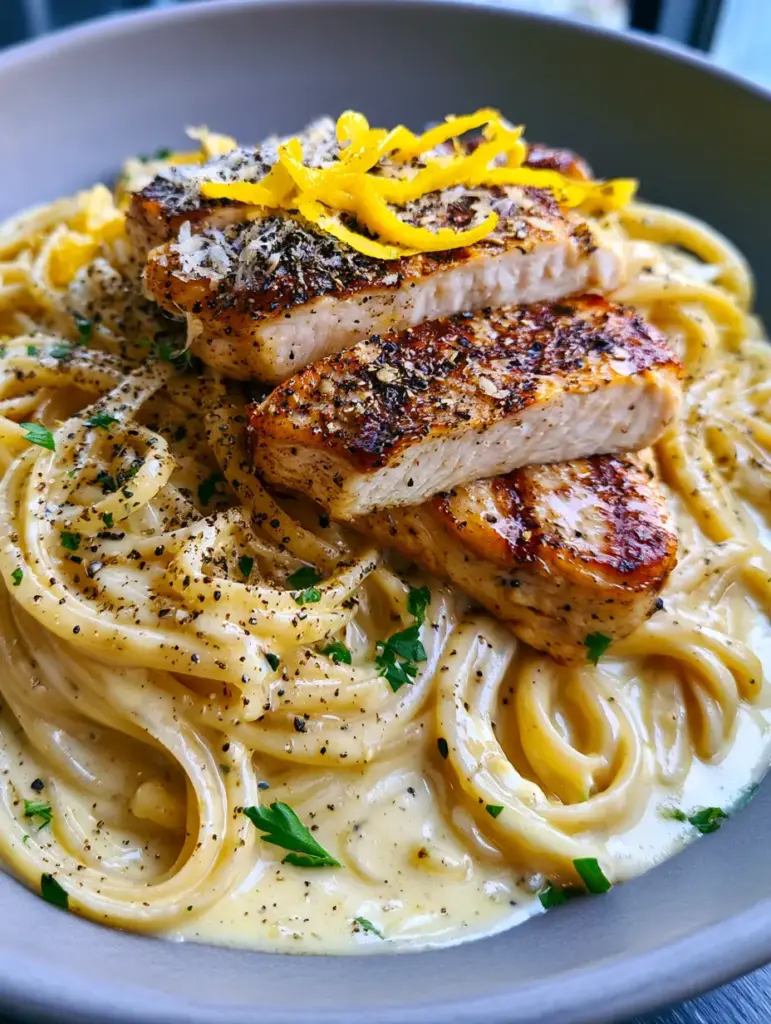
Creamy Lemon Pasta is the ultimate weeknight luxury that tastes like a five-star Italian bistro dish but comes together in your own kitchen in under 30 minutes. This recipe features perfectly swirled al dente linguine tossed in a glossy lemon-garlic cream sauce that clings to every strand. Topped with juicy, golden-brown seared chicken breast and a flurry of fresh garnishes, it is a visual and culinary masterpiece designed to stop the scroll. Whether you are a fan of creamy parmesan pasta or looking for a bright twist on classic comfort food, this dish delivers high-impact flavor with minimal effort.
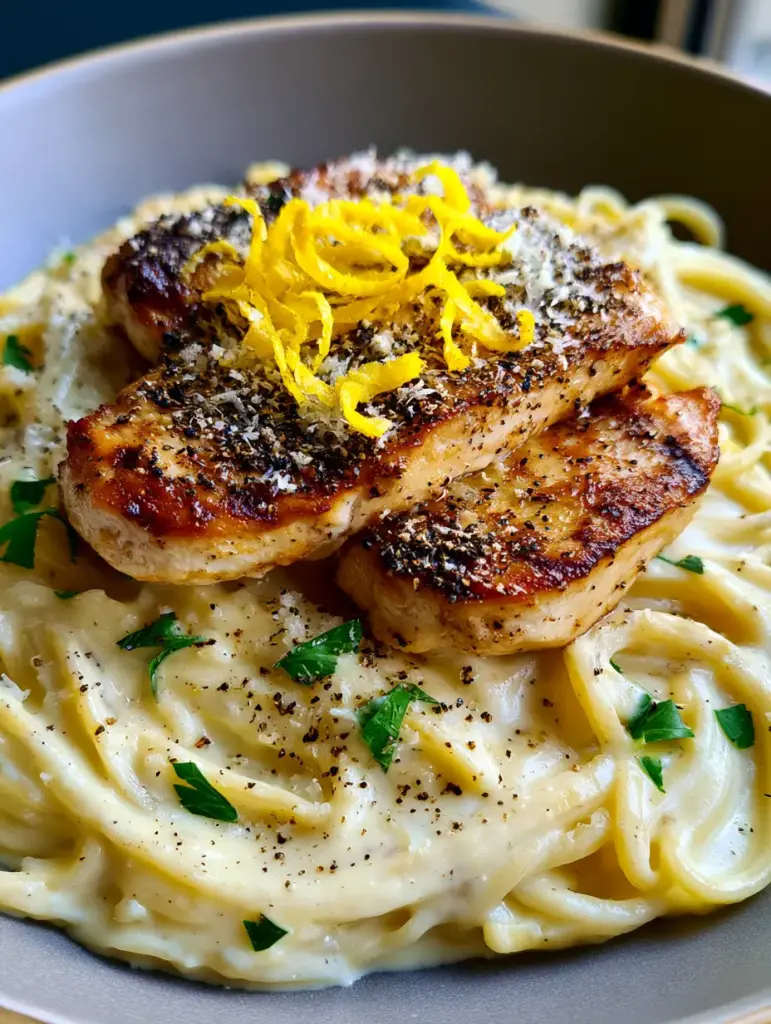
Why This Zesty Linguine is a Weeknight Game Changer
- The Perfect Texture Contrast: You get the snap of al dente pasta against a velvety, emulsified cream sauce that isn’t heavy or cloying.
- Visual Brilliance: The contrast between the golden-brown chicken grill marks and the pale-yellow sauce makes this a centerpiece-worthy meal.
- Aromatic Depth: The combination of toasted garlic, fresh lemon zest curls, and coarse cracked black pepper creates a sensory experience before you even take a bite.
- Versatile Base: Much like a creamy garlic shrimp pasta, this recipe allows you to swap proteins easily while maintaining that signature citrus brightness.
Essential Ingredients for the Ultimate Lemon Cream Sauce
To achieve that professional, glossy finish seen in the photos, you need specific ingredients that balance fat, acid, and starch. Using high-quality components ensures the sauce stays stable and doesn’t break.
Linguine (16 oz / 450g): The flat surface of linguine is superior to spaghetti for this recipe, as it provides more surface area for the lemon-garlic cream to coat. Always cook to al dente to ensure the pasta finishes cooking in the sauce.
Chicken Breast (2 large): We look for a deep, golden-brown sear. This provides the savory “umami” base that cuts through the acidity of the lemon. If you prefer seafood, this sauce also pairs beautifully with cajun salmon pasta techniques.
Heavy Cream (1 cup / 240ml): Do not substitute with milk. Heavy cream contains the fat content necessary to emulsify with the lemon juice without curdling, creating that thick, pale-yellow sauce.
Fresh Lemons (2 large): You will need both the juice for the sauce and the curly lemon zest for the final garnish. The zest contains essential oils that provide a floral aroma that juice alone cannot replicate.
Parmesan Cheese (1/2 cup / 50g): Use a micro-plane to create a dusting of finely planed cheese. This allows the parmesan to melt instantly into the sauce, contributing to the glossy texture rather than creating clumps.
Fresh Flat-Leaf Parsley: A handful of chopped parsley adds a necessary “green” note and creates scattered bright green flecks that pop against the yellow sauce.
Mastering the Golden Sear and the Glossy Sauce
The secret to professional Creamy Lemon Pasta lies in the sequence of events. We want to build layers of flavor in a single pan to maximize the “fond” (those little brown bits) at the bottom.
Achieving the Perfect Golden-Brown Chicken
Season your chicken breasts generously with kosher salt and black pepper. Heat a large skillet over medium-high heat with 1 tablespoon (15ml) of olive oil. Place the chicken in the pan and do not move it for at least 4-5 minutes. This patience is what creates those visible grill marks and golden crust. Flip and cook until the internal temperature reaches 165°F (74°C). Remove and let rest before slicing into three juicy pieces per serving.
Developing the Lemon-Garlic Base
In the same pan, melt 2 tablespoons (30g) of unsalted butter. Add 4 cloves of minced garlic. Sauté only until fragrant (about 30 seconds)—do not let the garlic brown, or it will turn bitter. Deglaze the pan with the fresh lemon juice, scraping up the chicken bits. This is the foundation of your glossy sauce.
Emulsifying the Pale-Yellow Cream Sauce
Lower the heat to medium and pour in the heavy cream. Whisk constantly as it comes to a gentle simmer. The sauce will begin to thicken. This is the time to add a splash of starchy pasta water. The starch acts as a bridge between the fats in the cream and the water in the lemon juice, ensuring a velvety, emulsified finish.
The Final Swirl and Garnish
Add your al dente linguine directly into the skillet. Use tongs to swirl the pasta, ensuring every strand is coated in the thick lemon cream. Top with your sliced chicken. Now, for the visual finish: add a heavy sprinkle of coarse cracked black pepper, a dusting of micro-planed parmesan, and those essential lemon zest curls. The final touch is the scattered parsley for that restaurant-style pop.
Expert Tips for Pinterest-Perfect Pasta
- The Pasta Water Hack: Never drain your pasta fully. The “liquid gold” (pasta water) is what makes the sauce glossy and thick instead of dry.
- Zest Before You Juice: It is nearly impossible to zest a squeezed lemon. Get those bright yellow curls ready first!
- Rest the Chicken: Slicing the chicken too early lets the juices escape. Wait 5 minutes to ensure every bite is juicy and tender.
- Heat Control: If the sauce gets too thick, add more pasta water. If it’s too thin, simmer for another minute. You want it to coat the back of a spoon.
How to Keep Your Lemon Cream Pasta Fresh
Like most quick and easy pasta recipes, this dish is best served immediately. However, if you have leftovers, store them in an airtight container for up to 3 days. When reheating, add a tablespoon of water or milk to loosen the sauce, as the pasta will absorb the moisture overnight. We do not recommend freezing this dish, as the cream sauce may break and lose its glossy texture upon thawing.
What to Serve with Creamy Lemon Pasta
To balance the richness of the lemon-garlic cream, serve this with a light, crisp side. A simple arugula salad with balsamic glaze or roasted asparagus works perfectly. If you want to keep with the Italian theme, a side of pasta napoletana styled vegetables or a crusty baguette is ideal for soaking up the extra sauce.
Your Pressing Creamy Pasta Questions Answered
Absolutely! Simply omit the chicken and add roasted asparagus, sautéed spinach, or crispy chickpeas for protein. The glossy lemon sauce is the star.
It’s not recommended. Fresh lemons provide the essential oils in the zest and a much brighter, less metallic acidity than bottled versions.
Use heavy cream (not milk) and ensure the sauce is at a gentle simmer, not a rolling boil. Adding the lemon juice to the butter and garlic first, then whisking in the cream, helps stabilize the emulsion.
Allow it to simmer for an extra 2 minutes, or add more finely planed parmesan cheese. The cheese acts as a natural thickener when melted into the cream.
Long, flat pasta like linguine or fettuccine is best because it provides a large surface area for the sauce to cling to, ensuring every bite is flavorful.
The Ultimate Creamy Lemon Pasta Recipe
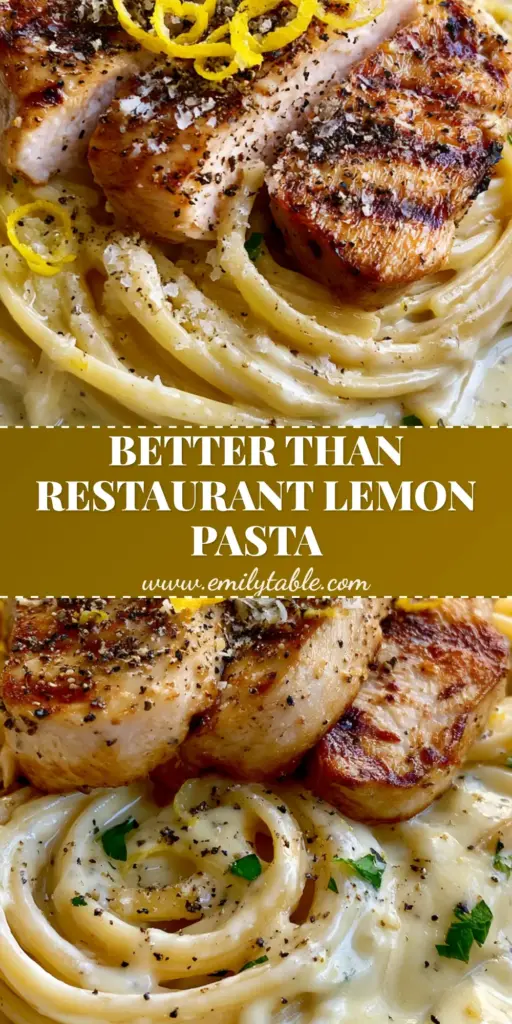
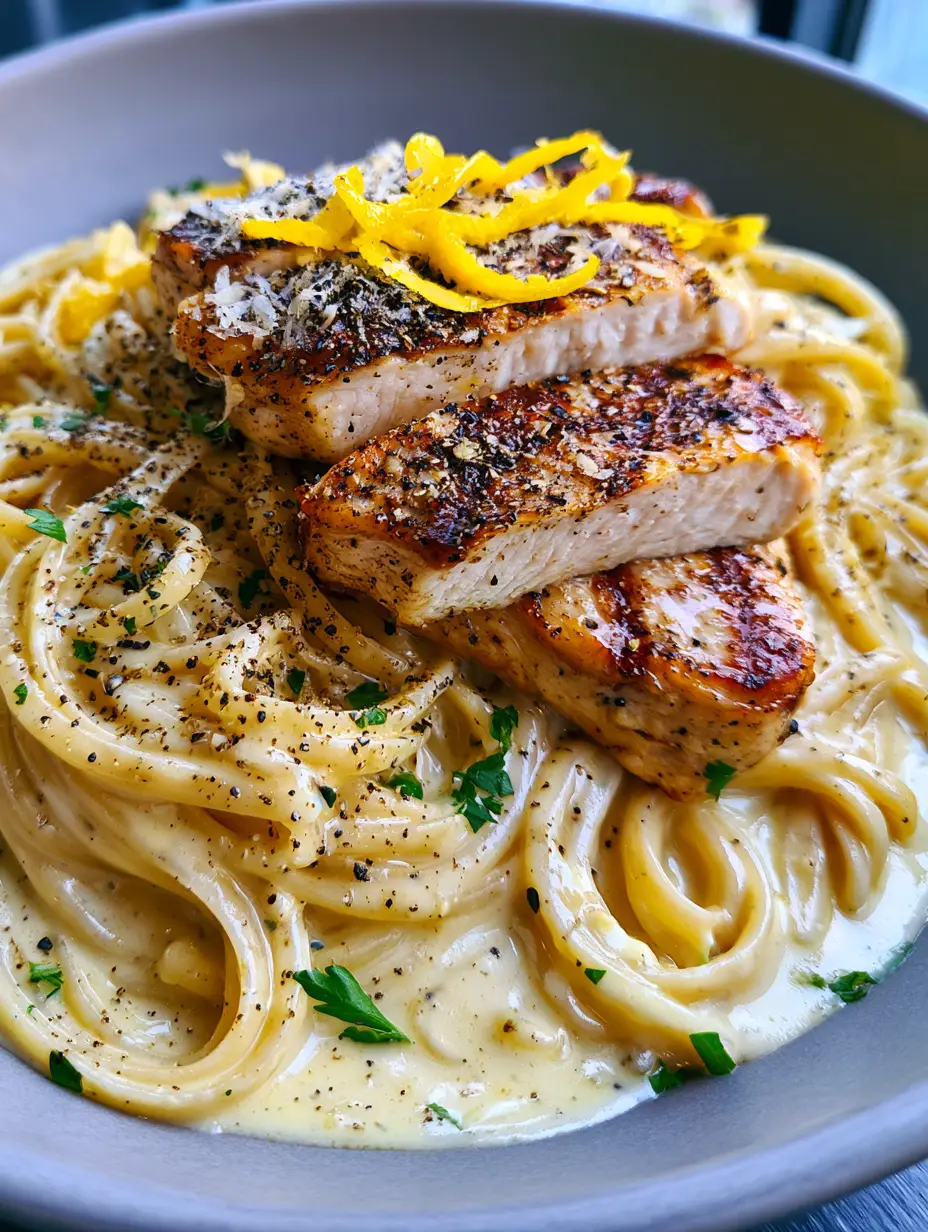
Creamy Lemon Pasta with Seared Chicken and Zesty Garlic Sauce
Ingredients
Equipment
Method
- Bring a large pot of salted water to a boil. Cook linguine until al dente. Reserve 1 cup of pasta water before draining.
- Season chicken with salt and pepper. Heat olive oil in a skillet. Sear chicken for 5 minutes per side until golden-brown grill marks appear and internal temp is 165°F. Remove and slice.
- In the same skillet, melt butter and sauté garlic for 30 seconds. Add lemon juice to deglaze.
- Stir in heavy cream and a splash of pasta water. Simmer until the sauce is thick and pale-yellow.
- Toss linguine in the sauce until swirled and glossy. Top with chicken, lemon zest curls, cracked pepper, parmesan, and parsley.
Notes
For an extra kick, add a pinch of red pepper flakes to the garlic.
Save, Share, and Rate!
Did this Creamy Lemon Pasta hit the spot? If you loved the glossy sauce and golden chicken, please save this recipe to your “Dinner Inspiration” board on Pinterest! Following @Emily_Table helps us bring more restaurant-quality recipes to your kitchen. If you made this, snap a photo and share it in the comments below—I love seeing your swirled linguine creations! Don’t forget to leave a 5-star rating to help other home cooks find this recipe.