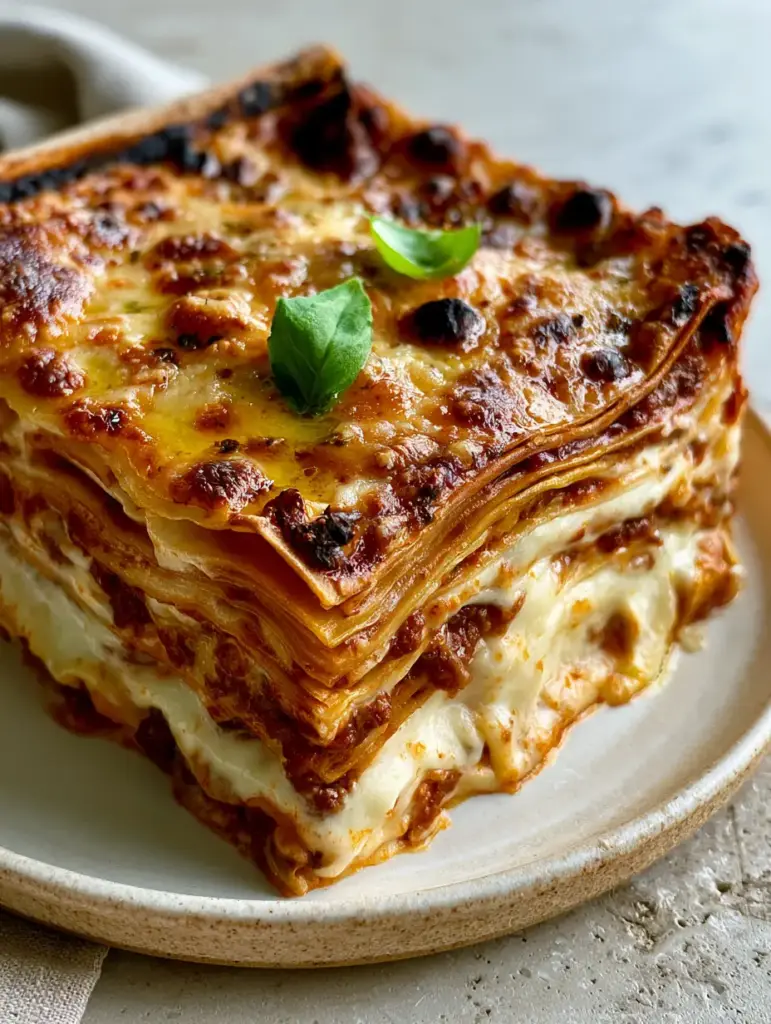
Lasagna Bolognese is the crown jewel of Italian comfort food, a dish that transcends the simple concept of “pasta” to become a culinary experience. Unlike its American counterparts, this authentic version relies on the delicate balance of handmade thin egg pasta layers, a slow-simmered beef and pork ragu, and a thick ivory bechamel sauce. When you pull this dish from the oven, featuring a bubbly toasted parmesan cheese crust and a glossy olive oil sheen, you aren’t just serving dinner; you’re serving a piece of Bologna. As Emily_Table followers know, the secret to a viral-worthy slice is all in the architectural precision of those 10 ultra-thin layers.
Why This Authentic Lasagna Bolognese Recipe Works
- The 10-Layer Rule: By using handmade thin egg pasta, we achieve a refined texture that melts in your mouth rather than feeling heavy or doughy.
- Slow-Simmered Depth: The slow-simmered beef and pork ragu develops a complex, dark-red richness that only time (and a little patience) can create.
- Silky Bechamel: We skip the grainy ricotta in favor of a thick ivory bechamel sauce, providing a velvety contrast to the savory meat.
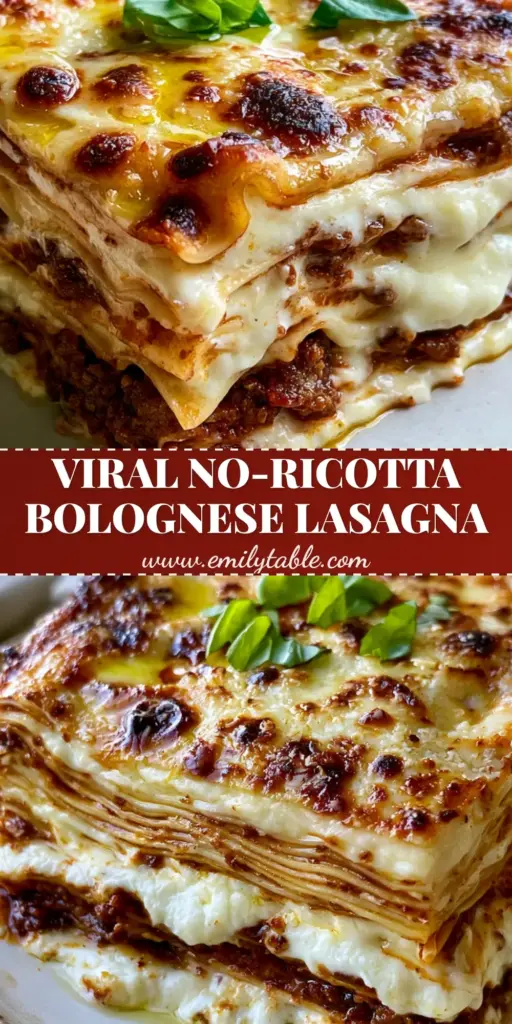
- Visual Perfection: Finished with sea salt flakes and torn fresh basil, this dish looks just as incredible as it tastes, making it one of the most sought-after Italian dinner ideas.
The Essential Ingredients for Success
To recreate this masterpiece, every ingredient must serve a purpose. We aren’t just making a beef lasagna; we are building a legacy of flavor.
The Slow-Simmered Ragu alla Bolognese
Ground Beef and Pork: Use a blend of 80/20 beef and fatty ground pork. The combination provides the perfect fat-to-protein ratio for a rich mouthfeel. You will need 1 lb (450g) of each.
The Soffritto: Finely diced onion, carrot, and celery. This is the aromatic foundation of the sauce. Use 1 cup (150g) of each.
Tomato Paste & Whole Peeled Tomatoes: Use high-quality San Marzano tomatoes for that signature dark-red hue. You’ll need 2 tbsp (30ml) of paste and 28 oz (800g) of crushed tomatoes.
Whole Milk: 1 cup (240ml) of milk is added to the meat to tenderize the fibers and add a subtle creaminess to the sauce.
Dry White Wine: 1 cup (240ml) to deglaze the pan and add acidity to balance the fats.
The Ivory Bechamel (Besciamella)
Unsalted Butter: 1/2 cup (115g) to create a golden roux.
All-Purpose Flour: 1/2 cup (65g) to thicken the sauce to a “nappe” consistency.
Whole Milk: 4 cups (950ml), heated slightly to ensure a lump-free, thick ivory bechamel sauce.
Nutmeg: Just a pinch of freshly grated nutmeg to provide that authentic Italian aroma.
The Pasta and Assembly
Fresh Egg Pasta Sheets: 1 lb (450g) of ultra-thin sheets. If you aren’t making your own, look for high-quality fresh sheets at a local deli. This is far superior to a standard baked lasagna using dried noodles.
Parmigiano Reggiano: 2 cups (200g) of freshly grated cheese for that bubbly toasted parmesan cheese top.
Garnish: Extra virgin olive oil for a glossy olive oil sheen, sea salt flakes, and torn fresh basil.
Step-by-Step Instructions for the Perfect Slice
Step 1: The Long-Haul Ragu
Start by sautéing your soffritto in a large heavy-bottomed pot with a drizzle of olive oil. Once softened, add the beef and pork. Sauté until deeply browned—this is where the flavor lives.
Deglaze with the white wine, scraping up all the brown bits (fond). Pour in the milk and simmer until it evaporates. Finally, add your tomatoes and paste. Reduce heat to the lowest setting and let it slow-simmer for at least 3 hours. The result should be a thick, rich, dark-red sauce.
Step 2: Crafting the Silky Bechamel
In a medium saucepan, melt the butter over medium heat. Whisk in the flour and cook for 2 minutes (do not brown it!). Slowly drizzle in the milk while whisking constantly.
Continue to cook until the sauce thickens enough to coat the back of a spoon. Season with salt and a hint of nutmeg. It should be a thick ivory bechamel sauce that smells faintly of toasted butter.
Step 3: The Architectural Layering (The 10-Sheet Method)
This is where your Lasagna Bolognese takes shape. Spread a thin layer of ragu at the bottom of a ceramic dish to prevent sticking. Lay down your first handmade thin egg pasta sheet.
Top with a thin, even layer of ragu, followed by a generous spread of bechamel, and a sprinkle of parmesan. Repeat this process exactly 10 times. The goal is ultra-thin layers that build height without bulk.
Step 4: The Final Bake
On the final layer, ensure you have a thick coating of bechamel and a heavy dusting of Parmigiano Reggiano. Bake at 375°F (190°C) for 25-30 minutes. Watch for the visual cues: you want a bubbly, golden-brown toasted parmesan cheese crust with small charred spots.
Expert Tips for Success
- Rest Before Slicing: Let the lasagna sit for at least 15-20 minutes after baking. This allows the 10 layers to set, ensuring a clean “macro side-view” square when lifted.
- No-Boil Fresh Pasta: If your fresh pasta is thin enough, you do not need to pre-boil it. The moisture from the ragu and bechamel will cook it perfectly in the oven.
- Season Every Layer: A tiny pinch of sea salt flakes between layers elevates the entire profile.
- The Olive Oil Finish: Always finish with a glossy olive oil drizzle right before serving to add a professional sheen.
Storage, Reheating & Freezing
Lasagna Bolognese is arguably better the next day. Store leftovers in an airtight container in the fridge for up to 4 days. To reheat, cover with foil and bake at 325°F (160°C) until the ivory bechamel is bubbling again.
Freezing: You can freeze the entire dish (unbaked or baked). Wrap tightly in plastic wrap and foil. It will stay fresh for up to 3 months. Thaw in the fridge overnight before reheating.
What to Serve With This Dish
Since this is a rich, decadent meal, pair it with something bright. A simple arugula salad with lemon vinaigrette or a side of creamy lemon pasta (for a true pasta feast) works beautifully. If you want to keep the theme, try a side of crusty bread to soak up any remaining slow-simmered beef and pork ragu.
Frequently Asked Questions
If you are using truly handmade, ultra-thin egg pasta, you do not need to boil them. The moisture from the slow-simmered ragu and the bechamel sauce will hydrate and cook the pasta to a perfect al dente during the baking process.
To achieve that toasted parmesan crust, use freshly grated Parmigiano Reggiano and finish the bake with a few minutes under the broiler if necessary until small charred spots appear.
The deep red color comes from a combination of long, slow simmering (at least 3 hours) and the addition of concentrated tomato paste, which caramelizes slightly as the sauce reduces.
Authentic Lasagna Bolognese hails from the Emilia-Romagna region, where a silky ivory bechamel is used to provide a sophisticated, creamy texture that complements the rich meat ragu better than the grainier ricotta found in Southern Italian-American versions.
The Ultimate Lasagna Bolognese Recipe
Lasagna Bolognese: The Ultimate Authentic 10-Layer Italian Masterpiece
Ingredients
Equipment
Method
- Slow-simmer beef, pork, and aromatics for 3 hours until a dark-red richness is achieved.
- Layer thin pasta sheets with bechamel and ragu exactly 10 times in a ceramic dish.
- Bake at 375°F until the top is a bubbly toasted parmesan crust with charred spots.
Notes
Use a drizzle of high-quality olive oil and fresh basil just before serving for the best visual appeal.
Save This Recipe to Pinterest!
Did you love those 10 layers of perfection? Make sure to save this recipe to your Pinterest boards so you never lose it! Follow Emily_Table for more authentic spaghetti bolognese variations and Italian classics.
Show us your results! Snap a photo of your bubbly, toasted crust and share it in the comments below. Don’t forget to leave a 5-star rating if this is the best lasagna you’ve ever had!