Linguine Positano is more than just a quick dinner; it is a sensory journey to the vertical cliffs and turquoise waters of Italy’s Amalfi Coast. This dish celebrates the Mediterranean philosophy of simplicity, where high-quality ingredients like shimmering garlic-infused olive oil and blistered whole cherry tomatoes do all the heavy lifting. In just 20 minutes, you can transform a handful of pantry staples into a restaurant-quality meal that looks as stunning as it tastes.
If you have been searching for the perfect addition to your rotation of Italian dinner ideas, this is the recipe that will stop the scroll. We are taking the classic pasta pomodoro and elevating it with toasted golden garlic slivers and melted fontina cheese ribbons that create gooey, irresistible pockets of flavor throughout the perfectly al dente noodles. It is light, vibrant, and deeply satisfying.
Why You Will Fall in Love With This Linguine Positano
- Textural Contrast: The snap of al dente linguine meets the soft, burst cherry tomato juices and the crunch of toasted garlic.
- Gooey Cheese Pockets: Unlike traditional pasta, we use melted fontina cheese ribbons to add a buttery, nutty depth that balances the acidity of the tomatoes.
- Visual Masterpiece: With fresh torn basil leaves and cracked black pepper grains, this dish looks like a professional chef prepared it in your kitchen.
- Ultra-Fast Cleanup: This is a sophisticated meal that requires minimal pans, making it perfect for a busy weeknight or an elegant date night.
The Anatomy of a Perfect Positano Pasta
To achieve the forensic visual accuracy seen in high-end Italian bistros, every ingredient must serve a culinary purpose. The Linguine Positano relies on the quality of its fats and the freshness of its produce. When these elements hit the hot pan, they create a natural emulsion that coats each strand of pasta in a glossy, golden sheen.
If you enjoy a creamy lemon pasta, you will appreciate how this recipe uses tomato juices and melted cheese to create creaminess without heavy cream. It is a masterclass in building flavor through heat and timing.
Essential Ingredients for Success
1 lb (454g) Linguine: The flat surface of linguine is the ideal canvas for the glossy extra virgin olive oil. Ensure you cook it in heavily salted water to season the pasta from the inside out.
1/2 cup (120ml) Extra Virgin Olive Oil: Use the best quality you have. This isn’t just for cooking; it is the primary sauce. It should be shimmering and fragrant.
2 cups (300g) Cherry Tomatoes: We want a mix of blistered whole cherry tomatoes for structure and burst cherry tomato juices to form the sauce base.
6 cloves Garlic, thinly slivered: Do not mince the garlic. We want toasted golden garlic slivers that provide a mellow, nutty bite rather than a sharp, pungent flavor.
6 oz (170g) Fontina Cheese: This is the secret weapon. Sliced into ribbons, it melts into gooey pockets rather than disappearing into a sauce like Parmesan would.
1 bunch Fresh Basil: Always freshly torn. Tearing the leaves releases the essential oils more effectively than chopping with a knife, which can bruise the herbs.
1 tsp (2g) Coarse Black Pepper: Large cracked black pepper grains provide a floral heat that cuts through the richness of the olive oil and cheese.
Mastering the Blister: A Step-by-Step Guide
1. Achieving the Perfect Al Dente Foundation
Bring a large pot of water to a rolling boil and add a generous palmful of sea salt. Add your linguine and cook for 1-2 minutes less than the package directions. We want the pasta to finish cooking in the pan with the burst cherry tomato juices to soak up every drop of flavor.
Before draining, reserve at least 1 cup (240ml) of starchy pasta water. This is liquid gold for your sauce emulsion. Much like a spaghetti bolognese, the pasta water helps the fats and liquids bind together.
2. Infusing the Gold: The Garlic and Oil
In a large skillet over medium-low heat, add your extra virgin olive oil and the thin slivers of garlic. The goal is to reach a toasted golden-brown color slowly. If the garlic turns dark brown, it will be bitter. You are looking for a gentle sizzle and a nutty aroma that fills the kitchen.
3. Blistering the Tomatoes
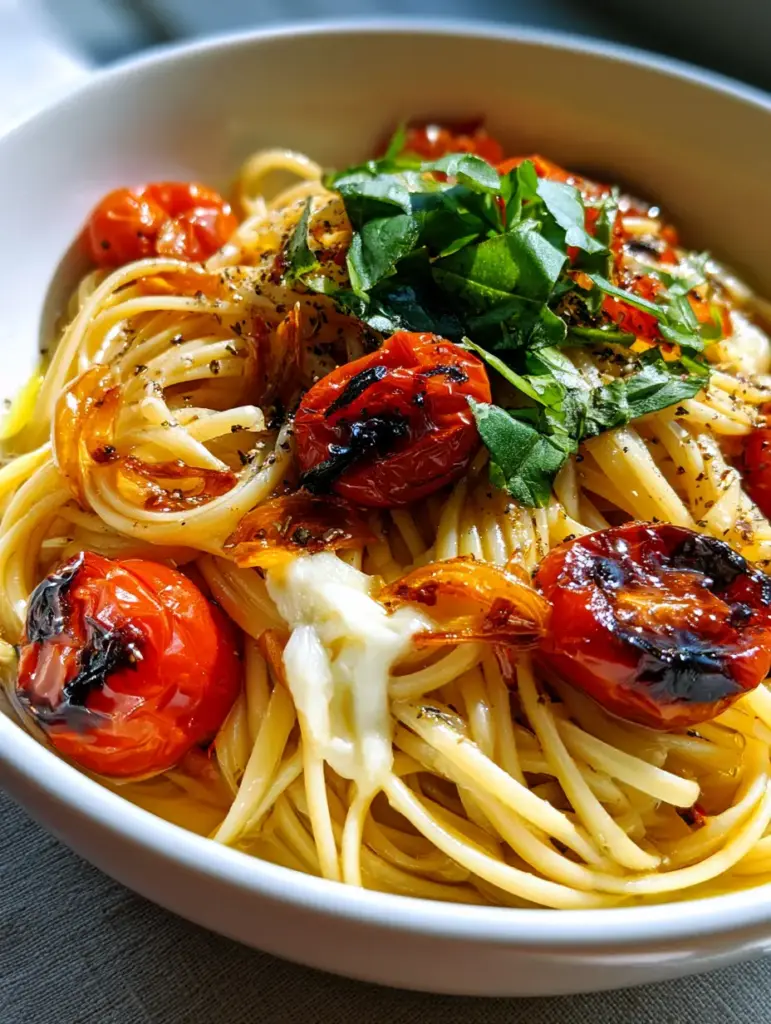
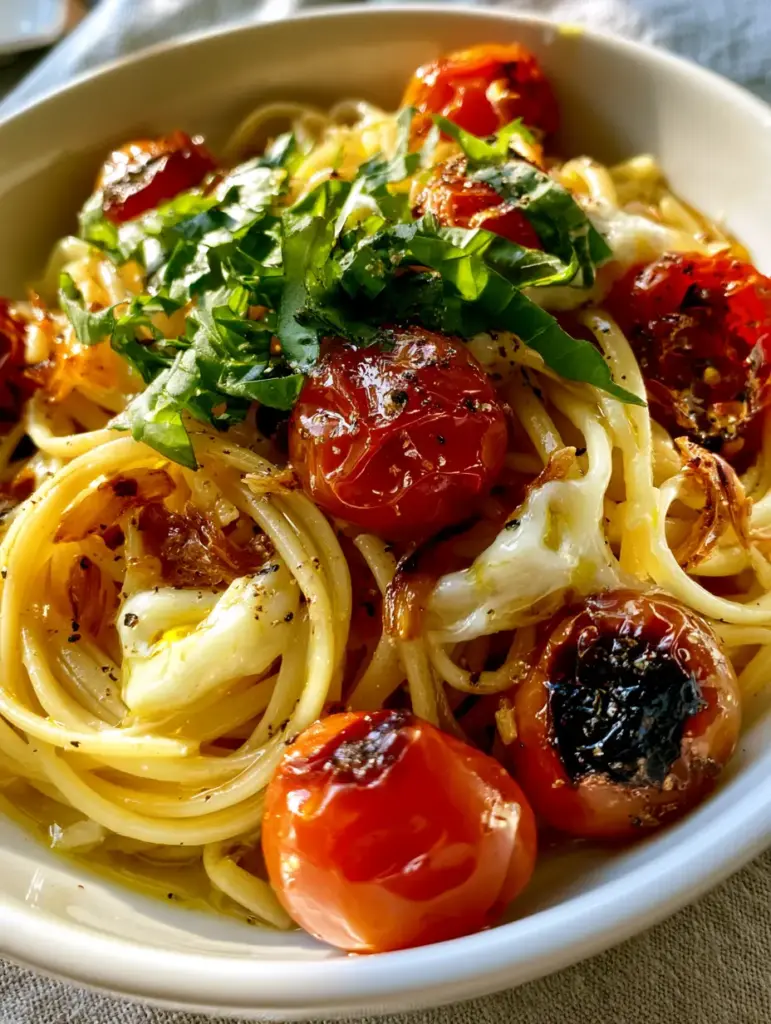
Increase the heat to medium-high and toss in the whole cherry tomatoes. Leave them undisturbed for 2-3 minutes. You want to see dark char marks and blistered skins. Once charred, use the back of a wooden spoon to gently press on half of the tomatoes until they pop, releasing their juices into the oil.
4. The Great Emulsion
Add the slightly undercooked linguine directly into the skillet. Pour in a splash of the reserved pasta water. Toss vigorously using tongs. The shimmering olive oil and tomato liquid will transform into a glossy coating that clings to the noodles.
5. The Fontina Finish
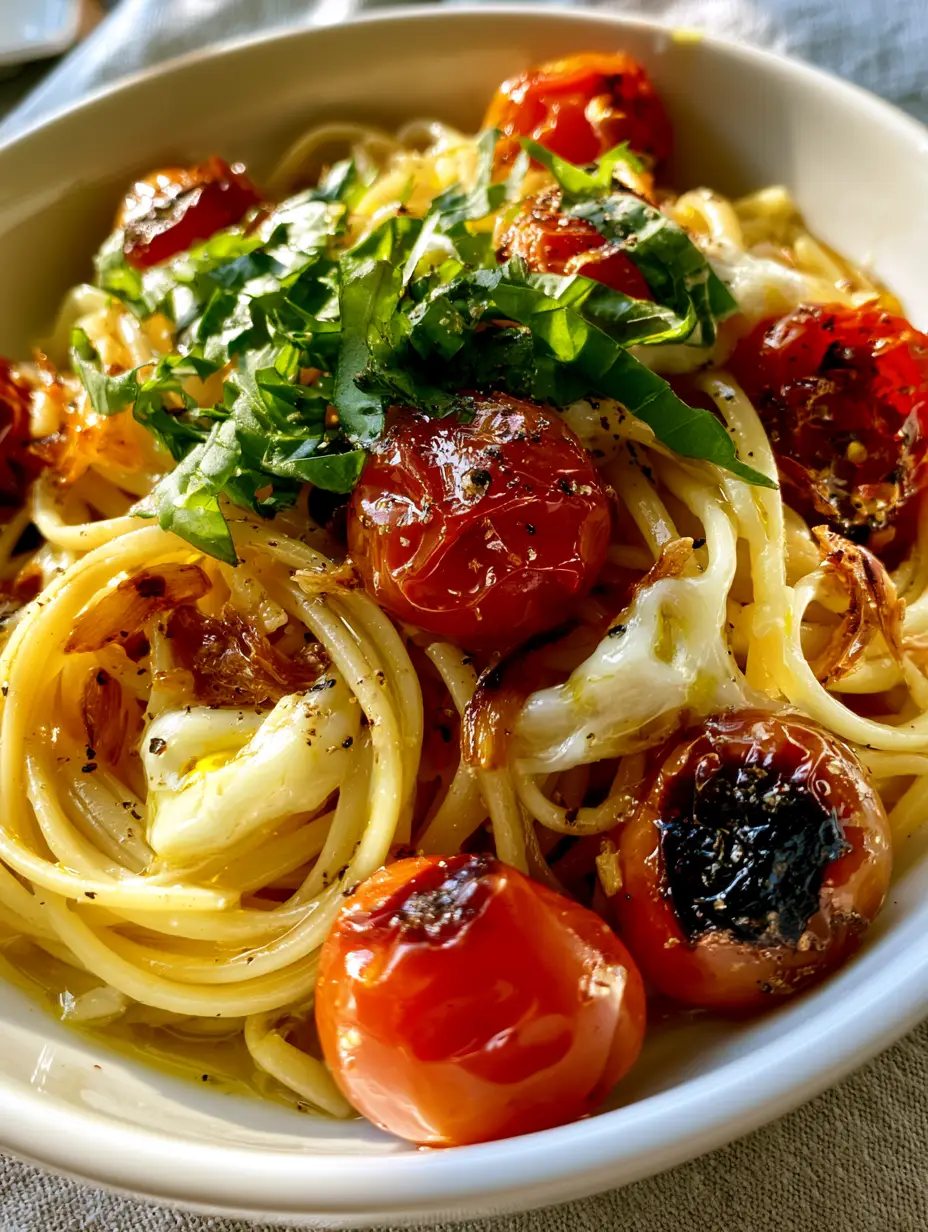
Turn off the heat. This is crucial—we don’t want to cook the cheese, just melt it. Scatter the fontina cheese ribbons over the pasta and fold them in gently. You should see small, gooey pockets and stretching strands of white cheese tucked between the linguine.
6. Final Garnishes and Plating
Transfer the Linguine Positano to a white ceramic pasta bowl. Scatter fresh torn basil leaves generously over the top. The residual heat will wilt the basil just enough to release its perfume. Finish with a heavy dusting of cracked black pepper grains for that professional chef aesthetic.
Expert Tips for the Ultimate Pasta Positano
- Don’t Skimp on Oil: The olive oil is the backbone of this recipe. If the pasta looks dry, add another tablespoon of oil or a splash of pasta water.
- High Heat for Tomatoes: To get those dark char marks without overcooking the insides, your pan must be hot before the tomatoes go in.
- Cold Fontina: Use cold cheese when cutting your ribbons. It makes it easier to handle and ensures the cheese doesn’t clump too quickly when it hits the pasta.
- Season in Layers: Salt the pasta water, then add a pinch of salt to the tomatoes as they blister. This builds a complex flavor profile.
Storage and Reheating Advice
Linguine Positano is best enjoyed immediately while the fontina ribbons are at their stretchiest. However, if you have leftovers, store them in an airtight container in the refrigerator for up to 3 days.
To reheat, do not use the microwave as it can make the oil separate and the cheese rubbery. Instead, place the pasta in a skillet with a splash of water or a drizzle of olive oil over medium-low heat. Toss until the melted white fontina is gooey again.
We do not recommend freezing this dish, as the fresh tomatoes and delicate fontina texture will not survive the thawing process well. For a meal that freezes beautifully, consider our baked lasagna instead.
What to Serve with Linguine Positano
Since this dish is bright and acidic, it pairs beautifully with a crisp green salad or a side of crusty artisan bread to soak up the shimmering garlic-infused olive oil. If you want to increase the protein, a side of grilled shrimp or chicken breast works wonderfully.
For those looking for a spicier kick, you might also enjoy our spicy spinach and sun-dried tomato pasta, which offers a different take on the Mediterranean flavor palette.
Frequently Asked Questions
Yes! You can easily substitute the linguine for your favorite gluten-free pasta brand. Just ensure you still use the starchy cooking water to help emulsify the oil and tomato juices.
Cherry or grape tomatoes are best because they have a high skin-to-flesh ratio, which allows them to blister and char perfectly while maintaining their shape. Larger tomatoes contain too much water and will make the sauce soggy.
The key is to start the garlic in cold oil over medium-low heat. This allows the garlic to infuse the oil as it heats up, resulting in toasted golden slivers rather than bitter, burnt bits.
This specific recipe relies on cracked black pepper grains for a mild, floral heat. If you prefer a spicier dish, you can add a pinch of red pepper flakes (peperoncino) when toasting the garlic.
While traditional Positano recipes are often vegan or use Parmesan, our version uses Fontina cheese ribbons. Fontina is ideal because it creates gooey pockets of melted cheese that stay distinct, rather than fully dissolving into the sauce.
The Official Linguine Positano Recipe
Follow these precise steps to recreate the high-end macro shot experience in your own dining room. The key is in the Visual Recipe Blueprint: glossy, charred, and gooey.
Linguine Positano Recipe: A Sun-Drenched Taste of the Amalfi Coast
Ingredients
Equipment
Method
- Bring a large pot of salted water to a boil. Cook the 1 lb (454g) linguine until just shy of al dente (about 2 minutes less than package directions). Reserve 1 cup (240ml) of pasta water before draining.
- In a large skillet over medium-low heat, add 1/2 cup (120ml) extra virgin olive oil and the slivered garlic. Cook until you have toasted golden garlic slivers, being careful not to burn them.
- Turn heat to medium-high. Add the whole cherry tomatoes. Cook undisturbed for 2-3 minutes until you see dark char marks. Use a spoon to burst half of the tomatoes, releasing their juices into the oil.
- Add the drained linguine and a splash of pasta water to the skillet. Toss vigorously until the pasta is shimmering and coated in a glossy sauce.
- Turn off the heat. Fold in the fontina cheese ribbons until they form gooey pockets. Top with torn basil leaves and a heavy dusting of cracked black pepper grains.
Notes
Use a high-quality extra virgin olive oil as it provides the primary flavor for the sauce.
Share Your Masterpiece!
Did your Linguine Positano come out with those perfect blistered tomatoes and toasted garlic slivers? We want to see it! Save this recipe to your Italian Recipes board on Pinterest so you never lose it.
Follow Emily_Table for more chef-tested recipes that bring the flavors of the world to your kitchen. If you made this, please leave a 5-star rating in the recipe card above and drop a photo of your dish in the comments below. Happy cooking!