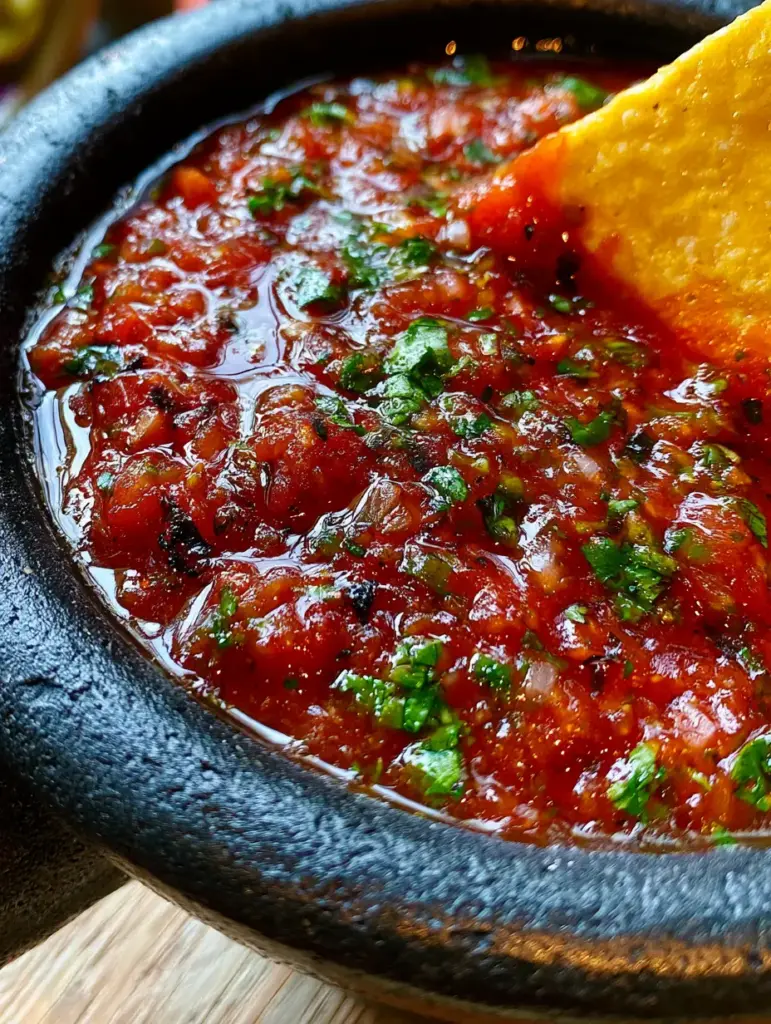
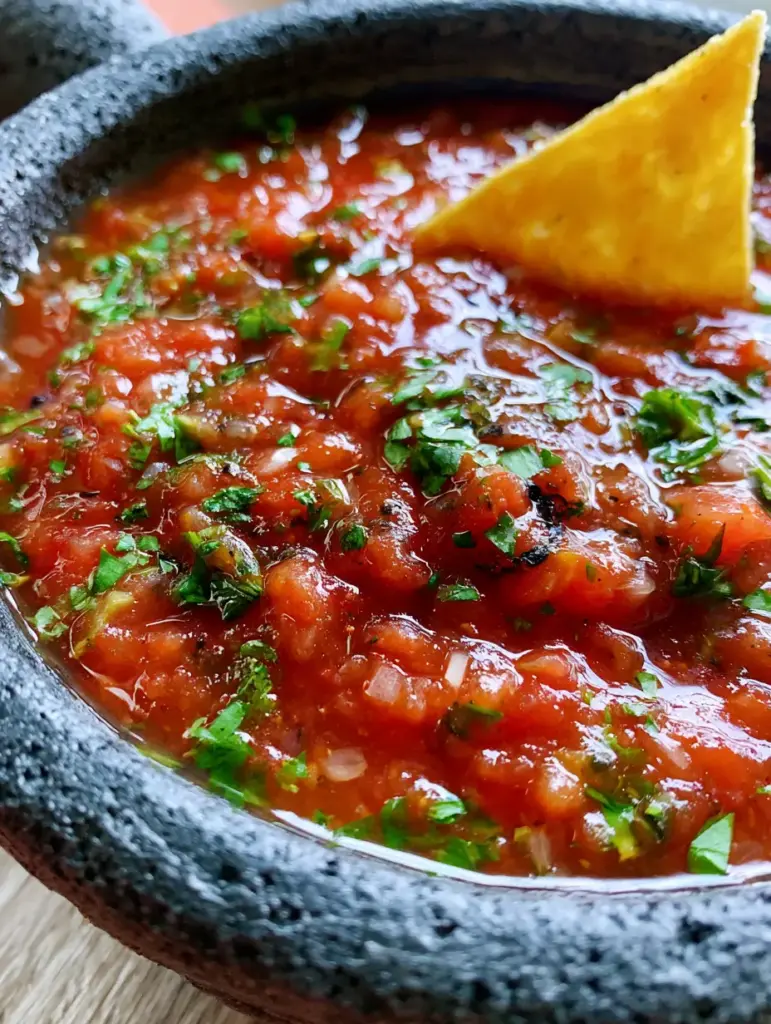
There is a specific, undeniable magic that happens the moment a basket of warm chips hits a restaurant table alongside a chilled bowl of thin, vibrant red salsa. You know the look: a deep crimson hue, those tell-tale microscopic flecks of charred tomato skin, and a consistency that perfectly coats a chip without ever feeling heavy. This Restaurant Style Salsa Recipe captures that exact sensory experience, bringing the professional kitchen’s secret techniques into your home.
Mastering this Restaurant Style Salsa Recipe is about more than just blending vegetables; it is about the forensic balance of acidity, char, and salinity. In this guide, we will break down the science of fire-roasting, the art of the “pulse,” and how to achieve that elusive translucent onion texture that defines the best cantina salsas. Whether you are prepping for a party or just craving that specific restaurant bite, this is the only blueprint you will ever need.
Why This Restaurant Style Salsa Recipe Surpasses the Bottled Stuff
- The Forensic Char: By fire-roasting our tomatoes until the skins blister and blacken, we introduce a smokiness that raw or canned-only salsas simply cannot replicate.
- Perfect Viscosity: We achieve a thin, pourable base that maintains enough body to cling to a corn tortilla chip, avoiding the “watery” pitfall of amateur recipes.
- Aromatic Depth: The use of finely minced white onion and fresh cilantro provides a crisp, cooling contrast to the deep, savory notes of the roasted fruit.
- Balanced Acidity: A precise application of glistening lime juice droplets cuts through the richness of the fire-roasted base, brightening every single microscopic sea salt crystal.
The Scientific Anatomy of Our Fire-Roasted Ingredients
To achieve the visual and flavorful results seen in our professional blueprint, we must select ingredients that behave predictably under heat and blades. Every component in this Restaurant Style Salsa Recipe serves a structural and chemical purpose.
Fire-Roasted Whole Tomatoes: 28 oz (794g) of high-quality whole peeled tomatoes are the foundation. We roast them further to ensure those charred skin flecks are present, providing the “umami” backbone of the sauce.
Fresh White Onion: 1/2 cup (75g) of finely minced white onion is non-negotiable. White onions offer a sharper, cleaner bite than yellow onions, and when minced finely, they become translucent and suspended in the thin red base.
Fresh Cilantro: 1/2 cup (15g) of loosely packed, finely minced cilantro leaves. The oils in fresh cilantro are volatile, meaning they provide the best aroma when added at the very end of the process.
Jalapeño or Serrano Peppers: 2 medium (30g) peppers, charred and deseeded. These provide the controlled heat that lingers on the palate without overwhelming the delicate lime and salt balance.
Fresh Lime Juice: 2 tbsp (30ml) of freshly squeezed lime juice. The citric acid acts as a flavor bridge, elevating the earthy tones of the roasted tomatoes and keeping the colors vibrant.
Garlic Cloves: 3 cloves (9g), roasted in their skins. Roasting garlic mellows its pungency, turning it sweet and buttery, which helps emulsify the thin salsa base.
Sea Salt: 1.5 tsp (9g) of fine sea salt. These microscopic crystals dissolve quickly, ensuring a uniform seasoning that highlights the natural sugars in the tomatoes.
Cumin and Sugar: A pinch of each. 1/2 tsp (1g) of ground cumin adds an earthy anchor, while 1/2 tsp (2g) of sugar balances the intense acidity of the roasted skins.
Essential Culinary Tools for High-Definition Salsa
Achieving the visual descriptors in our prompt—the thin consistency and micro-flecks—requires specific equipment. You cannot achieve this level of precision with a knife alone.
High-Speed Blender or Food Processor: A food processor is preferred for this Restaurant Style Salsa Recipe to maintain control over the “pulse” function, preventing the salsa from becoming a pureed soup.
Cast Iron Skillet or Broiler Pan: This is necessary for the fire-roasting stage. The high thermal mass of cast iron helps blister the tomato skins quickly without overcooking the interior flesh.
Fine Mesh Mincer: For the cilantro and onion, a very sharp chef’s knife or a micro-mincer ensures the bits are “tiny and translucent” rather than chunky.
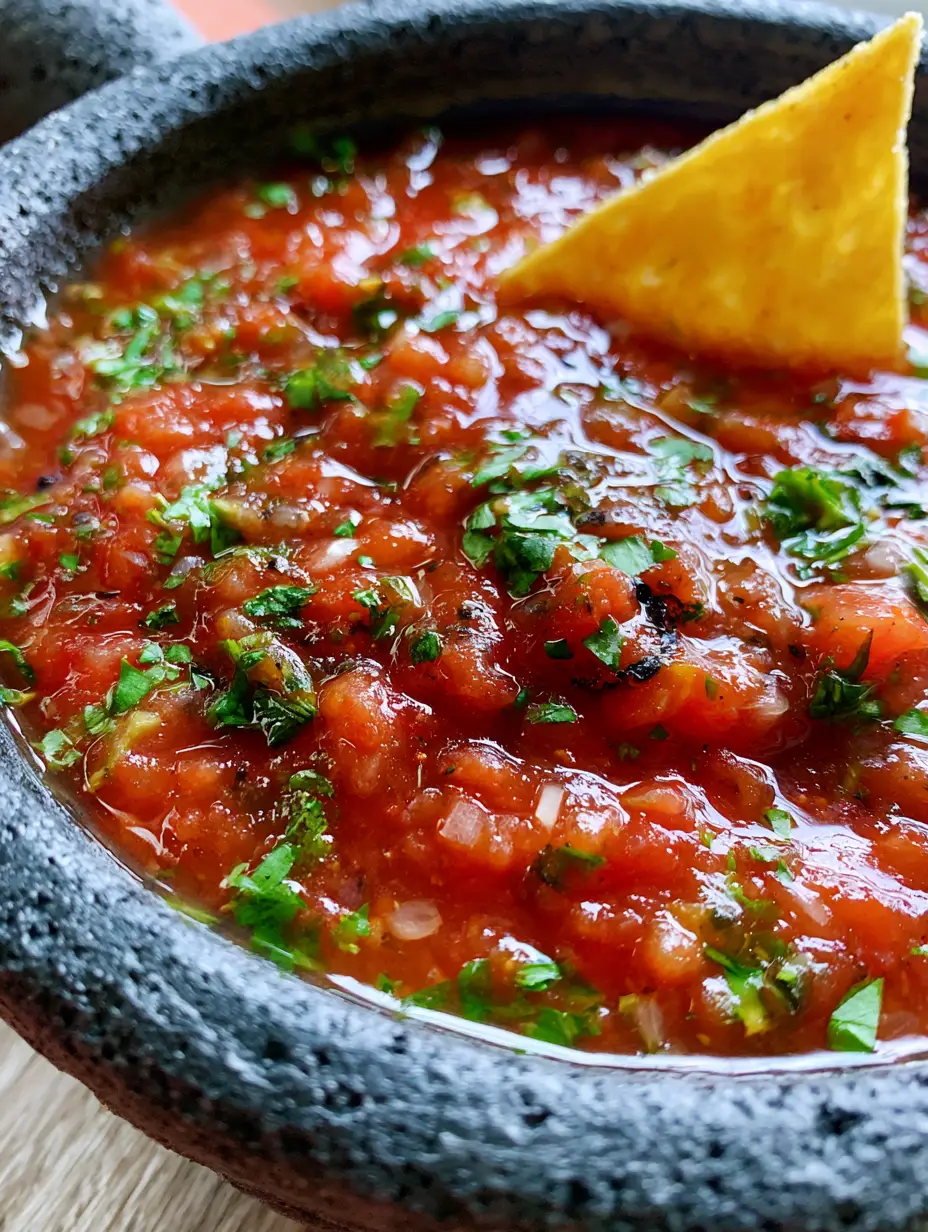
Matte Black Stone Molcajete: While not used for the blending, a rustic molcajete is the premier vessel for serving. The dark stone makes the vibrant red salsa and bright green cilantro pop visually.
The Step-by-Step Blueprint to Restaurant-Quality Results
Phase 1: The Alchemy of the Fire-Roast
Preheat your broiler to high or set a cast iron skillet over medium-high heat. Place your whole tomatoes, halved jalapeños, and unpeeled garlic cloves onto the surface. You are looking for a specific sensory cue: the sound of the skins popping and the smell of slight carbonization.
Roast for 5–7 minutes, turning occasionally, until the tomato skins are blistered and show significant blackened areas. These blackened bits are the “charred skin flecks” mentioned in our visual blueprint. Once charred, remove the garlic from its papery skin and set everything aside to cool for 5 minutes.
Phase 2: Achieving the Thin Red Base
Place the fire-roasted tomatoes (including all the charred skins and juices), the roasted jalapeños, and the garlic into your food processor. Add the 1.5 tsp (9g) of sea salt, cumin, and sugar. Pulse in short 1-second bursts.
Stop pulsing when the tomatoes have broken down into a thin, pourable consistency but still contain visible micro-flecks of black skin. Over-processing will incorporate too much air, turning the salsa pinkish-orange instead of the vibrant, glossy red we desire.
Phase 3: The Aromatic Fold-In
Transfer the blended base to a bowl. Now, manually stir in the 1/2 cup (75g) of finely minced white onion and the 1/2 cup (15g) of minced cilantro. By folding these in by hand, you ensure the onion remains translucent and the cilantro remains bright green and distinct.
Add the 2 tbsp (30ml) of lime juice. You should see the surface become glossy and reflective. Taste the salsa with a crisp yellow corn tortilla chip—the salt on the chip will interact with the salsa, providing the final seasoning check.
Expert Tips for Forensic Culinary Accuracy
- Temperature Matters: Always let your roasted ingredients cool before blending. Blending hot liquids can lead to steam buildup and a change in the cellular structure of the tomato, resulting in a mealy texture.
- The “Rest” Period: Allow the salsa to sit in the refrigerator for at least 30 minutes before serving. This allows the microscopic sea salt crystals to fully dissolve and the flavors to meld into a cohesive profile.
- Consistency Control: If your salsa feels too thick, add 1-2 tbsp (15-30ml) of water or tomato juice. The goal is a “thin salsa clinging to the edges” of the chip, as described in our visual prompt.
- Cilantro Preservation: Never blend the cilantro. The high-speed blades bruise the leaves, releasing chlorophyll that can make the salsa taste bitter and look muddy.
Managing Your Salsa: Storage and Shelf Life
This Restaurant Style Salsa Recipe is fresh and contains no artificial preservatives. Store it in an airtight glass jar in the refrigerator for up to 5–7 days. The acidity from the lime juice acts as a natural stabilizer, but the flavors are at their peak within the first 48 hours.
We do not recommend freezing this salsa. The freezing and thawing process breaks down the cell walls of the fresh onions and cilantro, turning the once-crisp aromatics into a soft, mushy texture that loses the “translucent” visual appeal.
What to Serve With This Vibrant Red Salsa
While a basket of yellow corn tortilla chips is the classic pairing, this salsa is a versatile workhorse in the kitchen. Its thin consistency makes it an excellent topping for heavier, creamier dishes where a hit of acidity is needed.
Try serving it alongside a hearty Cajun shrimp and steak alfredo to cut through the richness of the cream sauce. It also provides a wonderful fresh contrast when served as an appetizer before a meal of Chicago style spaghetti or a quick easy homemade pizza. If you love the flavors in this dish, you will also enjoy the textures in my Mexican street corn pasta salad or a classic fresh black bean and corn salsa.
Common Questions About Restaurant Style Salsa
Yes, high-quality canned fire-roasted tomatoes work well, but for the most authentic charred skin flecks and glossy texture, roasting whole tomatoes in a cast iron skillet is recommended.
To achieve a thinner consistency, add small amounts of tomato juice or water rather than more lime juice, which could make the salsa overly acidic.
It varies, but the heat is controllable. By removing the seeds and membranes of the jalapeños before roasting, you can achieve a mild but flavorful salsa that highlights the roasted aromatics.
The secret is a very fine mince using a sharp knife and adding them after the blending process. This prevents them from becoming a paste and allows them to remain distinct and translucent.
This usually happens due to over-blending. High speeds incorporate air into the tomato base, emulsifying the liquids and turning them opaque. Use short pulses to maintain the deep red color.
The Ultimate Restaurant Style Salsa Recipe Card
Restaurant Style Salsa Recipe: The Ultimate Guide to Perfect Charred Texture
Ingredients
Equipment
Method
- Place whole tomatoes, jalapeños, and unpeeled garlic on a hot cast iron skillet or under a broiler. Roast for 5-7 minutes until skins are blistered and show black charred flecks.
- Allow the roasted items to cool for 5 minutes. Remove the garlic from its skin and discard the skin.
- Place roasted tomatoes, charred peppers, garlic, sea salt, cumin, and sugar into a food processor. Pulse in 1-second intervals until a thin red base forms with visible micro-flecks of skin.
- Transfer salsa to a serving bowl. Manually stir in the finely minced white onion, minced cilantro, and glistening lime juice until combined.
- Allow the salsa to rest for 30 minutes in the refrigerator to let flavors meld. Serve in a matte black molcajete with a salted yellow corn tortilla chip.
Notes
Always fold in the cilantro and onion by hand to keep the colors vibrant and textures distinct.
Bringing the Cantina Home
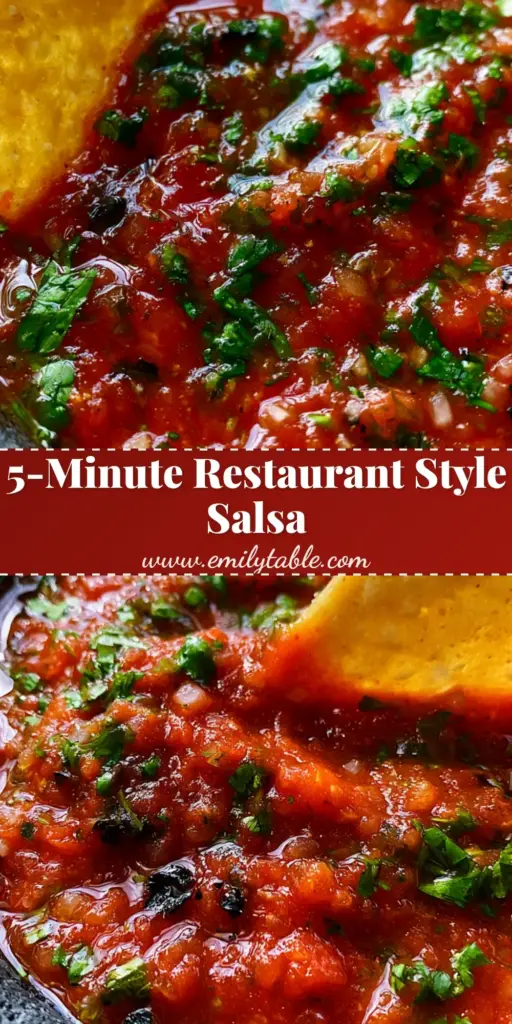
Achieving the perfect Restaurant Style Salsa Recipe is a rewarding culinary journey that combines heat, heart, and a little bit of science. By focusing on the visual cues—the charred flecks, the glossy surface, and the translucent aromatics—you have created a dish that is as beautiful as it is delicious. This salsa is designed to be the centerpiece of your next gathering, glistening under the light in a rustic molcajete.
If you enjoyed this deep dive into the forensics of salsa making, please leave a comment below and let me know how yours turned out! Don’t forget to share your creations and follow me for more culinary blueprints on Pinterest.