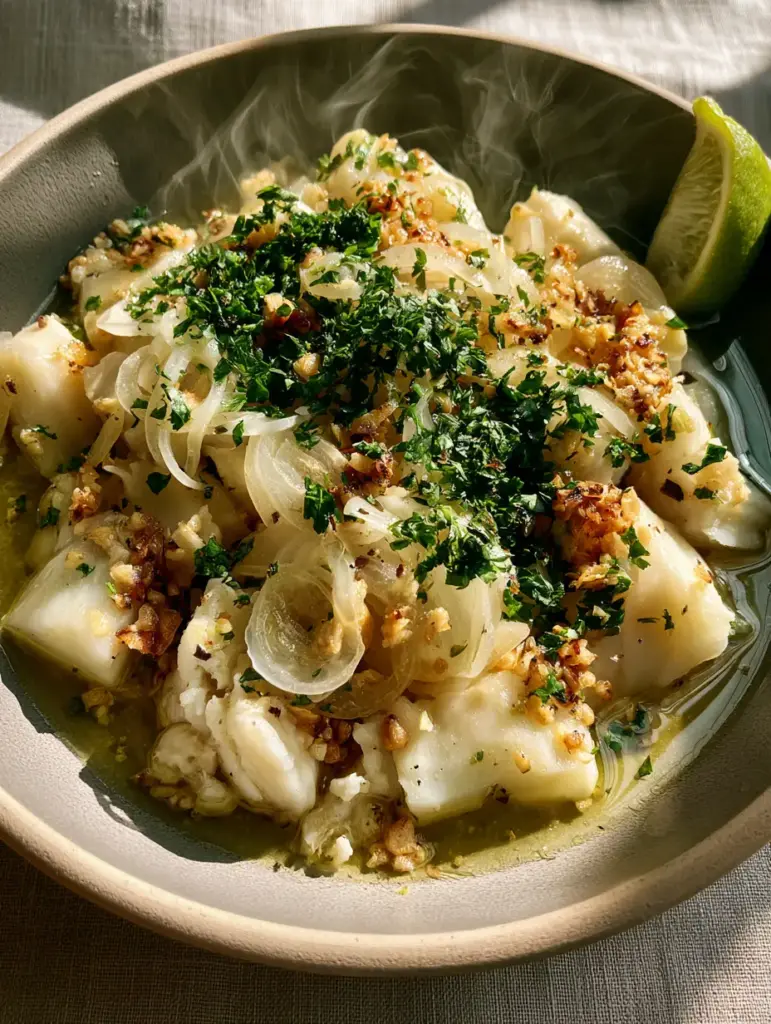
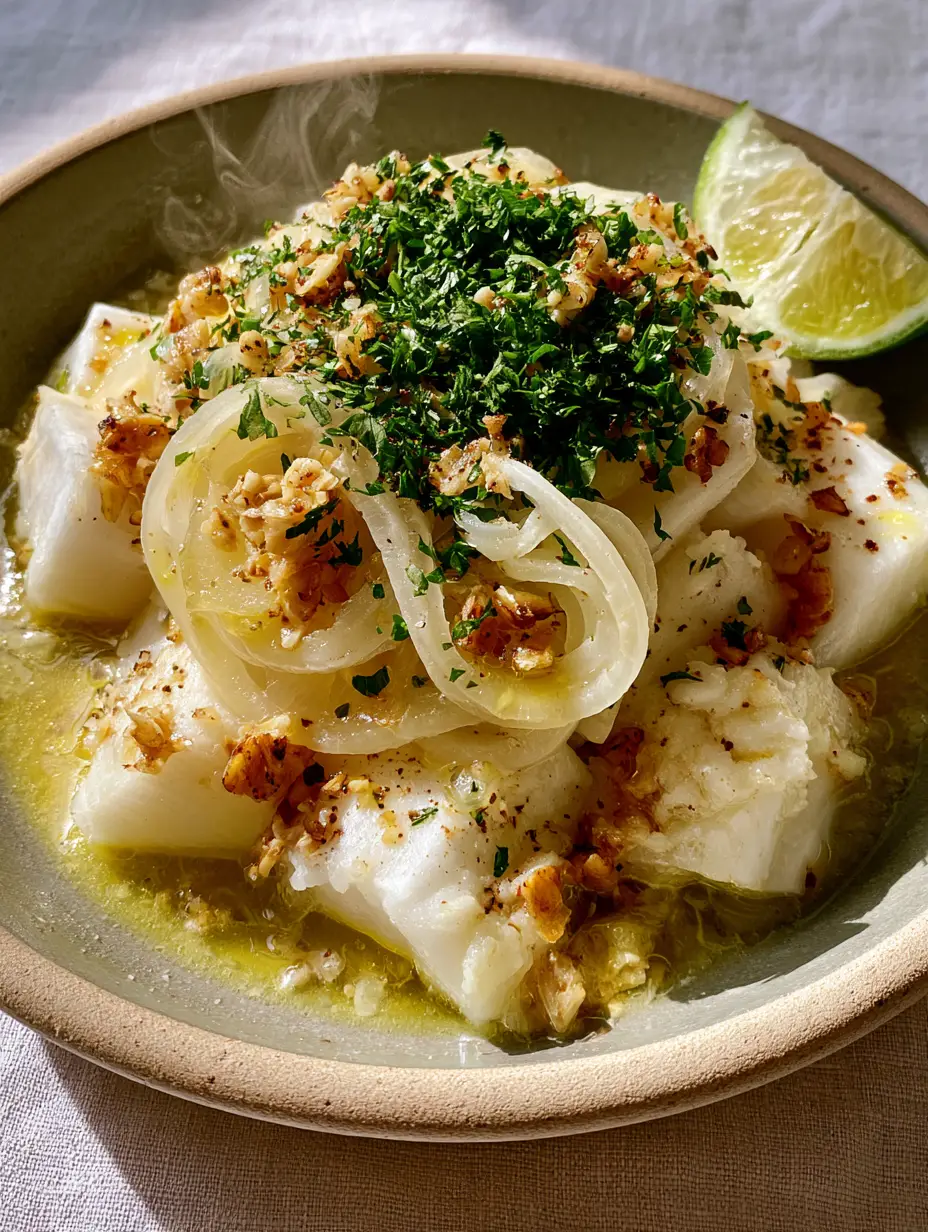
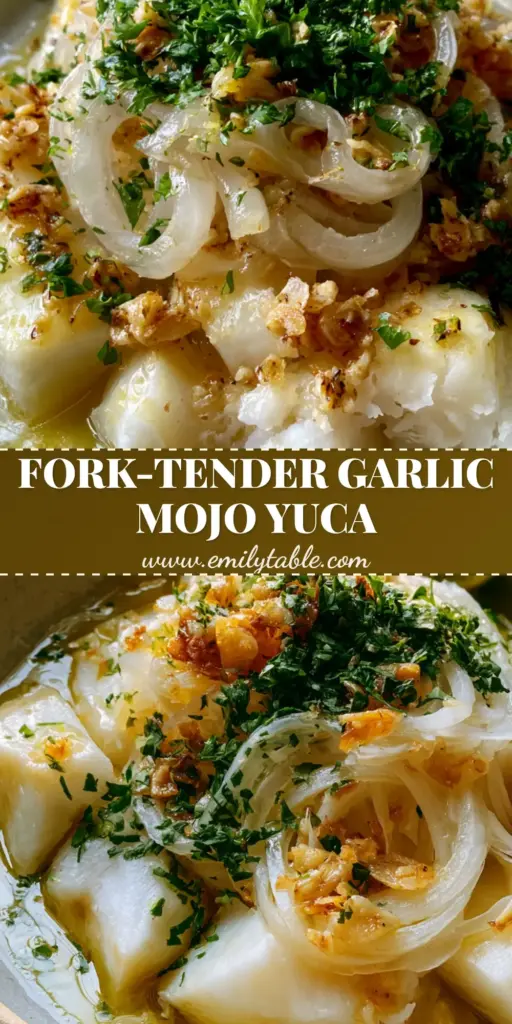
There is nothing quite like the sight of a steaming heap of Yuca con Mojo arriving at the table. The ivory-white, waxy chunks of cassava, visibly soft and gently breaking apart, serve as the perfect canvas for a vibrant, citrusy garlic infusion. This dish is a staple of Cuban cuisine, celebrated for its unique textural contrast between the dense, starchy root and the silky, translucent golden oil that pools at the bottom of the bowl.
When you prepare this recipe, the aroma of toasted garlic slivers hitting hot olive oil will fill your kitchen, signaling the start of a truly comforting meal. The visual appeal is undeniable: soft-sautéed white onion rings draped over fork-tender yuca, topped with a heavy sprinkle of finely chopped fresh flat-leaf parsley. A single lime wedge tucked onto the rim of a matte clay bowl adds the final touch of brightness to this handheld-aesthetic masterpiece.
Whether you are recreating a childhood memory or discovering this tropical tuber for the first time, mastering the balance of salt, acid, and fat is key. Let’s dive into the forensic details of making the perfect Yuca con Mojo that looks just as stunning as it tastes.
The Irresistible Appeal of Perfectly Steamed Cassava
- Fork-Tender Texture: We aim for yuca that is soft enough to break apart with a gentle press, revealing a waxy, ivory-white interior.
- Aromatic Mojo Sauce: The combination of toasted golden garlic slivers and lime juice creates a translucent, glistening sheen that coats every bite.
- Structural Contrast: Soft, translucent white onion rings provide a delicate crunch and sweetness that balances the earthy cassava.
- Vibrant Finishes: A heavy sprinkle of fresh parsley and bright lime juice droplets ensure every forkful is refreshed.
The Pantry List for Zesty Cuban Yuca
Fresh Yuca (Cassava) Root: 2 lbs (907g) of fresh yuca is the star here; look for firm roots without soft spots or dark blemishes. When boiled, it transforms from a hard, brown-skinned log into tender, waxy chunks.
Extra Virgin Olive Oil: 1/2 cup (120ml) serves as the base for the mojo. Using a high-quality oil ensures a rich, golden hue and a fruity backbone for the garlic infusion.
Fresh Garlic Cloves: 8-10 large cloves (approx. 50g), thinly slivered, are essential. We toast these until they are golden-brown to provide both a deep flavor and a crispy texture.
White Onion: 1 large onion (approx. 250g), sliced into thin rings, adds bulk and sweetness. These are sautéed until just translucent, maintaining their shape while softening.
Fresh Lime Juice: 1/3 cup (80ml) of freshly squeezed lime juice provides the necessary acidity. It emulsifies slightly with the oil to create that signature droplets effect on the yuca surface.
Fresh Flat-Leaf Parsley: 1/4 cup (15g), finely chopped, adds a burst of green color. It cuts through the richness of the oil and provides an earthy, fresh aroma.
Kosher Salt: 2 tbsp (30g) for the boiling water and additional to taste. The yuca must be seasoned from the inside out while it simmers to avoid a bland final product.
Water: Enough to cover the yuca by at least 2 inches (5cm). This is the foundational medium that allows the starch to hydrate and soften properly.
Essential Tools for Achieving Kitchen Success
To get the textures described in our visual blueprint, you will need a large, heavy-bottomed pot for boiling the cassava. A sturdy pot ensures even heat distribution, which is critical for preventing the outside of the yuca from turning mushy before the center is cooked. You will also need a sharp chef’s knife to create those thin, uniform garlic slivers and onion rings.
A medium skillet, preferably stainless steel or cast iron, is necessary for the mojo. This allows you to monitor the color of the garlic slivers closely, ensuring they reach a perfect golden-brown without burning. Finally, a shallow clay bowl is the ideal vessel for serving, as it retains heat well and provides a beautiful, neutral background for the glistening oil and steam vapors.
Mastery of the Stovetop: Step-by-Step Instructions
Preparing the Cassava Roots
Begin by peeling the yuca. Use your knife to cut off the ends, then cut the root into 3-inch (7.5cm) cylinders. Make a shallow longitudinal slit through the thick brown bark and the pinkish inner skin. Use your thumb or a spoon to pry the skin away; it should peel off in large strips.
Place the peeled chunks into your large pot and cover with water. Add 2 tablespoons (30g) of kosher salt. Bring to a rolling boil over high heat, then reduce to a simmer. You are looking for a visual cue of the yuca starting to “bloom” or crack open slightly at the ends.
Boiling to Fork-Tender Perfection
Simmer the yuca for 20-30 minutes. The exact time depends on the freshness of the root. Test for doneness by piercing a chunk with a fork; it should slide in with zero resistance, and the yuca should appear ivory-white and waxy. If the center feels hard, continue simmering.
Once tender, drain the yuca. While it is still hot, use a pair of tongs to remove the woody core (the tough string) from the center of each chunk. Arrange the steaming, fork-tender chunks in a shallow matte clay bowl. The steam vapors rising from the dish are a sign of perfectly timed preparation.
Crafting the Golden Garlic Mojo
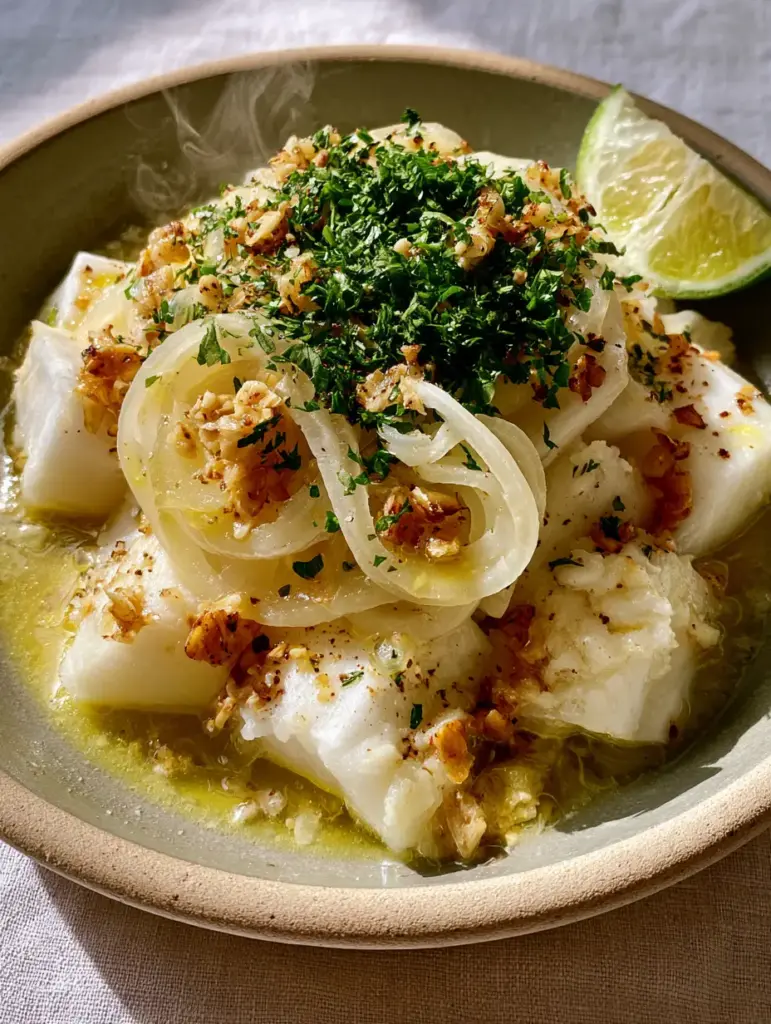
While the yuca boils, prepare the infusion. Heat 1/2 cup (120ml) of olive oil in your skillet over medium-low heat. Add the garlic slivers. Watch them closely; as soon as they become fragrant and turn a light golden-brown, use a slotted spoon to remove them and set aside. This prevents them from overcooking in the residual heat.
In the same oil, add the white onion rings. Sauté for 3-5 minutes until they are translucent and soft but haven’t lost their ring shape. Remove the skillet from the heat and carefully stir in the lime juice. The oil may sizzle slightly as the acid hits the fat.
Assembling the Visual Masterpiece
Pour the warm garlic-lime oil and sautéed onions generously over the heap of yuca. Ensure the oil pools slightly at the bottom of the bowl. Scatter the reserved toasted garlic bits over the top for a concentrated crunch.
Finish the dish with a heavy sprinkle of finely chopped parsley and a few extra lime juice droplets for shine. Place a fresh lime wedge on the rim of the bowl. The side-lighting from your kitchen window will catch the glistening sheen of the oil and the soft vapors of the hot yuca.
Expert Tips for a Flawless Result
- The Core Secret: Always remove the fibrous inner vein after boiling. It is technically edible but creates an unpleasant woody texture that ruins the “fork-tender” experience.
- Don’t Overcrowd: When sautéing the onions, ensure they have enough room to soften without steaming themselves into a mushy pile. We want translucent, distinct rings.
- Temperature Control: If the oil is too hot when you add the lime juice, it can splatter. Take the pan off the burner for 30 seconds before adding the citrus.
- Salt the Water: Yuca is extremely dense. If you don’t salt the water heavily during the boil, the interior of the chunks will taste flat, regardless of how much mojo you add later.
Storage, Reheating, and Make-Ahead Advice
Yuca con Mojo is best served immediately while the steam is still rising. However, if you have leftovers, store them in an airtight container in the refrigerator for up to 3 days. The yuca will firm up significantly when cold as the starches retrograde.
To reheat, it is best to steam the yuca chunks for 5 minutes until they regain their waxy softness. Alternatively, you can sauté the leftover chunks in a little extra olive oil until the edges become crispy, creating a different but delicious texture. Avoid the microwave if possible, as it can make the cassava rubbery.
What to Serve With This Vibrant Side Dish
This dish is a powerhouse of flavor that pairs beautifully with protein-heavy mains. It is the traditional companion to a crispy vaca frita, where the citrus in the mojo cuts through the rich, fried beef perfectly. The garlic-infused oil also complements the charred notes of Peruvian grilled chicken or the smoky spices in papas con chorizo.
For a lighter meal, serve it alongside vegetarian stuffed peppers. The starchy yuca provides the satisfying “heft” needed to make a meatless meal feel complete. If you have extra mojo oil, don’t let it go to waste—drizzle it over taco salad bowls for an instant flavor upgrade.
Frequently Asked Questions
Yes! Frozen yuca is often more reliable because it is peeled and blanched at peak freshness. Cook it directly from frozen in boiling salted water until tender.
While lime is traditional and provides a specific floral acidity, lemon is a suitable substitute if limes are unavailable. The flavor will be slightly different but still delicious.
It is not toxic, but it is very tough and fibrous. For the best culinary experience, you should always remove the central string after boiling.
Yuca (one ‘c’) is the edible cassava root used in this recipe. Yucca (two ‘c’s) refers to ornamental desert shrubs that are generally not eaten.
Yuca can be unpredictable; if it was harvested too long ago or not stored properly, it may never soften. Always buy firm roots and ensure you are boiling them in well-salted water.
The Authentic Yuca con Mojo Recipe
Yuca con Mojo: The Ultimate Guide to Cuban Garlic Cassava
Ingredients
Equipment
Method
- Peel the yuca and cut into cylinders. Place in a large pot, cover with water, and add salt.
- Bring to a boil then simmer for 20-30 minutes until fork-tender and ivory-white. Drain and remove the woody center vein.
- Heat olive oil in a skillet. Toast garlic slivers until golden-brown, then remove with a slotted spoon.
- Add onion rings to the oil and cook until translucent. Off the heat, stir in the lime juice.
- Pour the hot oil and onion mixture over the yuca chunks. Top with toasted garlic, parsley, and lime droplets.
Notes
Use fresh lime juice rather than bottled for the most authentic flavor profile.
Sharing the Flavors of the Tropics
Bringing this dish to your table is about more than just a recipe; it’s about capturing a sensory moment. From the glistening oil to the ivory-white texture of the cassava, every element of this Yuca con Mojo is designed to satisfy. If you enjoyed this culinary deep-dive, please leave a comment below and share your results! You can also find more visual inspiration by following Pinterest and saving this recipe to your favorite boards.