There is something undeniably hypnotic about a perfectly executed Ratatouille recipe. Inspired by the classic French Provencal dish and elevated by the visual artistry of the famous “Confit Byaldi,” this version brings restaurant-grade elegance to your home kitchen. Imagine paper-thin layers of vibrant summer vegetables resting atop a rich, smoky roasted red pepper foundation.
This isn’t just a side dish; it is a culinary masterpiece designed for the modern home cook. By using a weathered metal sheet pan, we achieve a rustic, handheld smartphone-photo-worthy aesthetic that looks as good as it tastes. The soft, natural daylight hitting the glossy olive oil glaze makes every slice of zucchini and eggplant pop with high-definition clarity.
Whether you are hosting a formal dinner or looking for a healthy, vegetable-forward weeknight meal, this Ratatouille recipe delivers. We are focusing on tender-crisp textures, caramelized edges, and a depth of flavor that only comes from roasting aromatics until they reach peak sweetness. Let’s dive into the forensic details of creating this edible art.
Why This Sheet Pan Ratatouille Is a Culinary Game Changer
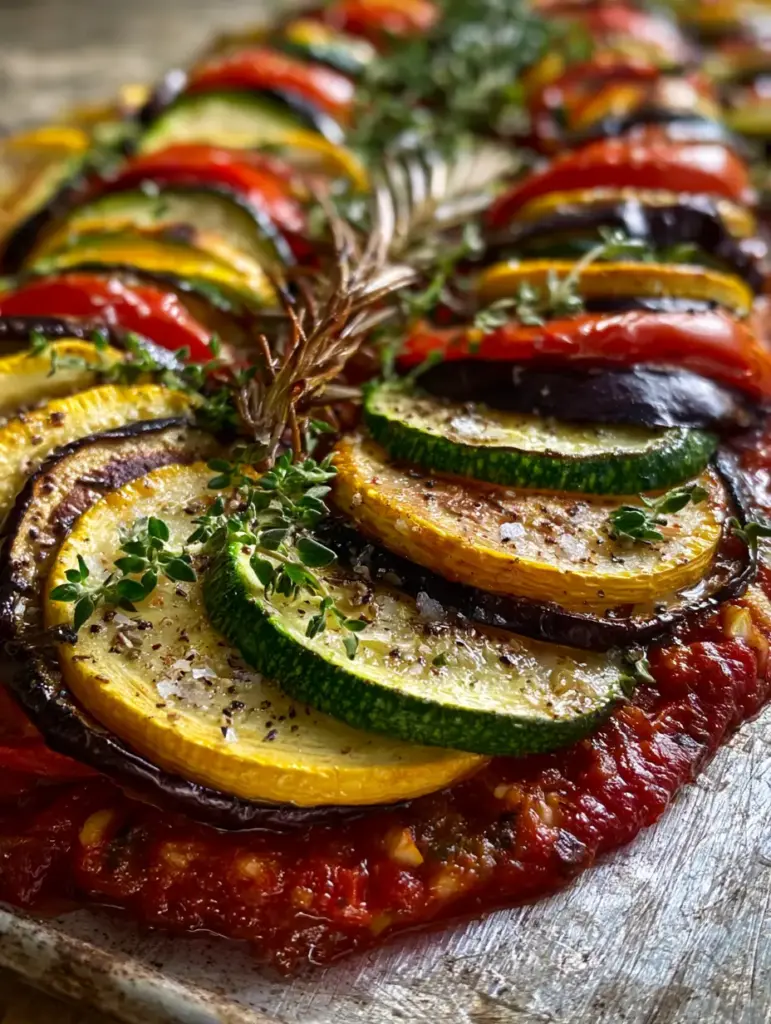
- Visual Perfection: The tight, overlapping spiral pattern creates a stunning mosaic of green, yellow, purple, and crimson that rivals any professional bistro.
- Textural Contrast: We achieve “tender-crisp” perfection, ensuring the vegetables maintain their structural integrity while developing charred, caramelized edges.
- Flavor Depth: Unlike watery versions, our thick roasted red pepper and tomato base is concentrated and infused with visible bits of minced garlic.
- Effortless Elegance: Despite its complex appearance, the use of a mandoline and a simple sheet pan makes this an achievable feat for any enthusiastic home cook.
The Anatomy of a Perfect Ratatouille: Essential Ingredients
To achieve the specific visual results of our blueprint, the choice of ingredients is non-negotiable. Every vegetable must be selected for its diameter to ensure a uniform, tight spiral. You want your zucchini, squash, and eggplant to be roughly the same width as your Roma tomatoes.
Zucchini and Yellow Squash: Look for firm, slender specimens. These provide the vibrant green and bright yellow rings that define the dish’s color palette. Their high water content requires a light glaze of olive oil to help them brown rather than steam.
Chinese Eggplant: Unlike the bulbous Italian variety, Chinese eggplant is long and thin. This is the secret to getting those paper-thin, deep purple circles that fit perfectly into the vegetable sequence without overwhelming the other flavors.
Roma Tomatoes: These are the gold standard for this Ratatouille recipe because they are fleshy and have fewer seeds. Slicing them thin allows them to melt slightly into the sauce while retaining their crimson border.
Roasted Red Pepper Base: We aren’t just using canned sauce. We combine fire-roasted red peppers with crushed tomatoes and plenty of minced garlic to create a “thick, rich, deep-red” foundation that supports the weight of the vegetable spiral.
The Finishing Aromatics: Fresh thyme leaves and a whole rosemary sprig are not just garnishes. When toasted in the oven, the rosemary releases oils that perfume the entire pan, while the thyme adds a tiny, green herbal pop across the surface.
The Professional Tool Kit for Precision Slicing
To achieve the “paper-thin” look described in our visual blueprint, a standard chef’s knife—while capable—is often difficult for maintaining perfect uniformity. A mandoline slicer is your best friend here. Set it to approximately 1/16th of an inch (1.5mm) for that delicate, translucent appearance.
You will also need a weathered metal sheet pan. The dark patina of a well-used pan helps absorb heat more efficiently than a shiny new one, contributing to those much-desired charred vegetable edges. Finally, a small pastry brush is essential for applying the glossy olive oil sheen without disturbing the intricate spiral pattern.
Step-by-Step Evolution of the Vegetable Spiral
Crafting the Rich Pepper Foundation
In a medium bowl, combine 1 cup (240ml) of crushed tomatoes with 1/2 cup (120ml) of finely minced roasted red peppers. Stir in 3 cloves (15g) of minced garlic, a pinch of salt, and a dash of black pepper. Spread this mixture evenly across your weathered metal sheet pan until it forms a thick, ruby-red bed.
Mastering the Mandoline Technique
Carefully slice the zucchini, yellow squash, Chinese eggplant, and Roma tomatoes into uniform circular discs. Consistency is key here; if the slices vary in thickness, they will cook at different rates, ruining the “tender-crisp” goal. Aim for slices so thin they are slightly flexible.
The Art of the Overlapping Spiral
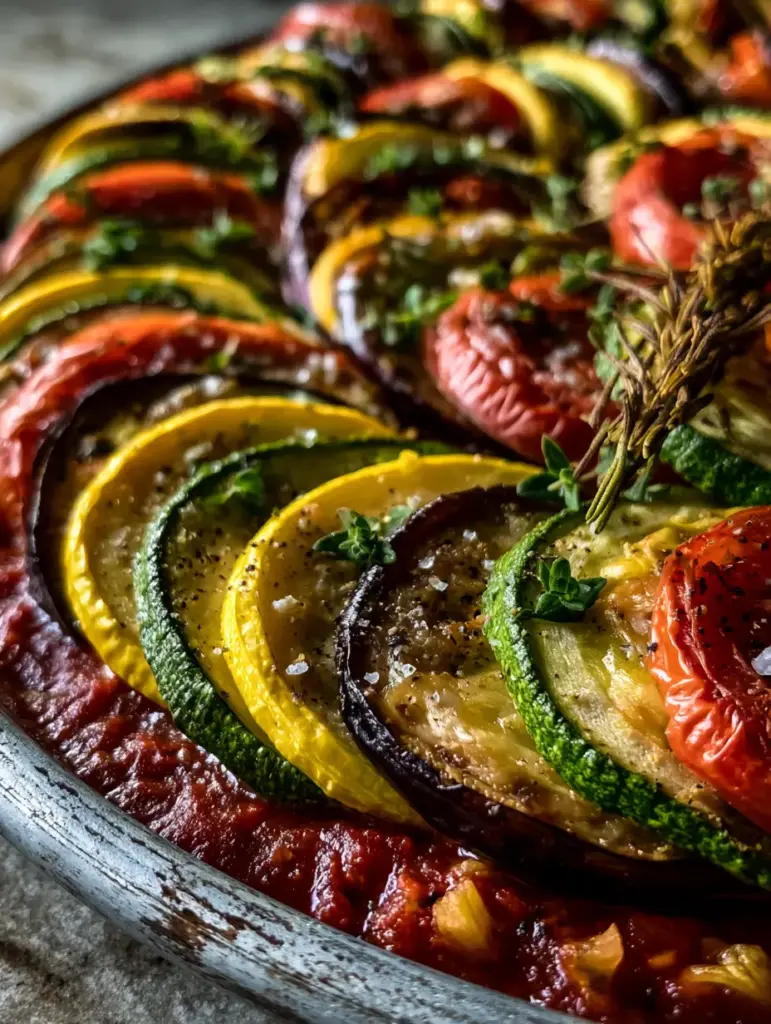
Begin at the outer edge of the sheet pan. Alternate your vegetables: zucchini, squash, eggplant, tomato. Lay them in a tight, overlapping pattern, leaning them slightly against one another. Continue this sequence in a concentric circle until you reach the center, creating a dense, colorful mosaic.
Seasoning and the Glossy Glaze
Drizzle 3 tbsp (45ml) of high-quality extra virgin olive oil over the vegetables. Use a pastry brush to ensure every slice has a glossy sheen. Sprinkle generously with 1 tsp (5g) of flaky sea salt and 1/2 tsp (2g) of cracked black pepper. Nestle the whole rosemary sprig in the center and scatter the fresh thyme leaves across the top.
Roasting for Caramelization and Char
Preheat your oven to 375°F (190°C). Slide the sheet pan into the center rack. Roast for 40-45 minutes. Watch for the visual cues: the sauce should be bubbling at the edges, and the vegetables should look soft but not mushy. For the final 3-5 minutes, turn on the broiler to achieve those signature charred, caramelized edges.
Expert Secrets for Ratatouille Success
- Salt the Eggplant: If your eggplant seems particularly bitter, salt the slices for 10 minutes and pat dry before assembling. This ensures a mellow flavor profile.
- Manage the Moisture: If your vegetables release too much liquid, don’t panic. The high-heat finish under the broiler will help evaporate excess moisture and concentrate the sauce.
- The Resting Period: Let the dish sit for 10 minutes after removing it from the oven. This allows the juices to settle and makes the spiral easier to scoop without falling apart.
- Aesthetic Lighting: If you are taking photos, follow our Midjourney prompt advice: use soft, side-lit natural daylight to highlight the moisture and texture of the charred edges.
Maximizing Your Meal: What to Serve with Ratatouille
This Ratatouille recipe is incredibly versatile. For a rustic French dinner, serve it alongside a warm, crusty loaf of bread to soak up the garlic-infused pepper sauce. If you want to increase the protein, it pairs beautifully with grilled meats or fish.
If you enjoy vegetable-heavy Mediterranean flavors, you might also love our authentic Greek moussaka which uses similar layering techniques. For those who prefer a different take on sheet pan cooking, our roasted sheet pan soup is a fantastic way to utilize leftover summer squash.
Looking for a heartier pairing? Serve a scoop of these roasted vegetables over a slice of Southern tomato pie for a double dose of garden-fresh flavor. It also makes an excellent side dish for a flavorful Peruvian grilled chicken.
Preserving Your Masterpiece: Storage and Reheating
Ratatouille is one of those rare dishes that actually tastes better the next day as the flavors continue to meld. Store leftovers in an airtight container in the refrigerator for up to 4 days. The vegetables will lose some of their “tender-crisp” texture but gain an incredible depth of flavor.
To reheat, avoid the microwave if possible, as it can make the vegetables rubbery. Instead, place the portion back on a baking sheet or in a cast-iron skillet. Heat at 350°F (175°C) until the sauce is bubbly and the edges regain a bit of their crispness.
Common Questions About This Provençal Classic
Yes! Ratatouille actually develops more flavor as it sits. You can assemble and bake it a day in advance, then reheat it in the oven to restore the glossy sheen and crisp edges.
No, you should leave the skin on. The deep purple skin of Chinese eggplant provides essential structural integrity for the thin slices and adds the signature visual contrast required for the spiral.
The secret is slicing the vegetables paper-thin and roasting at a relatively high temperature (375°F/190°C). Finishing the dish under the broiler for a few minutes helps evaporate excess moisture and creates charred edges.
It can be served either way! While it is traditionally served warm as a main or side dish, many people enjoy it at room temperature or even cold as part of a Mediterranean platter.
A mandoline slicer is the most effective tool for this recipe. It allows you to set a precise thickness (1/16th inch) so that every slice of zucchini, squash, and eggplant is identical.
The Signature Sheet Pan Ratatouille Recipe
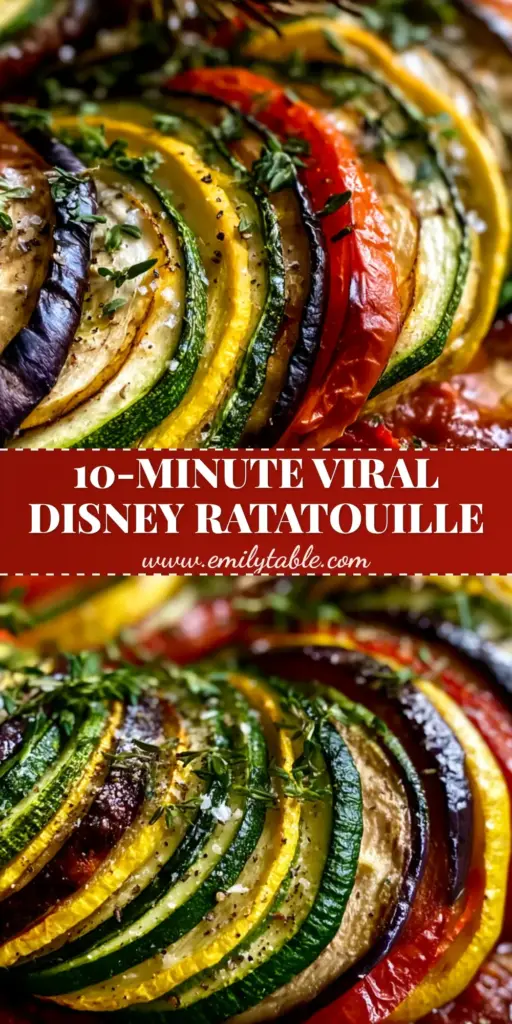
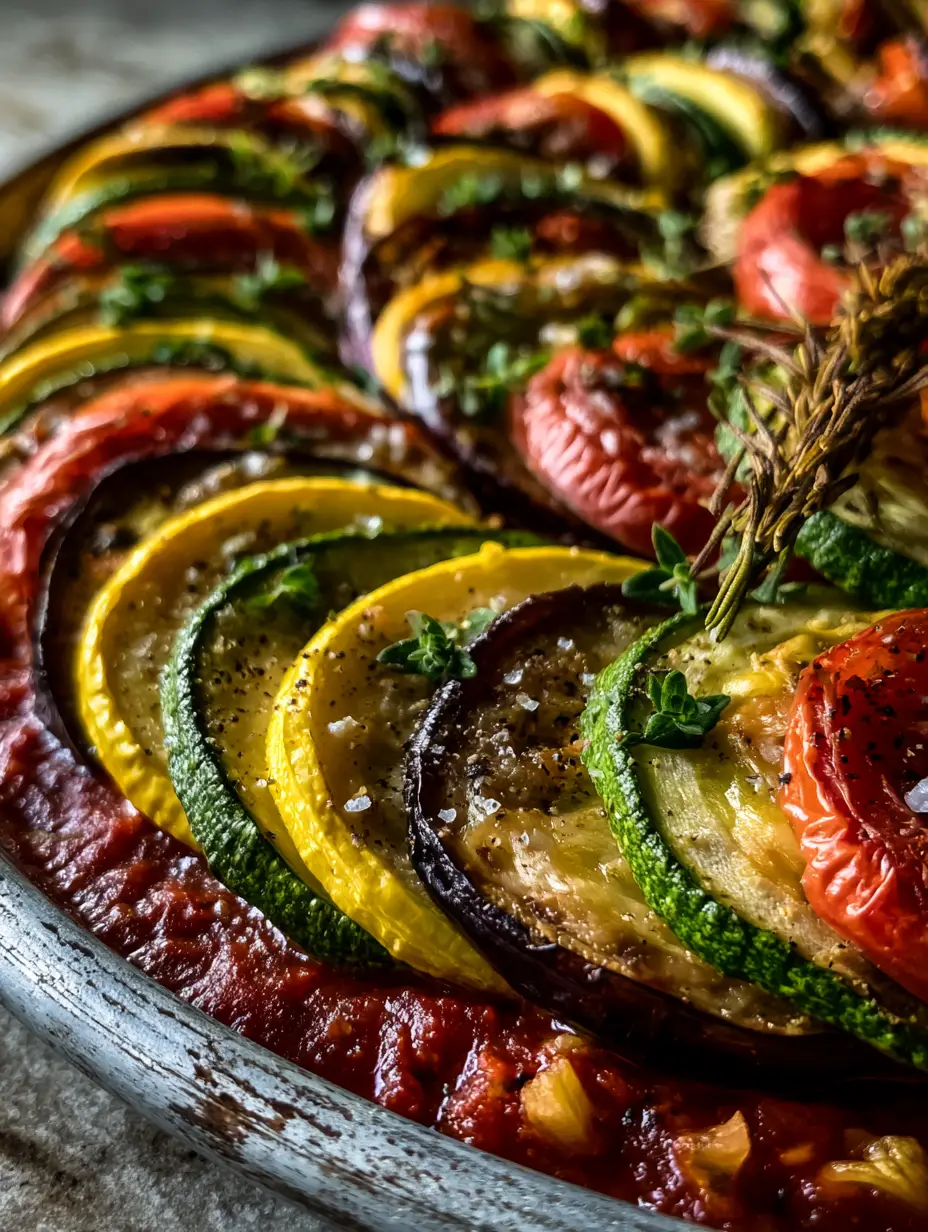
Ratatouille Recipe: The Ultimate Sheet Pan Disney-Style Vegetable Spiral
Ingredients
Equipment
Method
- Combine crushed tomatoes, minced roasted red peppers, and garlic. Spread evenly onto the sheet pan.
- Using a mandoline, slice zucchini, squash, eggplant, and Roma tomatoes into paper-thin circular discs.
- Arrange slices in a tight, overlapping spiral pattern starting from the outside edge of the pan.
- Brush with olive oil, sprinkle with sea salt, pepper, and thyme. Place the rosemary sprig in the center.
- Bake at 375°F (190°C) for 40 minutes. Broil for 3-5 minutes until edges are caramelized and charred.
Notes
Ensure the oven is fully preheated to achieve the tender-crisp texture.
Bring the Magic of Provence to Your Kitchen
Creating this Ratatouille recipe is a meditative process that rewards patience and precision. From the first slice of the mandoline to the final dusting of flaky sea salt, every step contributes to a dish that is as much a visual triumph as it is a culinary one. The combination of the thick roasted pepper base and the caramelized vegetable edges creates a flavor profile that is both rustic and refined.
We invite you to try this technique and see the difference that high-quality ingredients and professional “forensic” attention to detail can make. If you enjoyed this recipe, please leave a comment below and let us know how your spiral turned out! Don’t forget to share your beautiful creations and follow us on Pinterest for more culinary inspiration.