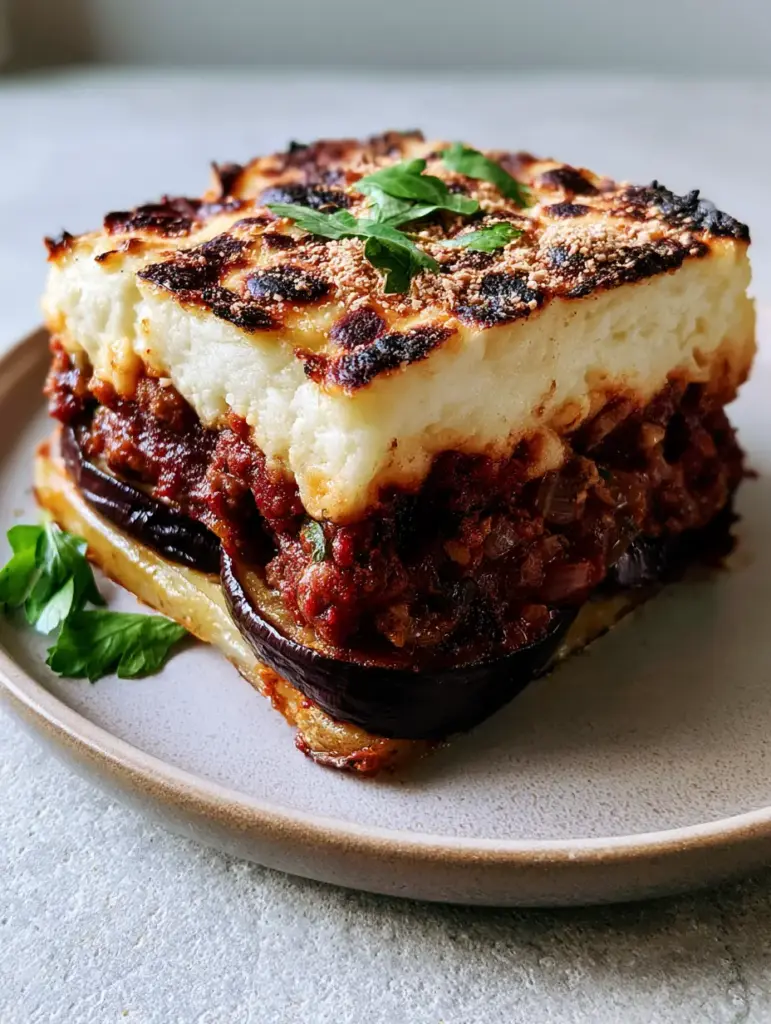
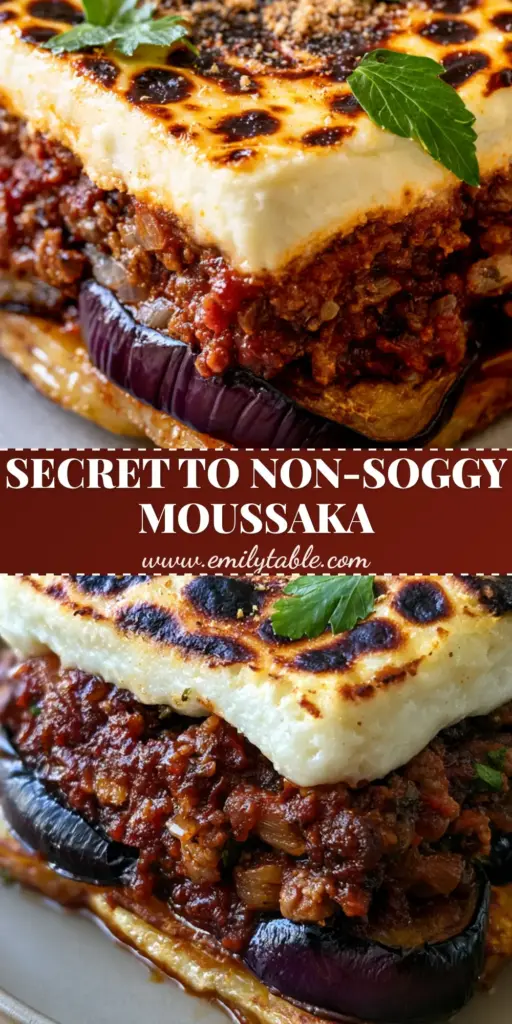
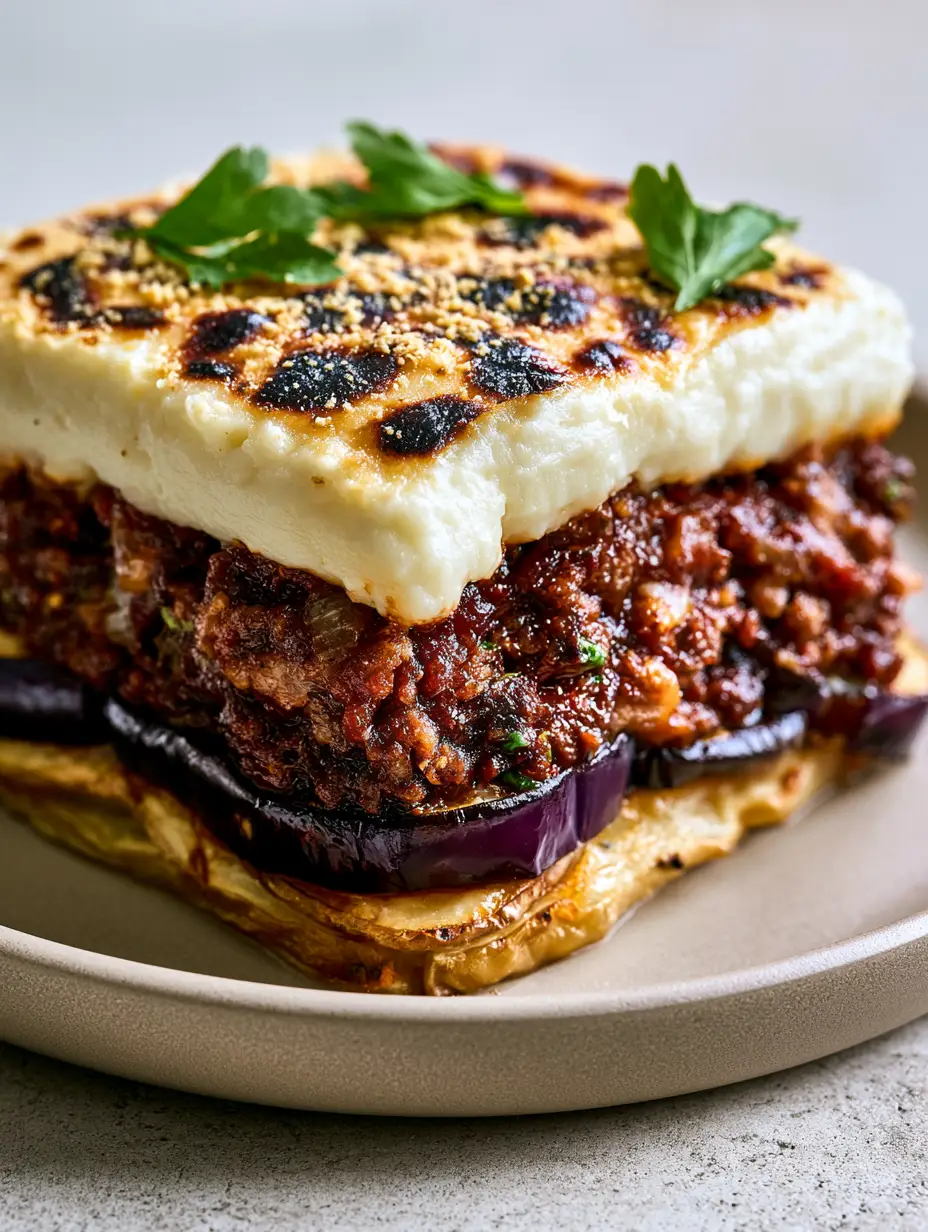
Greek Moussaka is widely considered the crown jewel of Hellenic cuisine, a towering architectural masterpiece of flavors and textures. This specific recipe recreates the iconic, high-end taverna presentation: a perfect square slice revealing distinct, colorful strata that promise a sensory journey in every bite.
From the golden foundation of roasted potatoes to the two-inch thick, pillowy bechamel cap, every element is designed for maximum impact. We move beyond simple home cooking into the realm of culinary precision, ensuring your kitchen smells of warm nutmeg and rich, simmering lamb ragù.
Whether you are hosting a formal dinner or craving a comforting weekend project, this Greek Moussaka delivers a professional-grade result. The contrast between the charred eggplant skins and the blistered “leopard spots” on the cheese crust creates a visual appeal that is as stunning as it is delicious.
The Architecture of an Authentic Greek Moussaka
- Structural Integrity: A base of oven-roasted potato slices provides a sturdy foundation that prevents the slice from collapsing on the plate.
- Charred Depth: Tender eggplant rounds with deep purple skins are charred to add a smoky complexity that cuts through the creamy topping.
- Vertical Height: A signature two-inch thick bechamel layer creates a luxurious, custard-like mouthfeel that defines the dish’s silhouette.
- Visual Contrast: The dark red lamb sauce flecked with herbs sits perfectly between the white cream and golden vegetables.
The Essential Components for Perfect Layers
Large Russet Potatoes: 2 lbs (907g). These are sliced into 1/4-inch rounds and roasted until golden to provide the essential structural base for your Greek Moussaka.
Globe Eggplants: 3 large (approx. 1.5kg). The deep purple skins are kept on for visual appeal, while the flesh is charred until tender to ensure a melt-in-your-mouth texture.
Ground Lamb: 1.5 lbs (680g). Traditional and rich, lamb provides the authentic flavor profile required for a dark, savory meat sauce that stands up to the thick bechamel.
Tomato Paste and Crushed Tomatoes: 1 cup (240ml) and 14 oz (400g). These create the “dark red” visual cue, providing a concentrated acidity that balances the richness of the fats.
Whole Milk: 4 cups (960ml). The liquid gold for our bechamel, ensuring a creamy, thick consistency that holds its shape when sliced.
Kefalotyri or Parmesan Cheese: 1.5 cups (150g). This salty, hard cheese is responsible for those iconic blistered leopard spots on the toasted crust.
Fresh Flat-Leaf Parsley: 1/2 cup (15g), chopped. Added both to the meat sauce and as a bright green garnish to contrast the warm tones of the bake.
Warm Spices: 1 tsp (2g) Nutmeg and 1 stick of Cinnamon. These “invisible” ingredients provide the aromatic backbone that identifies the dish as uniquely Greek.
Foundational Fats: 1/2 cup (120ml) Extra Virgin Olive Oil and 1/2 cup (115g) Unsalted Butter. Used for searing the vegetables and creating the roux for the thick white sauce.
Professional Tools for Precision Assembly
To achieve the sharp side-profile shown in professional photography, you will need a deep 9×13 inch (23x33cm) ceramic or glass baking dish. Avoid shallow pans, as they cannot accommodate the 2-inch thick bechamel layer.
A mandoline slicer is highly recommended for achieving perfectly uniform potato and eggplant rounds. Consistent thickness ensures that every vegetable layer cooks at the same rate, preventing raw centers or mushy spots.
Mastering the Art of the Layered Casserole
Prepping the Foundation: Golden Roasted Potatoes
Peel and slice your potatoes into 1/4-inch (6mm) rounds. Toss them with olive oil and a pinch of salt, then arrange them in a single layer on a baking sheet.
Roast at 400°F (200°C) for 20 minutes until they are golden-brown and slightly crisp at the edges. This step is crucial for flavor and prevents the Greek Moussaka from becoming soggy.
Achieving Tender Charred Eggplant Rounds
Slice the eggplants into 1/2-inch (12mm) rounds, keeping the purple skins intact. Brush both sides generously with olive oil and season with cracked black pepper.
Sear them in a hot pan or grill until deep char marks appear and the centers feel soft. The charred exterior adds a beautiful dark ring to the side profile of your final slice.
Simmering the Rich Lamb and Tomato Ragù
Sauté finely chopped onions and garlic in olive oil until translucent. Add the ground lamb, breaking it up with a wooden spoon until browned and caramelized.
Stir in the tomato paste, crushed tomatoes, cinnamon, and a splash of water. Simmer on low heat for 30 minutes until the sauce is thick and dark red, then fold in the fresh flat-leaf parsley.
Crafting the Iconic Two-Inch Thick Bechamel
Melt the butter in a heavy-bottomed saucepan and whisk in an equal amount of flour to form a roux. Gradually pour in the milk, whisking constantly to ensure no lumps form.
Cook until the sauce is thick enough to coat the back of a spoon heavily. Remove from heat and stir in half the cheese and a generous dusting of freshly grated nutmeg for that signature aroma.
Assembly and The Final Blistering Bake
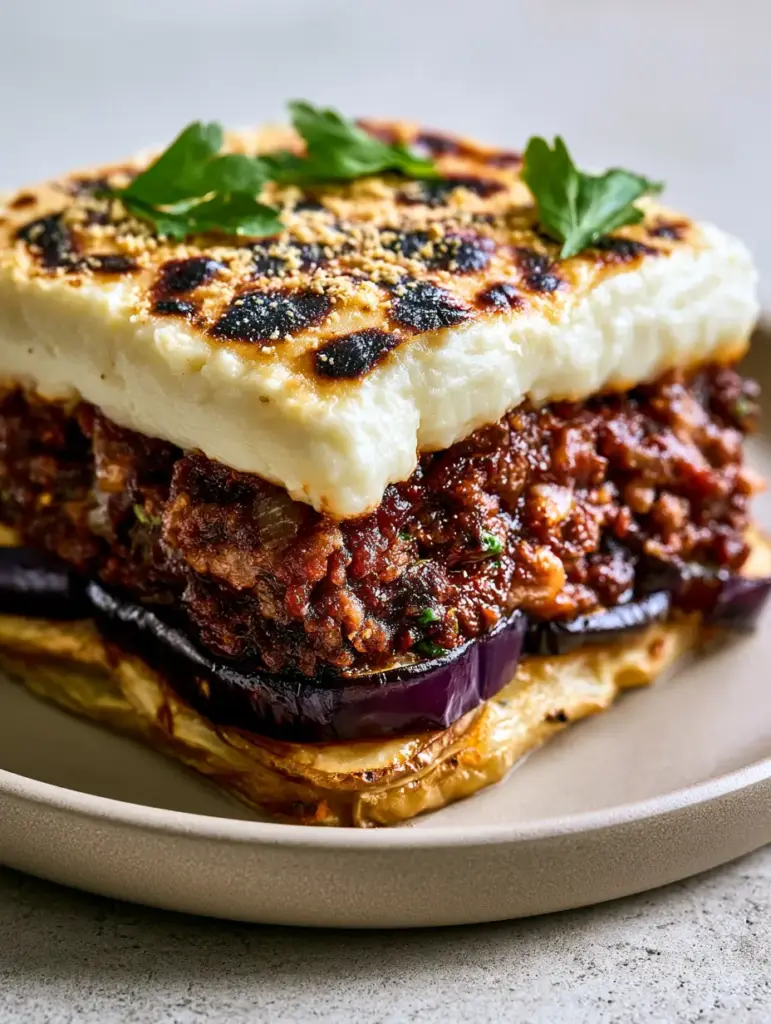
Layer the roasted potatoes in the bottom of your dish, followed by the charred eggplant rounds. Pour the thick meat sauce over the vegetables, smoothing it into an even layer.
Top with the bechamel, spreading it nearly to the rim of the dish to achieve that pillowy depth. Sprinkle the remaining cheese on top and bake at 375°F (190°C) for 45-50 minutes until the surface features dark golden-brown leopard spots.
Pro Tips for Restaurant-Quality Slices
- The Resting Rule: You must let the Greek Moussaka rest for at least 45 minutes before cutting. This allows the bechamel to set and the layers to bond, ensuring a perfect square slice.
- Salt the Eggplants: If your eggplants seem bitter, salt the slices and let them sit for 30 minutes to draw out moisture before charring.
- Whisk Aggressively: For the smoothest bechamel, use a balloon whisk and add the milk in small increments at the beginning.
- Visual Cues: Watch for the “leopard spots.” The cheese should not just be melted; it should be deeply toasted in patches for the best texture.
How to Store and Reheat Your Leftovers
Greek Moussaka actually tastes better the next day as the flavors continue to meld. Store leftovers in an airtight container in the refrigerator for up to 4 days.
To reheat, cover a slice with foil and bake at 350°F (175°C) until the center is hot. Avoid the microwave if possible, as it can make the eggplant layers slightly rubbery.
Classic Pairings for a Mediterranean Feast
Serve this hearty casserole with a crisp Greek salad featuring feta and kalamata olives. The acidity of the salad perfectly cuts through the richness of the lamb and cream.
If you enjoy layered Mediterranean dishes, you might also like our vegetarian stuffed peppers for a lighter alternative. For those who love bold, spiced meats, consider trying a side of papas con chorizo during your next brunch. If you have leftover lamb sauce, it works beautifully as a topping for taco salad bowls with a Mediterranean twist.
Frequently Asked Questions
Yes, ground beef is a common substitute. However, for the most authentic flavor and the ‘dark red’ sauce appearance described, ground lamb provides a richer, traditional Mediterranean profile.
For this visual blueprint, keep the skins on. The deep purple edges provide a beautiful contrast against the white bechamel and red meat sauce in each slice.
The secret is using a deep baking dish (at least 3 inches deep) and increasing the ratio of milk and roux. This recipe uses 4 cups of milk to ensure a towering, custard-like topping.
Traditional Kefalotyri or Graviera are best due to their high melting point and salt content. If unavailable, a high-quality aged Parmesan or Pecorino Romano will achieve the same golden-brown spots.
Sogginess usually comes from excess moisture in the eggplants. To prevent this, ensure you roast or char the eggplants thoroughly before assembly, and always let the dish rest for 45 minutes to allow liquids to be reabsorbed.
The Definitive Greek Moussaka Recipe
Greek Moussaka: The Ultimate Traditional Layered Eggplant and Lamb Casserole
Ingredients
Equipment
Method
- Arrange potato slices on a tray with olive oil and salt. Roast at 400°F (200°C) for 20 minutes until golden.
- Brush eggplant rounds with oil and sear in a hot pan until charred marks appear and skins remain deep purple.
- Brown lamb with onions, garlic, and tomato components. Simmer until thick and dark red.
- Create a roux with butter and flour, whisk in milk until a 2-inch thick pillowy consistency is achieved. Season with nutmeg.
- Layer potatoes, eggplant, meat, and bechamel. Top with cheese and bake at 375°F (190°C) until leopard spots form on the crust.
Notes
Keep the eggplant skins on for traditional visual appeal and structural integrity.
Closing & Call to Action
Mastering the Greek Moussaka is a rite of passage for any serious home cook. The combination of textures—from the tender vegetables to the blistered, cheesy crust—makes it an unforgettable dining experience.
If you enjoyed this deep dive into traditional Greek flavors, please leave a comment below and let us know how your layers turned out! Don’t forget to save this recipe to your “Mediterranean Favorites” board on Pinterest.