There is a specific culinary magic that happens when high-heat searing meets the deep, complex acidity of a premium balsamic reduction. This Balsamic Flank Steak is the embodiment of that synergy, presenting a dish that looks as if it stepped off the pages of a high-end culinary magazine.
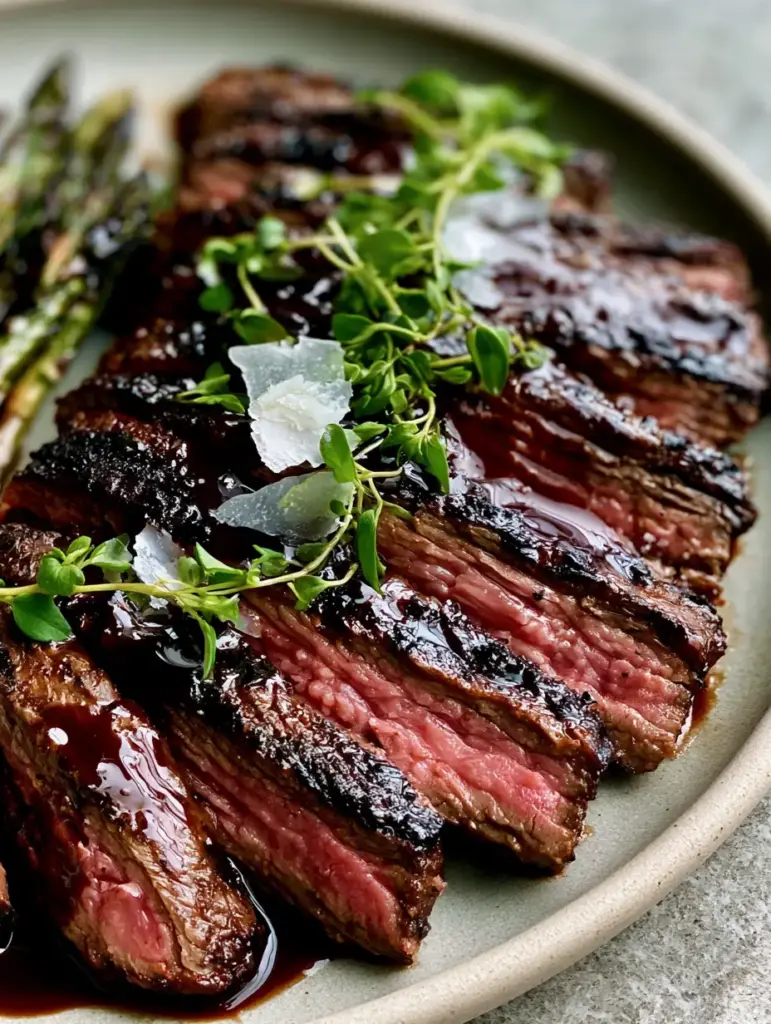
Imagine a premium ceramic platter holding succulent, perfectly sliced beef, each piece boasting a vibrant pink medium-rare center. The edges are expertly seared, providing a textural contrast to the thick, glossy, dark mahogany-colored balsamic glaze that clings to every fiber of the meat.
To finish, we sprinkle large, translucent Maldon flaky sea salt crystals and vibrant micro-thyme leaves across the top, catching the light and promising a burst of flavor in every bite. Served alongside charred, blistered green asparagus, this recipe is a masterclass in balancing acid, salt, and fat.
Why This Glazed Steak Recipe Dominates Your Dinner Rotation
- Visual Masterpiece: The contrast between the dark mahogany glaze, the pink beef, and the bright green micro-thyme creates a restaurant-quality presentation.
- Textural Harmony: You get the crunch of flaky sea salt, the snap of blistered asparagus, and the tender, succulent mouthfeel of medium-rare flank steak.
- Complex Flavor Profile: The balsamic reduction provides a syrupy sweetness and sharp tang that cuts through the rich, savory beef fat.
- Efficiency Meets Elegance: Despite its high-end appearance, this dish relies on foundational techniques that take less than 30 minutes to execute.
The Essential Elements for a Perfect Balsamic Flank Steak
To achieve the specific visual and flavor profile described in our blueprint, every ingredient serves a dual purpose: structural integrity and sensory appeal. We are looking for high-quality proteins and specific garnishes that elevate the dish from home-cooking to professional-grade.
2 lbs (907g) Flank Steak: Choose a cut with consistent thickness to ensure even cooking and that beautiful medium-rare center. This lean but flavorful cut is ideal for absorbing marinades and holding a heavy glaze.
1 cup (240ml) Balsamic Vinegar of Modena: This is the foundation of our dark mahogany glaze. A quality vinegar ensures the reduction is syrupy and complex rather than just acidic.
2 tbsp (30g) Brown Sugar or Honey: While balsamic reduces on its own, a touch of sugar aids the caramelization process. This helps achieve that thick, glossy finish that catches the light on the platter.
2 tbsp (30ml) High-Smoke Point Oil: Use avocado or grapeseed oil for the sear. You need high heat to create those distinct, dark charred grill marks without burning the meat.
1 lb (454g) Fresh Green Asparagus: Look for medium-thickness spears. These will blister perfectly on the outside while remaining tender-crisp on the inside.
1 tsp (5g) Maldon Flaky Sea Salt: These translucent crystals are vital for the “Forensic Visual Accuracy” of the dish. They provide a clean salt burst and a stunning visual contrast against the dark glaze.
1 tbsp (4g) Fresh Micro-Thyme Leaves: These tiny, vibrant green leaves offer a subtle earthy aroma. They are the final “pop” of color that brings the entire plate to life.
Professional Culinary Tools You Will Need
To replicate the seared beef edges and charred grill marks seen in our visual blueprint, you need the right equipment. A heavy-bottomed cast iron skillet or a high-quality grill pan is non-negotiable for heat retention.
You will also need a sharp chef’s knife for slicing the steak against the grain. Slicing at a slight bias is what creates that beautiful presentation where the pink interior is prominently displayed.
A small saucepan is required for the balsamic reduction. Using a wide-bottomed pan will speed up the evaporation process, allowing the vinegar to thicken into that mahogany-colored syrup more efficiently.
Mastering the Sear: Step-by-Step Balsamic Flank Steak
Step 1: The Mahogany Reduction Strategy
In a small saucepan, combine the balsamic vinegar and brown sugar over medium heat. Bring the mixture to a gentle simmer, avoiding a hard boil which can make the vinegar bitter.
Allow the liquid to reduce by half, which usually takes about 10-12 minutes. You are looking for a “nappe” consistency—the glaze should be thick enough to coat the back of a spoon and have a glossy, dark mahogany sheen.
Step 2: Preparing the Steak for the Heat
Pat the flank steak completely dry with paper towels. Moisture is the enemy of a good sear; if the meat is wet, it will steam rather than develop those dark charred grill marks.
Season generously with cracked black pepper and a small amount of kosher salt. Save the Maldon sea salt for the final plating to maintain those distinct crystal shapes.
Step 3: Achieving the Perfect Medium-Rare Sear
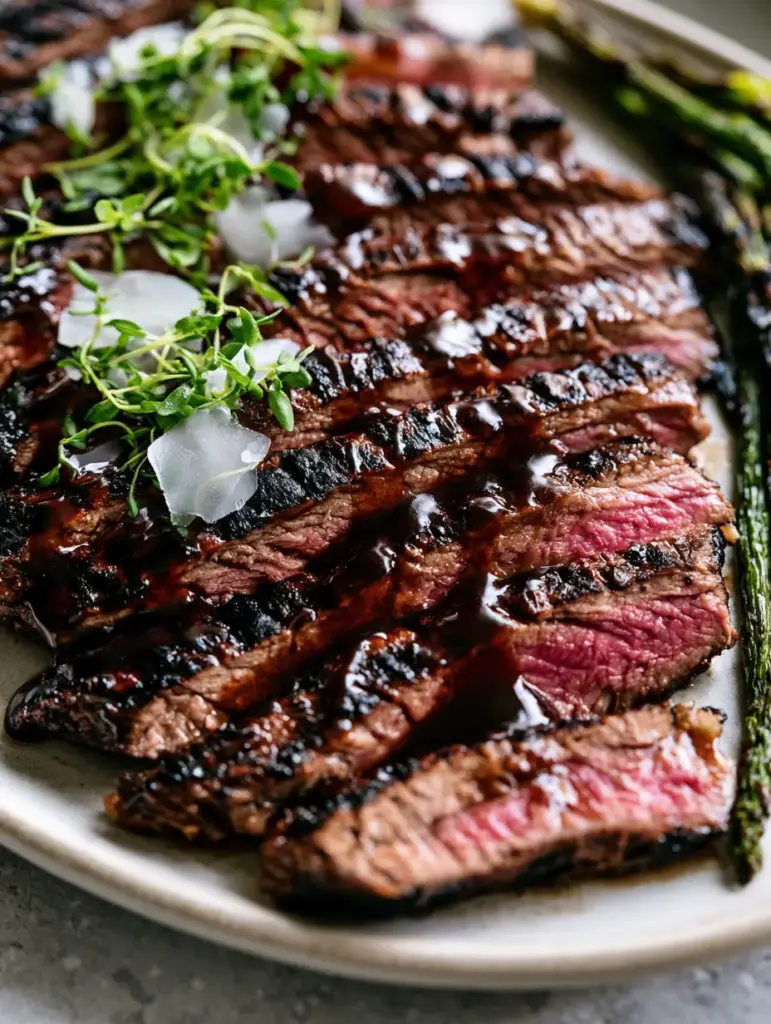
Heat your cast iron skillet over high heat until the oil is shimmering and just starting to wisps of smoke. Lay the steak into the pan, pressing down slightly to ensure maximum contact.
Sear for 4-5 minutes per side. You are looking for seared beef edges that are dark and crisp. Use a meat thermometer to pull the steak when it reaches 130°F (54°C) for a true medium-rare pink center.
Step 4: Blistering the Asparagus
While the steak rests, toss the asparagus spears into the same hot skillet. The residual beef fat and high heat will blister the skins in about 3-4 minutes.
Turn them occasionally until they have dark charred spots but remain vibrant green. This “blistered” look provides the essential color pop mentioned in our visual prompt.
Step 5: The Forensic Plating Technique
Slice the rested steak against the grain into 1/2-inch (1.25cm) thick slices. Arrange them on a premium ceramic platter, slightly overlapping to show off the succulent pink interior.
Generously drizzle the thick balsamic reduction over the center of the slices. Finish with a careful scattering of Maldon flaky sea salt and the bright green micro-thyme leaves.
Expert Tips for a Flawless Presentation
- The Grain Direction: Flank steak has long, distinct muscle fibers. Always slice perpendicular to these fibers to ensure the meat is tender rather than chewy.
- Resting is Vital: Allow the steak to rest for at least 10 minutes before slicing. This allows the juices to redistribute, ensuring the “juicy medium-rare” look without a puddle of liquid on the plate.
- Glaze Timing: If your glaze gets too thick as it cools, add a teaspoon of water and whisk over low heat to regain that glossy, pourable texture.
- Temperature Control: Ensure your steak is at room temperature for 30 minutes before cooking. This helps achieve that consistent pink center from edge to edge.
Flavor Pairings and Internal Link Opportunities
This Balsamic Flank Steak is a bold main course that pairs beautifully with a variety of sides. If you want to keep the meal vibrant and fresh, consider serving it alongside our roasted marry me broccoli, which complements the acidity of the balsamic.
For a heartier meal, the savory notes of the steak work wonders when paired with garlicky yuca con mojo. The starchiness of the yuca is a perfect vehicle for any extra balsamic glaze that wanders across the plate.
If you enjoy the smoky flavors of the grill, you might also love our Peruvian grilled chicken for your next outdoor gathering. And if you find yourself with leftover steak, it makes an incredible protein addition to fresh taco salad bowls.
Finally, for those who love rich, reduction-style sauces, our creamy chicken marsala pasta offers a similar depth of flavor using a wine-based reduction.
Common Questions About Glazed Flank Steak
Yes! You can reduce the balsamic vinegar up to a week in advance. Store it in a glass jar at room temperature. If it thickens too much, gently warm it with a splash of water.
Skirt steak or flat iron steak are excellent substitutes. Both have a similar texture to flank steak and will hold the thick balsamic reduction glaze just as well.
The two most important factors for tenderness are cooking to a medium-rare internal temperature (130-135°F) and slicing thinly against the grain to break up the long muscle fibers.
A heavy cast iron skillet is actually preferred by many chefs. It provides a more consistent surface for the seared beef edges and helps develop a deep, mahogany crust.
Use high heat and a small amount of oil. The goal is to let the spears sit undisturbed for a minute at a time to create dark charred spots while keeping the inside tender-crisp.
The Ultimate Balsamic Flank Steak Recipe
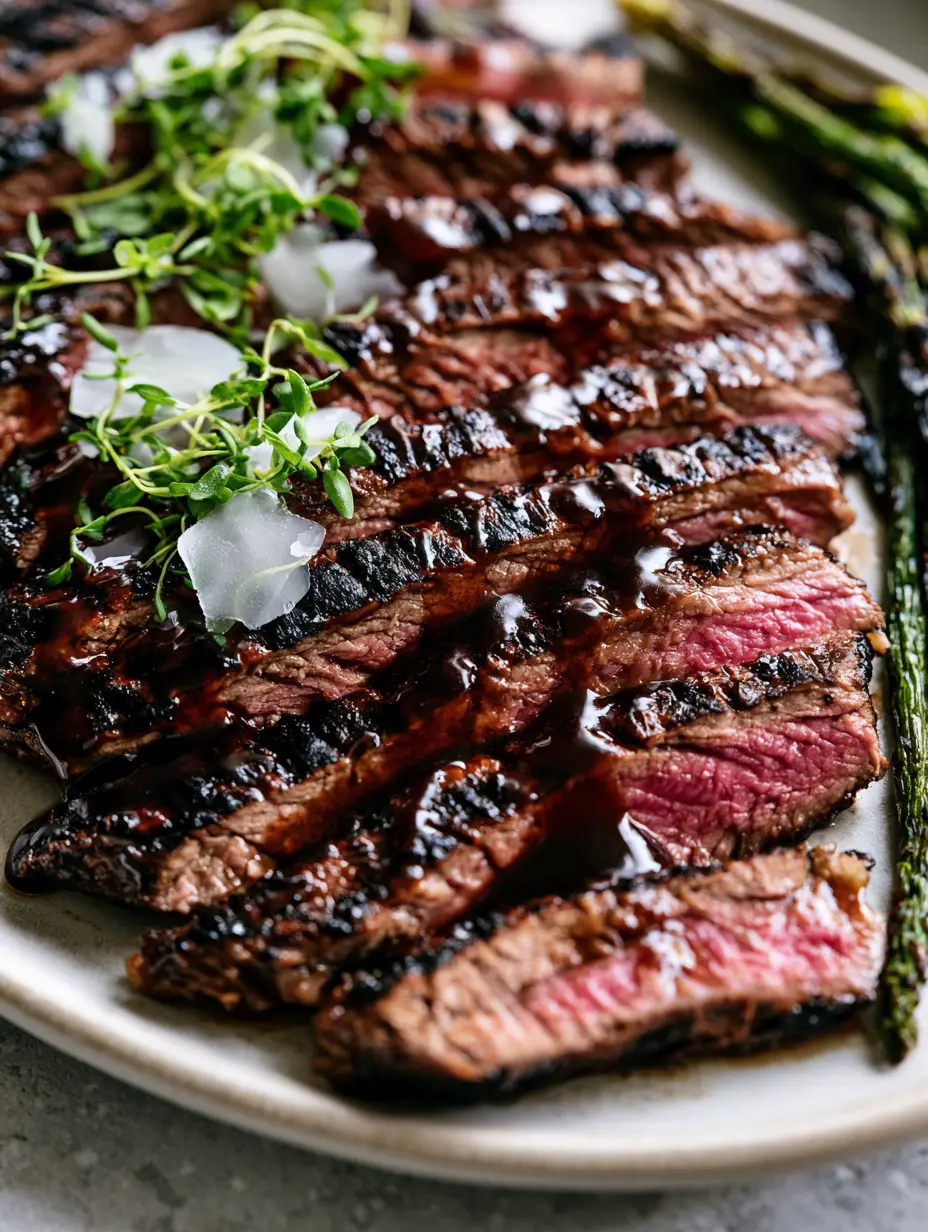
Balsamic Flank Steak with Glossy Mahogany Glaze and Blistered Asparagus
Ingredients
Equipment
Method
- Combine 1 cup (240ml) balsamic vinegar and 2 tbsp (30g) brown sugar in a saucepan. Simmer over medium heat for 10-12 minutes until reduced by half and thick enough to coat a spoon.
- Heat 2 tbsp (30ml) oil in a cast iron skillet over high heat. Sear the flank steak for 4-5 minutes per side until dark charred grill marks and seared beef edges form.
- Remove steak to rest. Add asparagus to the same hot pan and cook for 3-4 minutes until blistered and tender-crisp.
- Slice steak against the grain. Drizzle with the mahogany glaze, then top with Maldon sea salt and micro-thyme leaves.
Notes
Use a high smoke point oil to avoid bitter flavors during the high-heat sear.
Closing Thoughts and Your Culinary Journey
Mastering the Balsamic Flank Steak is about more than just cooking meat; it is about understanding the balance of textures and visual cues. From the charred edges of the beef to the translucent shimmer of the sea salt, every detail contributes to a superior dining experience.
We invite you to share your results and tag us in your photos! If you enjoyed this recipe, please leave a comment below and share it with your fellow home cooks. For more visual inspiration and recipe galleries, follow Emily_Table on Pinterest.