There is nothing quite like the vibrant, sun-drenched flavors of an authentic Mexican Shrimp Ceviche enjoyed on a warm afternoon. This recipe captures the essence of coastal Mexico, bringing together the bright acidity of fresh lime juice with the succulent sweetness of perfectly cured shrimp. Whether you are hosting a summer soirée or looking for a light, high-protein lunch, this dish is a sensory explosion of color and texture.
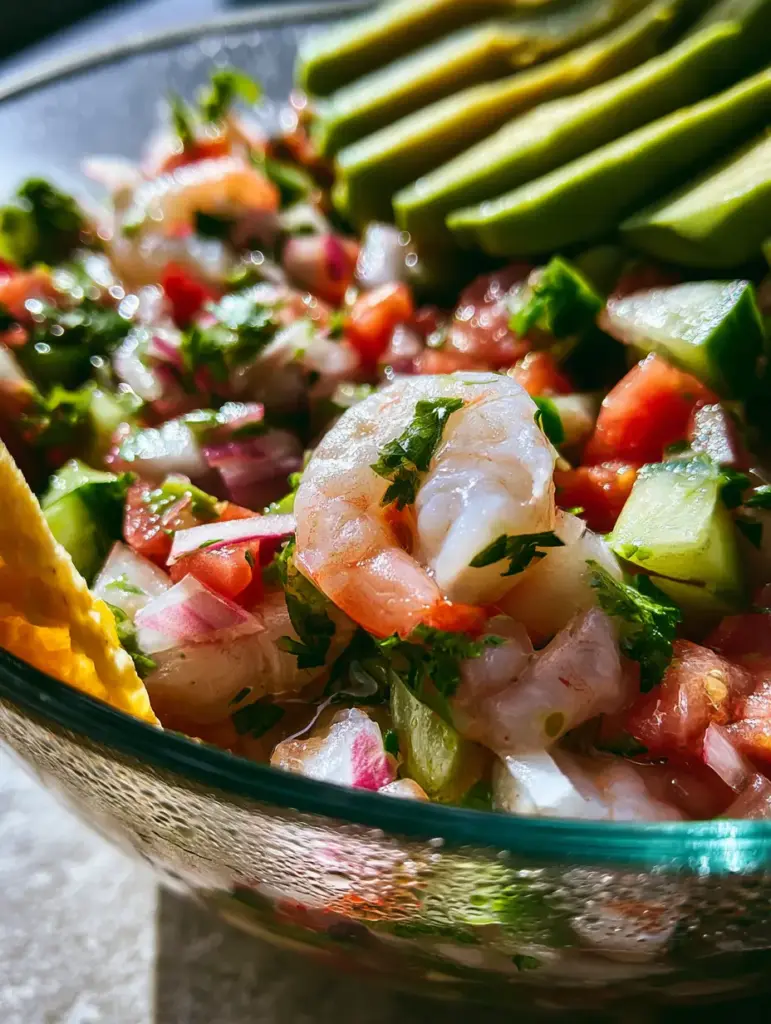
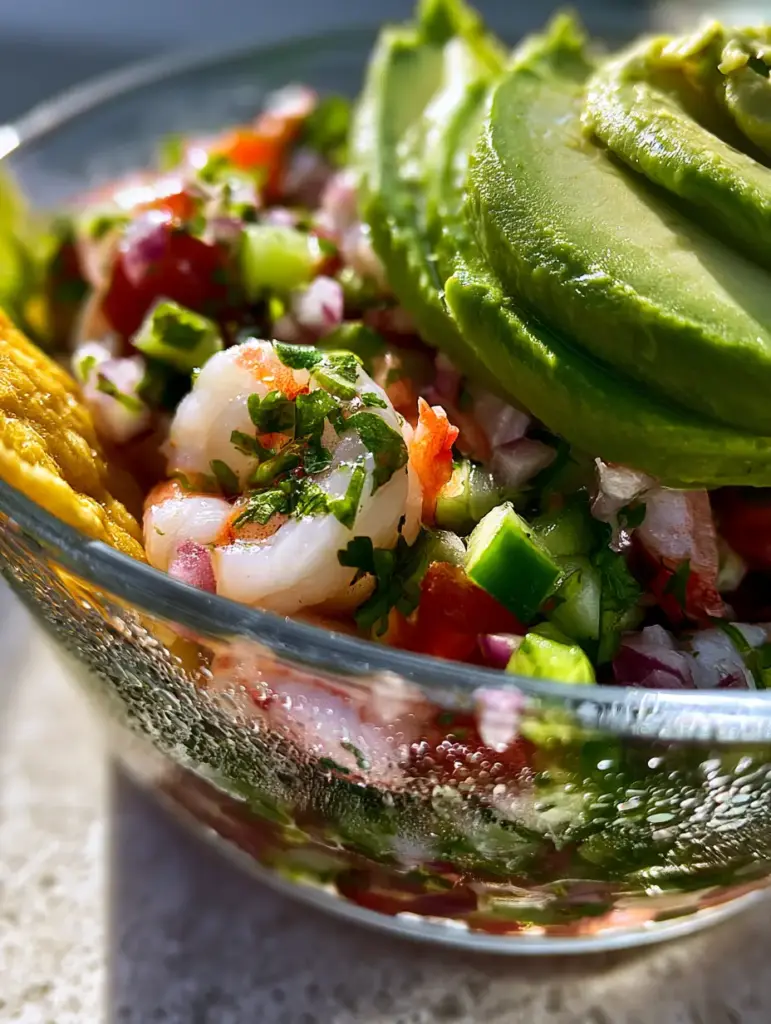
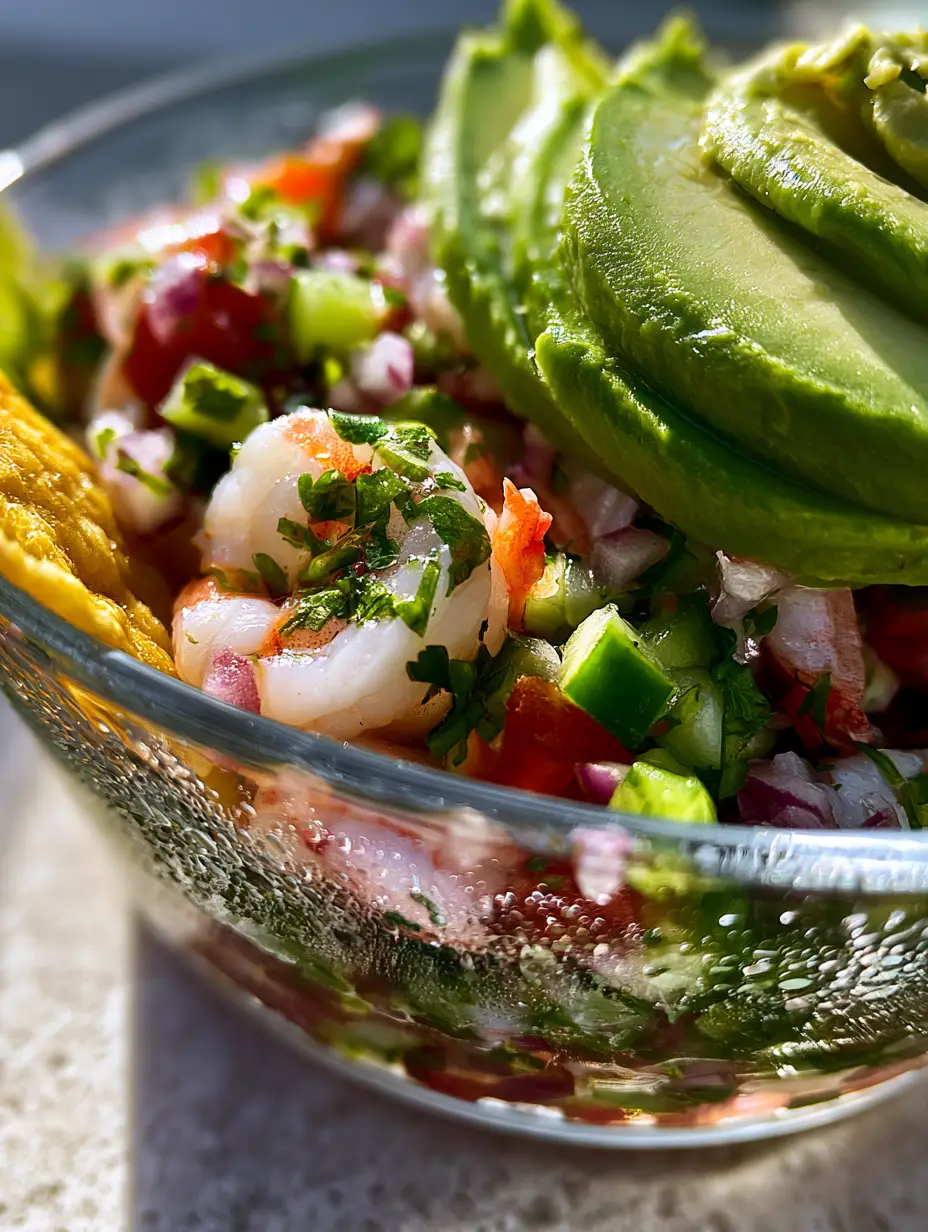
Inspired by the raw food textures found in high-end coastal palapas, this Mexican Shrimp Ceviche is as visually stunning as it is delicious. Imagine a glass bowl overflowing with opaque white shrimp, glistening under a fresh lime juice glaze, punctuated by ruby red tomatoes and emerald green cucumbers. Every bite offers a satisfying crunch from a golden corn tostada, balanced by the buttery richness of Hass avocado.
This isn’t just a recipe; it’s a deep dive into the culinary science of acid-curing. We will guide you through the process of transforming raw seafood into a tender, flavor-packed delicacy without ever turning on the stove. If you enjoy bright, lime-forward dishes, you might also find yourself craving our creamy Mexican street corn salad as the perfect side pairing.
The Irresistible Appeal of Authentic Coastal Ceviche
- Perfectly Opaque Texture: Learn the exact timing to achieve shrimp that are tender and “cooked” through citric denaturation, avoiding the rubbery texture of over-curing.
- Vibrant Color Palette: This dish features a rainbow of ingredients, from the deep purple of red onions to the brilliant green of minced jalapeños.
- Crisp & Creamy Contrast: The marriage of crunchy cucumber cubes and thick, creamy Hass avocado slices creates a mouthfeel that is second to none.
- Sun-Drenched Freshness: Utilizing a fresh lime juice glaze ensures every ingredient stays hydrated and glistening for that perfect macro-photo finish.
The Essential Components for a Vibrant Coastal Ceviche
Creating an elite Mexican Shrimp Ceviche requires high-quality, fresh ingredients. Because the “cooking” happens through acid rather than heat, the integrity of your seafood and produce is paramount.
Raw Shrimp (1 lb / 450g): Choose high-quality, wild-caught shrimp that have been peeled, deveined, and tails left on or off based on preference. For this recipe, we look for them to turn an opaque pearlescent white with blushing pink tails after their citrus bath.
Fresh Lime Juice (1 cup / 240ml): You will need approximately 8-10 juicy limes. The citric acid is the “heat” source that denatures the protein in the shrimp, making it safe and delicious to eat.
Roma Tomatoes (3 medium / 250g): These are preferred for their firm flesh and lower water content. Dicing them into ruby red cubes adds structure and a subtle sweetness to the bowl.
English Cucumber (1 large / 300g): We use English cucumbers for their thin skin and small seeds. These provide the “crisp emerald cubes” mentioned in our visual blueprint, offering a necessary cooling element.
Red Onion (1/2 medium / 100g): Finely diced red onion provides a sharp, pungent bite and a beautiful purple contrast against the white shrimp. Soaking them briefly in the lime juice mellows their raw intensity.
Fresh Cilantro (1/2 cup / 15g): Chopped fresh cilantro is the herbaceous backbone of Mexican Shrimp Ceviche. Use both leaves and tender stems for maximum flavor extraction.
Jalapeño (1-2 peppers / 30g): Minced jalapeño adds a controlled heat. Remove the seeds and membranes if you prefer a milder experience, or leave them in for a spicy kick.
Hass Avocado (1 large): Perfectly ripe Hass avocado should be sliced into thick, creamy wedges. This adds a luxurious fat content that balances the sharp acidity of the lime.
Golden Corn Tostadas: These provide the essential vessel for your ceviche. Their toasted corn flavor and rigid structure are perfect for scooping up the citrus-cured goodness.
Sea Salt & Black Pepper (to taste): Essential for drawing out the natural juices of the vegetables and enhancing the sweetness of the shrimp.
Professional Tools for Culinary Precision
To achieve the macro-level precision seen in professional food photography, you will need a few specific kitchen tools. A sharp Chef’s knife is non-negotiable for achieving those uniform “emerald cubes” and “ruby dice.”
A large glass or ceramic mixing bowl is vital. Avoid metal bowls, as the high acidity of the lime juice can react with certain metals, imparting a tinny, metallic taste to your delicate Mexican Shrimp Ceviche. Finally, a citrus juicer will save your hands and ensure you extract every last drop of “liquid gold” from your limes.
The Science of Citrus-Curing: Step-by-Step Excellence
Preparing the Shrimp Foundation
Start by dicing your raw shrimp into 1/2-inch (1.25cm) pieces. If you are using very small shrimp, you can leave them whole. Place them in your glass bowl and toss with 1 tsp (5g) of sea salt. This salt begins to break down the proteins even before the acid is added.
The Essential Lime Bath
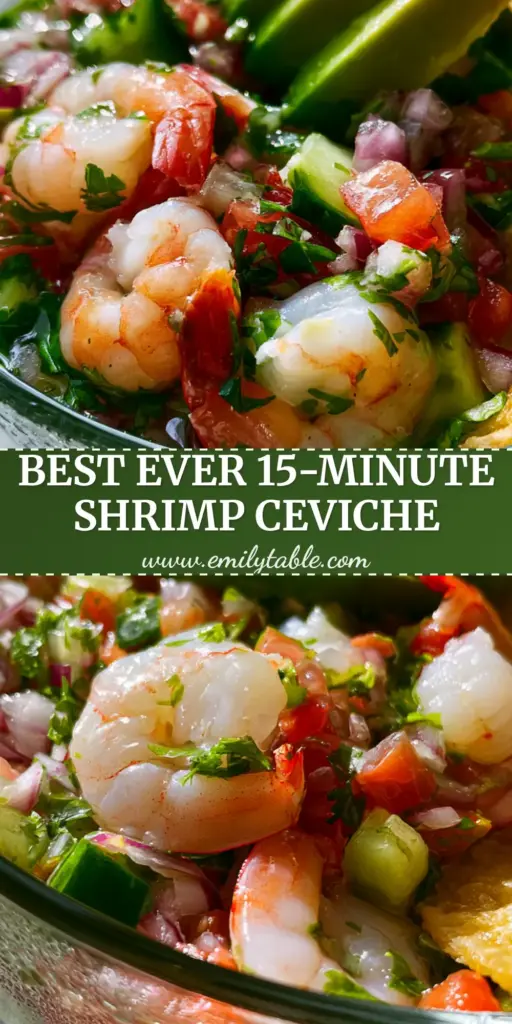
Pour the fresh lime juice (1 cup / 240ml) over the shrimp until they are completely submerged. Cover the bowl with plastic wrap and refrigerate. Watch for the visual cue: the shrimp will transition from translucent grey to a solid, opaque white with pink highlights. This typically takes 15 to 30 minutes depending on the size of the dice.
Precision Dicing for Texture
While the shrimp “cooks,” prepare your vegetables. It is crucial to dice the red onion, cucumber, and tomatoes into uniform sizes—roughly 1/4-inch (0.6cm) cubes. This ensures that every spoonful of Mexican Shrimp Ceviche contains a perfect distribution of flavor. If you find yourself enjoying the process of dicing fresh summer produce, you might also love making a refreshing orzo salad for your next gathering.
The Final Flavor Integration
Once the shrimp are opaque, do not drain the juice! This “Leche de Tigre” (tiger’s milk) is packed with flavor. Fold in the diced tomatoes, cucumber, red onion, minced jalapeño, and chopped cilantro. Toss gently to ensure every piece is glistening with the fresh lime juice glaze. Season with additional salt and black pepper to taste.
The Art of the Presentation
Just before serving, top the mixture with thick slices of Hass avocado. This prevents the avocado from oxidizing or breaking down into the liquid. Partially submerge a crispy, golden corn tostada into the side of the glass bowl for that handheld, authentic feel. The condensation on the outside of the glass bowl serves as a sensory cue for how cold and refreshing this dish truly is.
Expert Tips for Success
- Quality Matters: Since the shrimp isn’t heated, buy “sushi-grade” or “frozen-at-sea” shrimp to ensure safety and the best possible texture.
- Don’t Over-Marinate: Leaving shrimp in lime juice for longer than an hour will cause the proteins to become tough and chalky. Aim for the “sweet spot” of 20-30 minutes.
- Cold is Key: Serve your Mexican Shrimp Ceviche in chilled glass bowls. The droplets of cold condensation aren’t just for aesthetics; they indicate the dish is at its peak refreshing temperature.
- Balance the Acid: If your limes are particularly tart, a tiny splash of olive oil or a pinch of sugar can help round out the flavors without losing the signature zing.
Shelf Life and Storage Considerations
Mexican Shrimp Ceviche is best enjoyed immediately. The texture is at its peak within the first hour of assembly. If you have leftovers, they can be stored in an airtight container in the refrigerator for up to 24 hours.
Please note that the shrimp will continue to “cook” in the acid as they sit, meaning they may become firmer the next day. We do not recommend freezing ceviche, as the delicate cellular structure of the vegetables will collapse upon thawing, resulting in a mushy texture. For more meal-prep friendly options, consider an easy Italian pasta salad which holds up beautifully over several days.
What to Serve With This Coastal Delight
This dish is a star on its own, but it pairs beautifully with other Mexican-inspired appetizers. Serve it alongside a bowl of warm Mexican street corn dip for a contrast in temperatures. If you are looking for a more substantial meal, a side of classic pasta salad provides a neutralizing starch that complements the high-acid profile of the ceviche.
For drinks, a cold Mexican lager with a lime wedge or a crisp Sauvignon Blanc will elevate the citrus notes of the dish. The high-contrast highlights of the lime juice glaze under sun-drenched lighting make this the ultimate “outdoor dining” centerpiece.
Common Questions About Shrimp Ceviche
Yes, but ensure they are high-quality and fully thawed in the refrigerator before starting. Frozen-at-sea shrimp are often safer for raw applications as the freezing process kills certain parasites.
Look for a visual color change. The shrimp should transform from translucent and grey to a solid, pearlescent white with vibrant pink tails. It should feel firm to the touch, not squishy.
For small diced shrimp, 15 to 30 minutes is the sweet spot. If you leave them in the acid for more than 45-60 minutes, the shrimp will become overly firm and develop a chalky, rubbery texture.
Technically, no heat is used, but the shrimp is ‘cooked’ through a chemical process called denaturation. The citric acid in the lime juice changes the protein structure, making the shrimp firm and opaque, similar to heat-cooking.
Mexican ceviche typically features smaller diced seafood, often includes tomatoes and cucumbers, and is served on crispy tostadas. Peruvian ceviche usually has larger chunks of fish, uses corn on the cob (choclo), and sweet potatoes.
The Ultimate Mexican Shrimp Ceviche Recipe
Mexican Shrimp Ceviche: The Ultimate Refreshing Coastal Masterpiece
Ingredients
Equipment
Method
- Place the diced raw shrimp in a large glass bowl and toss with 1 tsp (5g) of sea salt.
- Pour the fresh lime juice (1 cup / 240ml) over the shrimp until completely submerged. Cover and refrigerate for 15-30 minutes until shrimp are opaque white with pink tails.
- Once cured, add the diced tomatoes, cucumber, red onion, jalapeño, and cilantro directly into the bowl with the shrimp and lime juice.
- Toss gently to ensure a glistening glaze. Taste and add salt or black pepper as needed.
- Top with thick slices of Hass avocado and serve immediately with golden corn tostadas.
Notes
Do not over-cure the shrimp beyond 45 minutes or they will become rubbery.
Bring the Taste of the Coast to Your Kitchen
Now that you have mastered the forensic details of an elite Mexican Shrimp Ceviche, it’s time to get dicing! This dish is a testament to how simple ingredients, when treated with culinary logic and precision, can create something truly extraordinary. The combination of opaque, citrus-cured shrimp and the crunch of a golden corn tostada is a summer staple you’ll return to again and again.
If you enjoyed this recipe, please leave a comment below and let us know how your curing process went! Don’t forget to sign up for our newsletter for more professional-grade recipes and share this post to your favorite food boards on Pinterest so you never lose track of this coastal classic.