There is a specific kind of magic that happens when small, rice-shaped pasta meets the vibrant, sun-drenched flavors of the Mediterranean. This orzo salad isn’t just a side dish; it is a masterclass in texture and visual brilliance, designed to be the centerpiece of your summer table.
Every grain of pasta is coated in a shimmering, glossy lemon-herb vinaigrette that catches the light perfectly. We’ve balanced the creamy weight of rustic feta crumbles against the sharp snap of Persian cucumbers and the briny punch of Kalamata olives.
Whether you are prepping for a high-end garden party or a simple weekday lunch, this recipe delivers a professional-grade aesthetic. It looks as though it was plucked straight from a high-quality social media feed, glowing with natural morning daylight and vibrant, distinct layers of fresh produce.
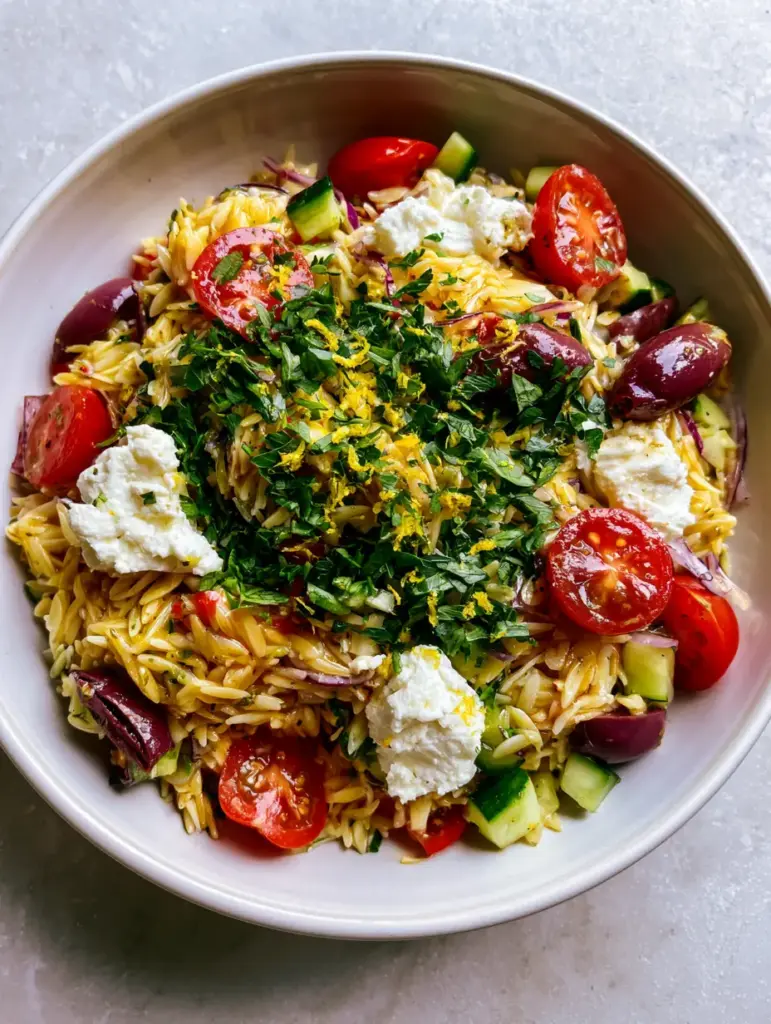
Why This Vibrant Mediterranean Bowl Redefines Freshness
- Textural Harmony: We achieve a perfect al dente bite in the orzo, contrasted by the crunch of skin-on cucumbers and the juice of halved cherry tomatoes.
- Glossy Visuals: The dressing is engineered to create a shimmering coat that doesn’t soak in and disappear, keeping the salad looking fresh for hours.
- Balanced Brine: The combination of creamy feta and purple Kalamata olives provides a sophisticated saltiness that offsets the bright acidity of the lemon zest.
- Aesthetic Appeal: With vibrant reds, deep purples, and bright greens, this dish is a “handheld smartphone photo” dream for any home cook.
The Foundation: Essential Ingredients for the Perfect Orzo Salad
Dried Orzo Pasta: You’ll need 1 lb (450g) of high-quality durum wheat orzo. This small pasta shape, also known as risoni, acts as the structural base, providing a satisfying chew that mirrors the size of the chopped vegetables.
Creamy Feta Cheese: 6 oz (170g) of block feta, crumbled by hand into rustic, uneven pieces. Avoid pre-crumbled varieties, which are often coated in anti-caking agents that dull the creamy texture and visual shine.
Persian Cucumbers: 3-4 small (approx. 300g) cucumbers, diced with the skin on. Persian varieties have thinner skins and fewer seeds, ensuring a concentrated “snap” in every mouthful without the watery mess of larger slicing cucumbers.
Cherry Tomatoes: 1 pint (285g) of bright red cherry tomatoes, halved lengthwise. Their internal juices mingle with the vinaigrette, adding a natural sweetness that balances the lemon’s tartness.
Kalamata Olives: 1/2 cup (75g) of pitted olives, halved. These purple gems provide a meaty texture and a deep, fermented saltiness that is quintessential to Mediterranean cuisine.
Red Onion: 1/2 small (60g) onion, sliced into paper-thin slivers. By slicing them thinly, we distribute their pungent heat evenly without overwhelming the delicate lemon zest.
Fresh Flat-Leaf Parsley: 1/2 cup (15g) finely chopped. Parsley provides more than just color; it offers a peppery, clean finish that cuts through the richness of the olive oil.
The Lemon Duo: 2 large lemons, used for both juice and micro-planed zest. The zest contains essential oils that provide a floral aroma, while the juice provides the necessary acid for the vinaigrette.
Extra Virgin Olive Oil: 1/2 cup (120ml) of high-quality oil. This is a foundational invisible ingredient that creates the shimmering, glossy coating seen in the visual blueprint.
The Seasoning: 1 tsp (6g) kosher salt and 1/2 tsp (1g) freshly cracked black pepper. Salt is vital for the pasta water and the dressing, while the black pepper provides a sharp, visual fleck against the white orzo.
The Culinary Equipment You Will Need
To achieve the precise, “rustic yet refined” look described in our visual blueprint, you need a few specific tools. A wide, shallow white ceramic bowl is essential for the final presentation, as it allows the ingredients to spread out in visible layers rather than being buried in a deep pot.
You will also need a sharp chef’s knife to ensure the cucumbers are diced cleanly and the red onions are slivered thinly. A microplane is non-negotiable for the lemon zest; it produces those fine, yellow ribbons that sit on top of the salad like gold dust. Finally, a large pot for boiling the orzo and a glass jar or whisk for emulsifying the vinaigrette are required.
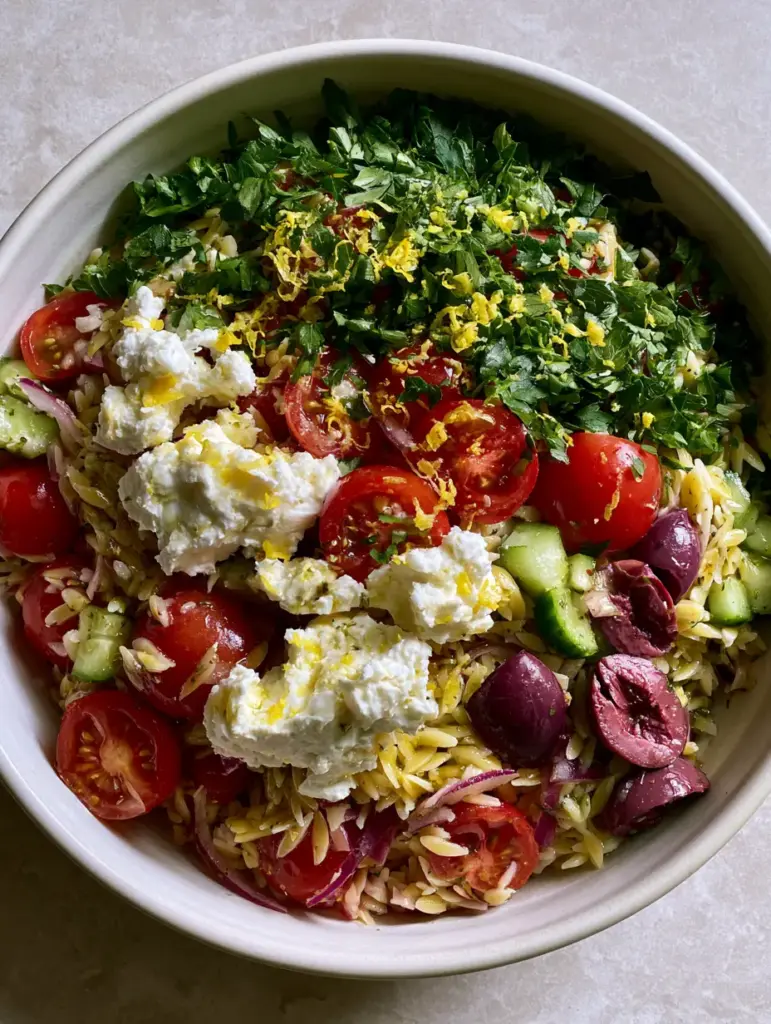
Mastering the Al Dente Orzo Technique
Boiling to Perfection
Bring 4 quarts (3.8L) of water to a rolling boil and season it generously with 2 tablespoons of salt. The water should taste like the sea; this is your only chance to season the interior of the pasta grains.
Add the orzo and stir immediately to prevent clumping. Cook for exactly 8-9 minutes, or until the pasta is al dente—firm to the bite but cooked through. Drain the orzo and rinse briefly under cool water to stop the cooking process and remove excess starch that could make the salad gummy.
Prepping the Vibrant Vegetable Medley
While the orzo cools slightly, prepare your vegetables with forensic precision. Halve the cherry tomatoes with a serrated knife to keep their shape intact. Dice the Persian cucumbers into 1/2-inch (1cm) cubes, keeping the skin on for that vibrant green contrast.
Sliver the red onions as thinly as possible. If you find raw onions too sharp, soak the slivers in ice water for 5 minutes, then pat dry; this removes the harsh sulfurous bite while maintaining the crunch.
Emulsifying the Shimmering Vinaigrette
In a small bowl or jar, combine the lemon juice, zest, extra virgin olive oil, salt, and black pepper. Whisk vigorously or shake the jar until the liquid becomes opaque and slightly thickened. This emulsion is what creates the “shimmering, glossy” look by ensuring the oil and acid stay bonded together on the pasta surface.
Step-by-Step Assembly for Maximum Visual Impact
The Initial Coating
Place the slightly warm orzo in a large mixing bowl and pour over half of the lemon vinaigrette. Toss gently. The warmth of the pasta allows it to absorb the flavors deeply, while the oil creates an immediate barrier that prevents the grains from sticking together.
Layering the Textures
Fold in the diced cucumbers, halved tomatoes, sliced red onions, and Kalamata olives. Add the chopped parsley last to ensure it stays bright green and doesn’t wilt from the residual heat of the pasta. Pour the remaining vinaigrette over the vegetables to give them that characteristic moist, vibrant glow.
The Final Flourish
Transfer the salad to your shallow white ceramic bowl. Scatter the rustic feta crumbles over the top—do not over-mix, or the feta will turn the salad “milky.” Finish with a final dusting of lemon zest and a generous crack of black pepper to match the visual prompt’s handheld, social-media-ready style.
Expert Tips for Orzo Salad Success
- The Temperature Rule: Never dress ice-cold orzo. Let the pasta come to room temperature or stay slightly warm so the vinaigrette penetrates the grain rather than just sliding off.
- Feta Logic: Use sheep’s milk feta if possible. It is creamier and holds its rustic crumbled shape better than cow’s milk alternatives, which can be rubbery.
- Make-Ahead Secret: If making this 24 hours in advance, reserve half the dressing. Orzo is thirsty and will drink up the vinaigrette overnight; a fresh splash before serving restores the shimmering highlight.
- Herb Preservation: Only chop the parsley right before you are ready to assemble. Pre-chopped herbs lose their volatile oils and their vibrant green hue quickly.
Storage, Reheating & Food Safety
This orzo salad is a meal prep champion. It can be stored in an airtight container in the refrigerator for up to 4 days. Because there are no mayonnaise-based ingredients, it is also safer for outdoor gatherings and picnics than traditional creamy pasta salads.
Do not freeze this salad. The cucumbers and tomatoes have high water content; freezing will rupture their cell walls, leaving you with a mushy, unappealing texture upon thawing. Always serve chilled or at room temperature for the best flavor profile.
What to Pair with Your Mediterranean Masterpiece
This salad is versatile enough to stand alone as a light lunch, but it also shines as a side dish for grilled proteins. It is a natural companion to a summer orzo pasta salad spread or a classic greek pasta salad buffet.
If you are looking for more pasta-based inspiration, consider serving this alongside a caprese pasta salad for a red-white-and-green themed party. For those who love bold, creamy flavors, it acts as a refreshing palate cleanser between bites of an elote pasta salad or a rich italian grinder pasta salad.
Frequently Asked Questions
Yes, you can make it up to 24 hours in advance. However, keep half of the dressing aside and toss it in just before serving to ensure the pasta remains glossy and doesn’t dry out.
While orzo is classic, you can use other small pasta shapes like ditalini or pearl couscous, though the cooking times and texture will vary slightly.
It is best to add the dressing when the orzo is slightly warm. This allows the pasta to absorb the lemon vinaigrette more effectively than if it were ice-cold.
High-quality block feta (preferably sheep’s milk) is best. Crumbing it yourself results in rustic, creamy pieces that provide a better texture than pre-crumbled varieties.
Gummy orzo usually results from overcooking or failing to rinse the pasta. Ensure you cook it to al dente and rinse with cool water to remove excess surface starch.
The Ultimate Vibrant Orzo Salad Recipe
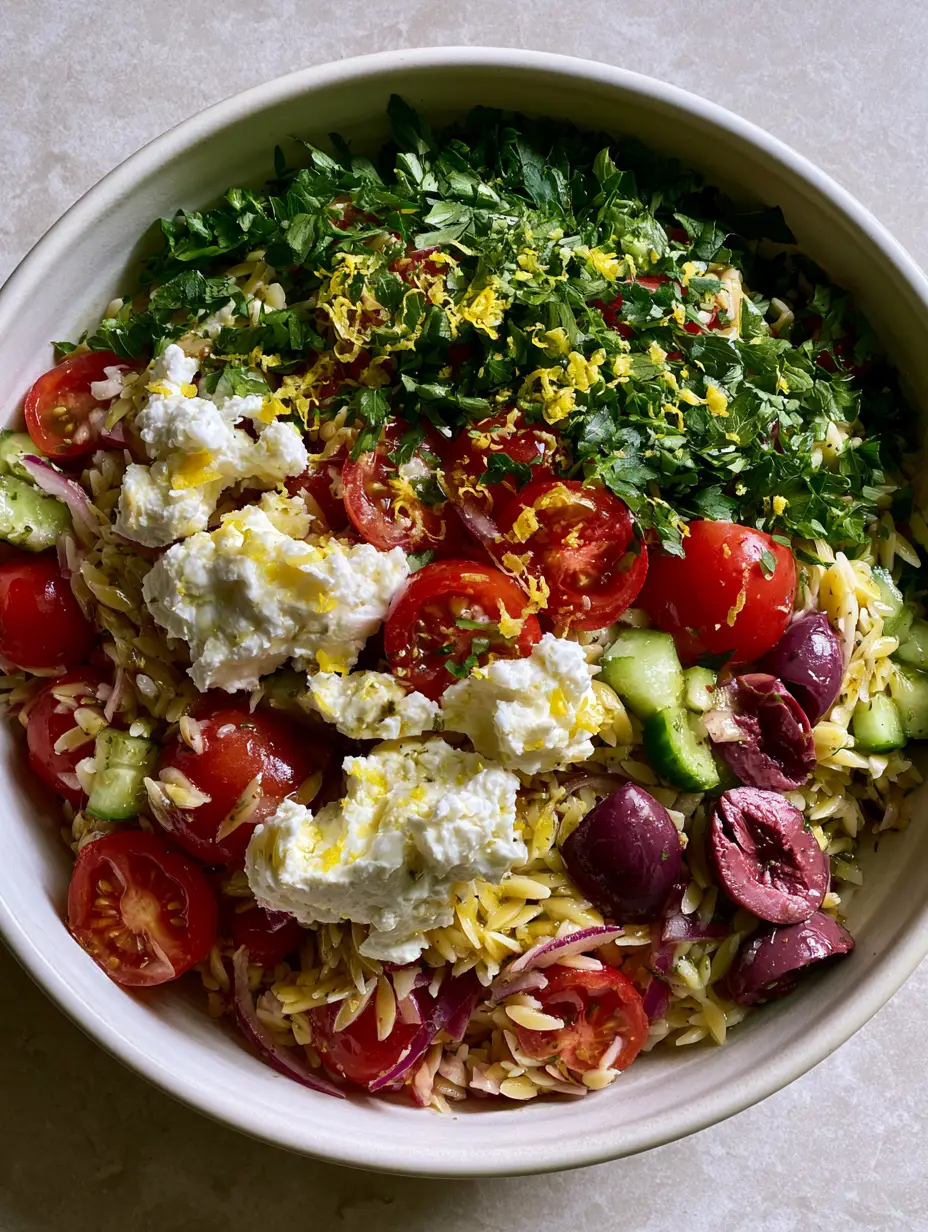
Orzo Salad with Shimmering Lemon Vinaigrette and Feta
Ingredients
Equipment
Method
- Bring a large pot of salted water to a boil. Cook the orzo for 8-9 minutes until it achieves a perfect al dente texture.
- Drain the orzo and rinse briefly with cool water to stop the cooking and prevent clumping.
- Whisk lemon juice, zest, olive oil, salt, and pepper in a jar until the dressing is opaque and shimmering.
- Toss the orzo with half the dressing. Fold in cucumbers, tomatoes, onions, olives, and parsley.
- Transfer to a shallow bowl. Top with rustic feta crumbles, extra zest, and cracked black pepper. Drizzle with remaining dressing for a glossy finish.
Notes
If making ahead, add half the dressing right before serving to keep the pasta moist and shimmering.
Closing & Call to Action
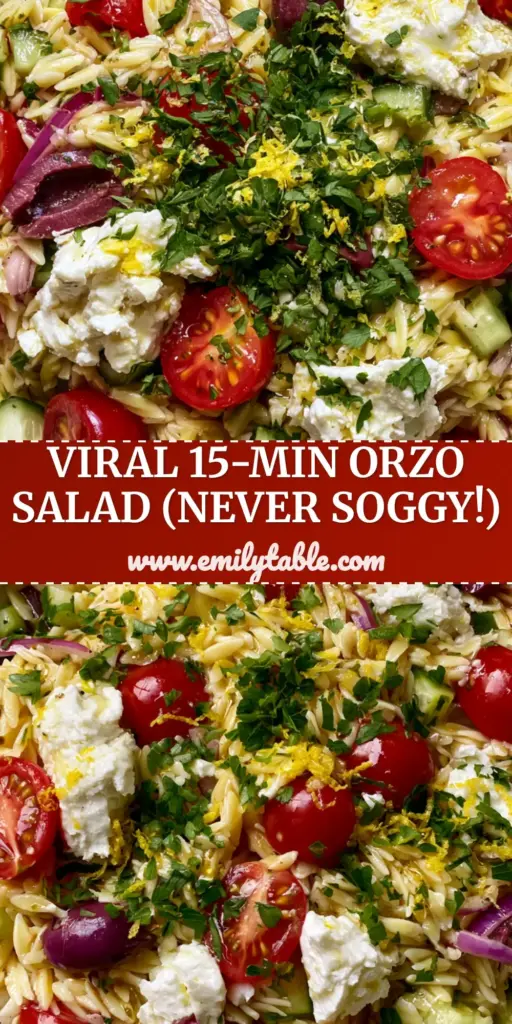
This orzo salad is the embodiment of fresh, Mediterranean cooking—simple, vibrant, and incredibly satisfying. The combination of the “shimmering” dressing and the “rustic” feta crumbles creates a dish that tastes just as good as it looks in your photos. It’s a reliable, high-protein vegetarian option that never fails to impress.
If you enjoyed this recipe, please leave a comment below and let us know how it turned out! Don’t forget to save this to your favorite boards on Pinterest so you always have this summer staple on hand. Happy cooking!
—