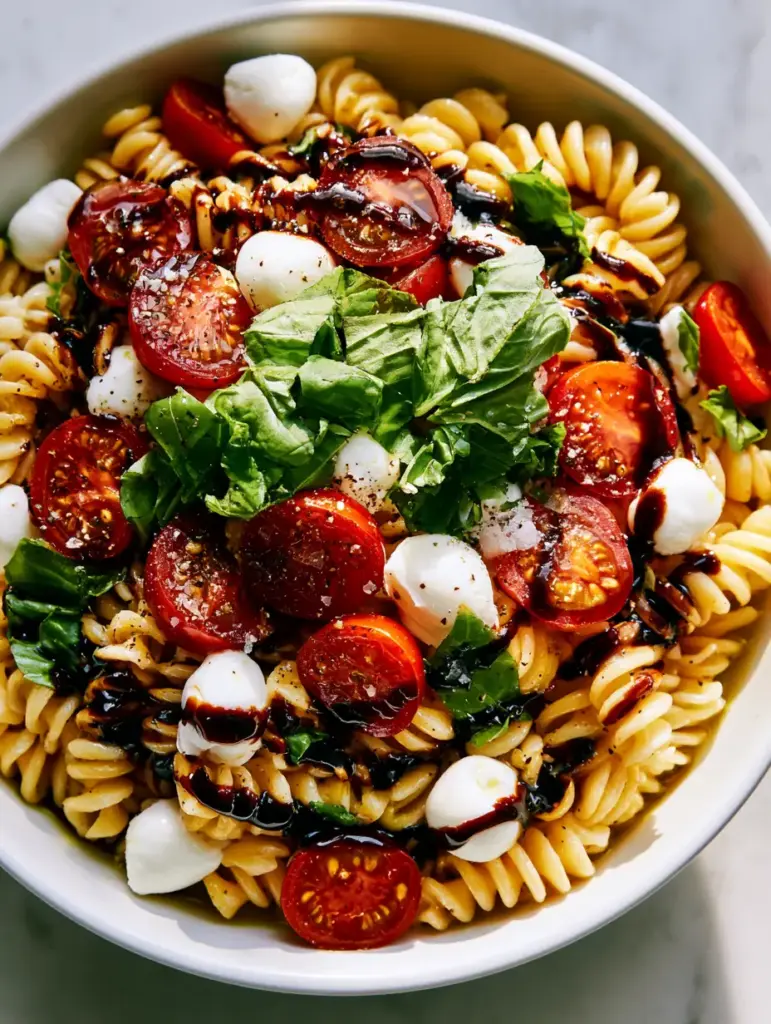
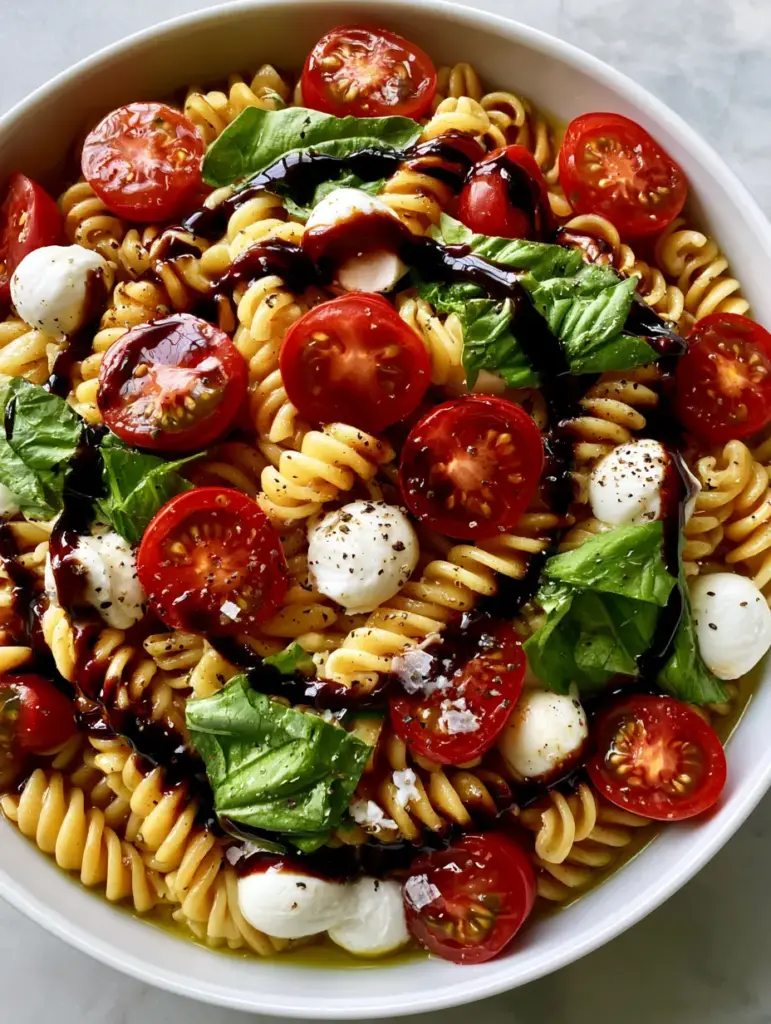
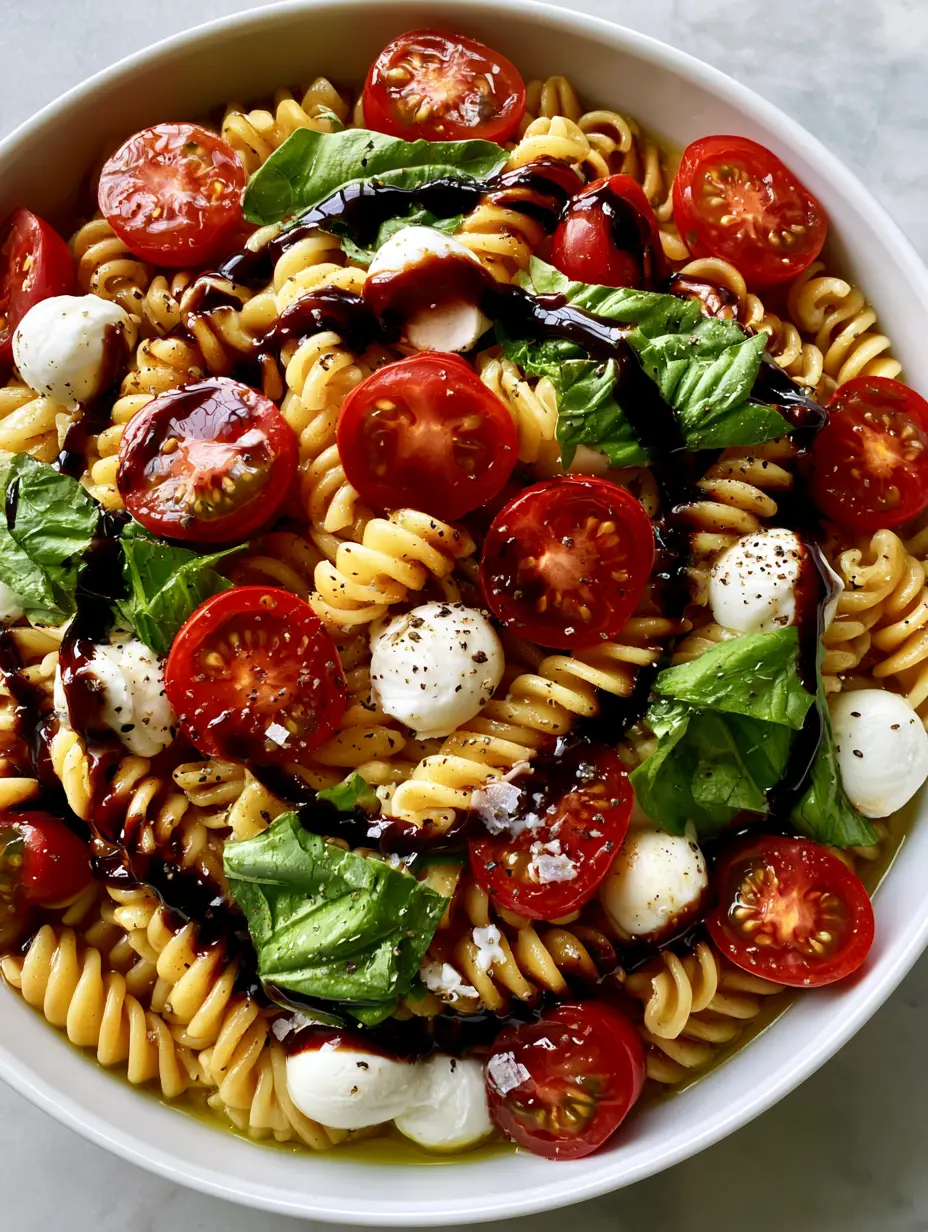
When the sun begins to linger longer in the evening sky and the air carries the scent of warming earth, nothing captures the essence of summer quite like this Caprese Pasta Salad. This dish isn’t just a side; it’s a visual masterpiece of golden al dente rotini, vibrant red cherry tomatoes, and snowy white mozzarella pearls. Inspired by the classic flavors of Capri, this recipe elevates the humble pasta salad into a gourmet experience that looks as stunning as a professional smartphone food photo on a marble countertop.
Every forkful offers a symphony of textures: the firm bite of perfectly cooked pasta, the burst of juicy tomato, and the creamy softness of fresh cheese. The entire dish is brought together by a shimmering olive oil barrier and an artful drizzle of thick, glossy, mahogany-hued balsamic glaze. Whether you are hosting an upscale garden party or looking for a refreshing weeknight meal, this salad provides the ultimate balance of acidity, sweetness, and herbal freshness.
Why This Vibrant Caprese Pasta Salad Wins Every Time
- Textural Contrast: The corkscrew shape of the rotini pasta is specifically chosen to catch the coarse sea salt flakes and cracked black pepper in every groove.
- Visually Stunning: The contrast between the deep mahogany balsamic glaze and the vibrant green torn basil creates a restaurant-quality presentation.
- Scientific Balance: We utilize a specific cooling technique for the pasta to ensure it maintains a “shimmering” olive oil coating without becoming greasy or clumping.
- Bursting Flavor: By halving the cherry tomatoes, we release their natural juices which mingle with the balsamic glaze to create a “living” dressing that improves with every minute it sits.
The Building Blocks of an Elite Caprese Pasta Salad
Golden Rotini Pasta: You will need 1 lb (454g) of high-quality semolina rotini. The helical structure is essential for capturing the olive oil and ensuring that the balsamic glaze doesn’t simply slide to the bottom of the bowl.
Fresh Mozzarella Pearls: Use 8 oz (226g) of “perline” or mozzarella pearls. These bite-sized spheres provide a creamy, mild contrast to the acidic tomatoes and are the exact visual match for our Caprese blueprint.
Bright Red Cherry Tomatoes: 2 cups (300g) of ripe cherry tomatoes provide the “juicy, bright red” visual required for this dish. They offer a concentrated sweetness that balances the earthy tones of the basil.
High-Quality Extra Virgin Olive Oil: 1/3 cup (80ml) of cold-pressed olive oil acts as the primary fat. It creates that “shimmering olive oil coating” that protects the pasta from drying out while adding a peppery finish.
Fresh Green Basil Leaves: 1 cup (30g) of loosely packed fresh basil. We tear the leaves by hand rather than chopping them to prevent bruising and to maintain the “large pieces of torn vibrant green basil” aesthetic.
Thick Balsamic Glaze: 1/4 cup (60ml) of a reduced balsamic vinegar. It must be thick and glossy—dark mahogany in color—to catch the light and provide a syrupy sweetness that cuts through the salt.
Coarse Sea Salt Flakes: 1 tsp (5g) for the final garnish. Unlike table salt, these flakes catch the light and provide a localized “crunch” of seasoning that enhances the fresh tomatoes.
Cracked Black Pepper: 1/2 tsp (2g) of freshly cracked peppercorns. The uneven size of the cracks adds to the rustic, “unedited smartphone photo” look while providing a slow-burning floral heat.
Foundational Salt for Boiling: 2 tbsp (34g) of kosher salt. This is an “invisible” ingredient essential for seasoning the pasta from the inside out during the hydration process.
Essential Tools for a Professional Presentation
To achieve the look of our top-down, high-angle visual blueprint, you will need a large white ceramic bowl. The white background allows the colors of the tomatoes and basil to pop against the neutral marble countertop. A large stainless steel colander is necessary for the “shock-cooling” process, and a silicone spatula will help you toss the rotini without breaking the delicate mozzarella pearls. Finally, a high-quality pepper mill is required to get those visible, rustic chunks of black pepper seen in the final shot.
Step-By-Step Culinary Execution
Perfecting the Al Dente Rotini
Bring 4 quarts (3.8L) of water to a rolling boil and add your kosher salt. Add the 1 lb (454g) of rotini and cook for exactly 1 minute less than the package instructions. This ensures the pasta remains “golden and al dente,” providing the structural integrity needed to support the heavier toppings. Drain the pasta and immediately rinse with cool water for 30 seconds to stop the cooking process and remove excess starch.
Creating the Shimmering Olive Oil Barrier
While the pasta is still slightly warm but no longer steaming, transfer it to your large white ceramic bowl. Drizzle the 1/3 cup (80ml) of extra virgin olive oil over the rotini and toss gently. This creates a shimmering coating that prevents the pasta from absorbing the balsamic glaze too quickly, ensuring the glaze remains “glossy” on the surface rather than soaking in.
Prepping the Caprese Elements
Slice your bright red cherry tomatoes in half longitudinally to reveal their juicy interior. Drain the mozzarella pearls and pat them dry with a paper towel; this ensures they don’t add excess moisture to the bowl. Tear the fresh basil leaves by hand into large, irregular pieces. Tearing follows the natural cell structure of the herb, which preserves more of the aromatic oils than a steel knife would.
Assembling for the “Top-Down” Shot
Layer the halved tomatoes and mozzarella pearls over the glistening pasta. Scatter the torn basil leaves across the top, ensuring some pieces are tucked into the spirals of the rotini. The goal is a layered, voluminous look that fills the bowl to the brim, mirroring the high-angle shot described in our visual prompt.
The Final Artful Drizzle
Using a steady hand, drizzle the thick mahogany balsamic glaze in a zigzag pattern across the salad. The glaze should sit on top of the ingredients, catching the soft, warm natural side-lighting. Finish by sprinkling the coarse sea salt flakes and cracked black pepper from a height of about 12 inches to ensure an even, visible distribution across the entire surface.
Expert Tips for Success
- Temperature Control: Never add the mozzarella to hot pasta, or it will soften into a messy glob. Ensure the pasta is at room temperature to keep the pearls “soft and white” as per the blueprint.
- Basil Preservation: Add the basil at the very last second. Fresh basil oxidizes quickly when exposed to air and acid; adding it just before serving keeps it “vibrant green.”
- Glaze Quality: If your balsamic glaze is too thin, simmer it in a small saucepan with a teaspoon of honey until it coats the back of a spoon. It must be “thick and glossy” to achieve the desired visual highlights.
- The Marble Effect: If you are taking photos, use a light gray marble surface and natural side-lighting from a nearby window to recreate the gentle highlights seen in our professional smartphone photo style.
Shelf Life and Storage Logistics
This Caprese Pasta Salad is best served within 2 hours of assembly to maintain the crispness of the basil and the gloss of the glaze. However, leftovers can be stored in an airtight container in the refrigerator for up to 3 days. Note that the balsamic glaze will eventually bleed into the pasta, turning it a slightly darker shade. If preparing in advance, store the glaze and basil separately and add them just before serving to maintain the high-contrast aesthetic.
What to Serve with Your Pasta Salad
This dish is incredibly versatile. It pairs beautifully with grilled chicken, seared salmon, or a crusty loaf of ciabatta bread. If you are planning a larger spread, consider offering a variety of easy pasta salad options to cater to different palates. For a themed Italian night, serve this alongside other authentic Italian pasta recipes. If you love the refreshing nature of this dish, you might also enjoy our summer orzo pasta salad or a zesty Italian pasta salad.
Common Questions About Caprese Salad
You can prep the pasta, tomatoes, and mozzarella a day ahead, but wait to add the basil and balsamic glaze until just before serving to keep the herbs from wilting and the colors vibrant.
For this specific recipe, fresh basil is essential. Dried basil lacks the vibrant green color and the soft texture required to match the Caprese aesthetic and flavor profile.
The secret is the olive oil barrier. By tossing the rotini in extra virgin olive oil while still slightly warm, you create a shimmering coating that prevents the pasta from absorbing the dressing and glaze.
Yes, for this pasta salad, rinsing with cool water stops the cooking process immediately, ensuring the rotini stays al dente and removing excess surface starch for a cleaner look.
Look for a glaze that is labeled as ‘reduced.’ It should have a syrupy consistency and a dark mahogany color so that it sits artfully on top of the tomatoes and cheese without running.
The Ultimate Caprese Pasta Salad Recipe
Caprese Pasta Salad with Shimmering Olive Oil and Balsamic Glaze
Ingredients
Equipment
Method
- Boil the rotini in salted water until al dente, about 1 minute less than package directions. Drain and rinse with cool water.
- Transfer the pasta to a large white bowl and toss with olive oil until every spiral has a shimmering coating.
- Fold in the halved cherry tomatoes and mozzarella pearls gently to avoid bruising.
- Scatter the torn vibrant green basil leaves over the top of the pasta mixture.
- Drizzle the thick, glossy balsamic glaze in an artful pattern. Finish with coarse sea salt flakes and cracked black pepper.
Notes
Tear basil by hand to avoid the leaves turning brown on the edges.
Closing & Call to Action
This Caprese Pasta Salad is a testament to how simple, high-quality ingredients can create a meal that is both visually stunning and deeply satisfying. From the shimmering olive oil to the artful mahogany drizzle, every element is designed to impress. If you enjoyed this recipe, please leave a comment below and let us know how it turned out! Don’t forget to sign up for our newsletter for more culinary inspiration, and be sure to share this post to your favorite board on Pinterest.
Happy cooking! — The Emily Table Team