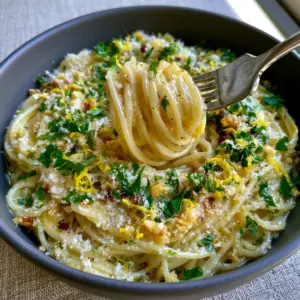
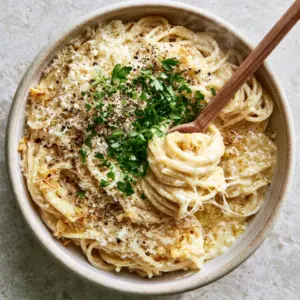
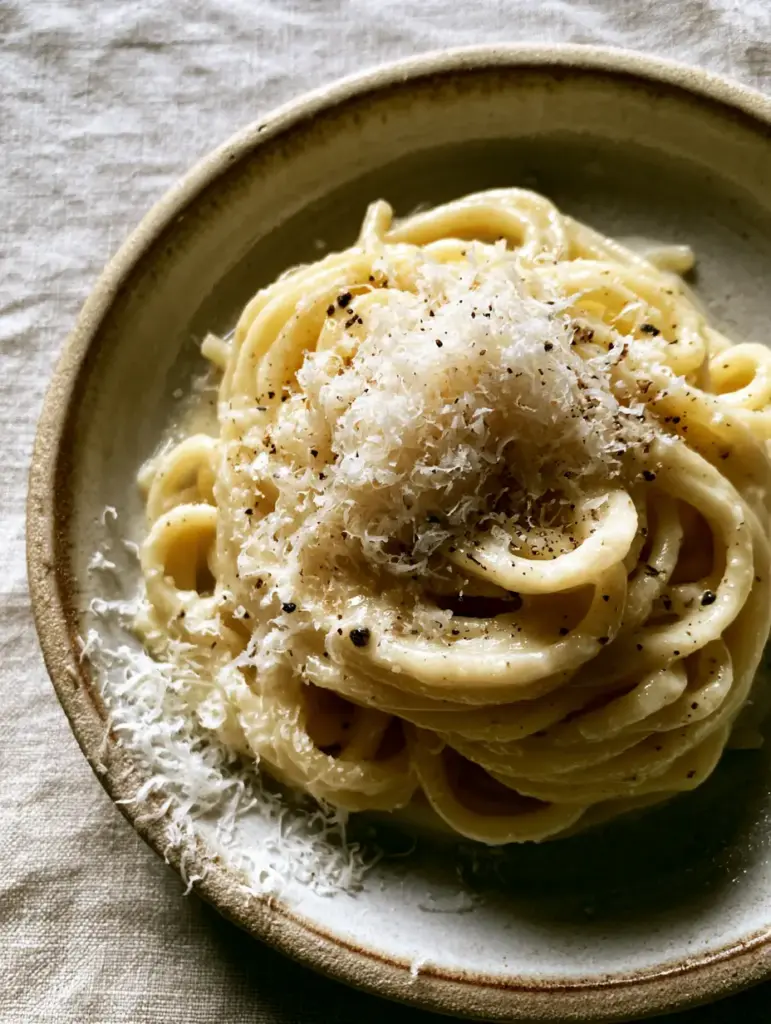
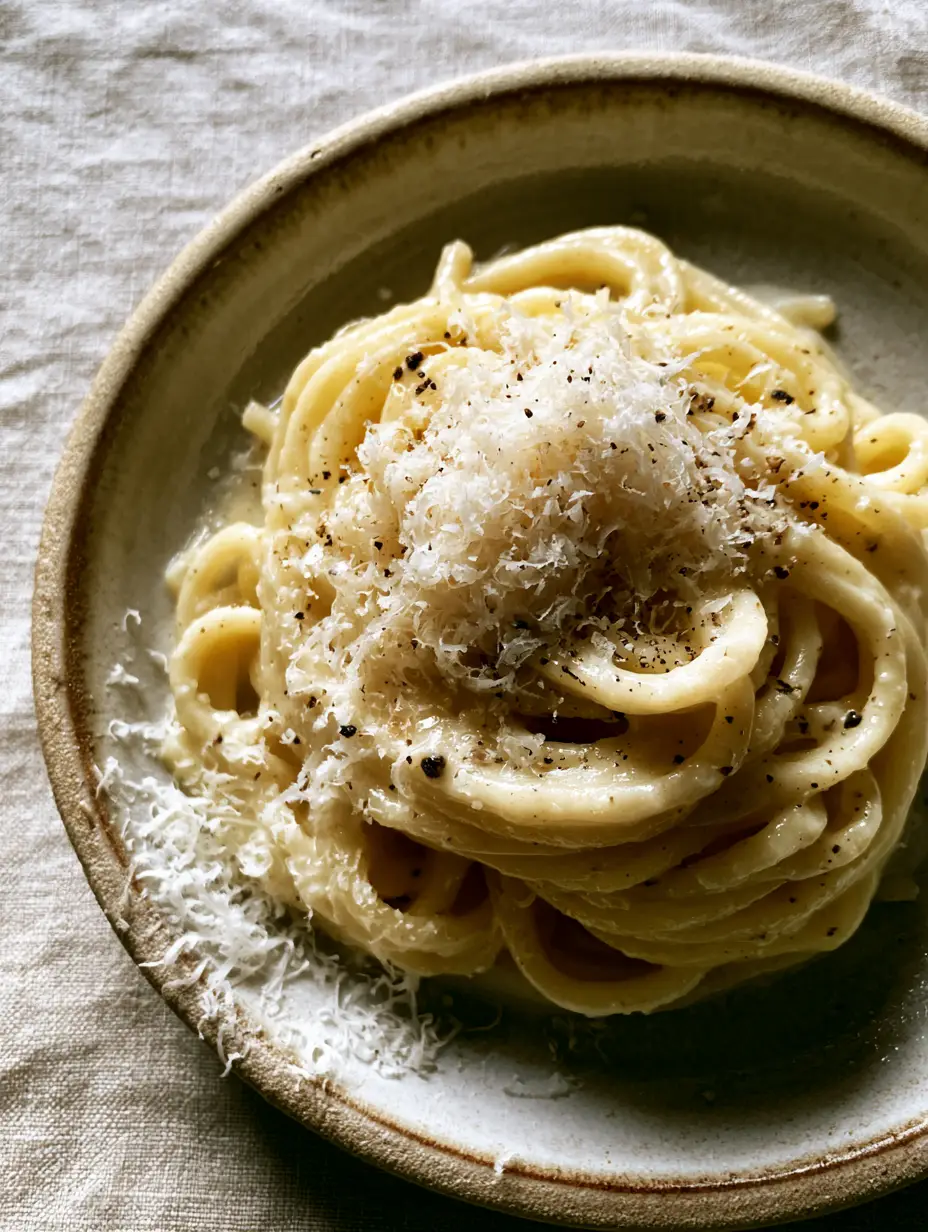
There is nothing quite as mesmerizing as watching a nest of thick spaghetti being swirled into a glossy, ivory-colored cheese emulsion. Authentic Italian pasta recipes often rely on the beauty of simplicity, and Cacio e Pepe is the crown jewel of Roman minimalism. This recipe delivers a restaurant-quality result that looks exactly like a high-end food photograph, featuring a silk-like sauce and coarse-cracked pepper.
When you master this dish, you aren’t just making dinner; you are performing a culinary dance of temperature and starch. The goal is a sauce that clings to every strand of pasta without a drop of heavy cream in sight. By the end of this guide, you will be able to plate a rustic ceramic dish that rivals the finest trattorias in Trastevere.
The Visual Allure of a Roman Classic
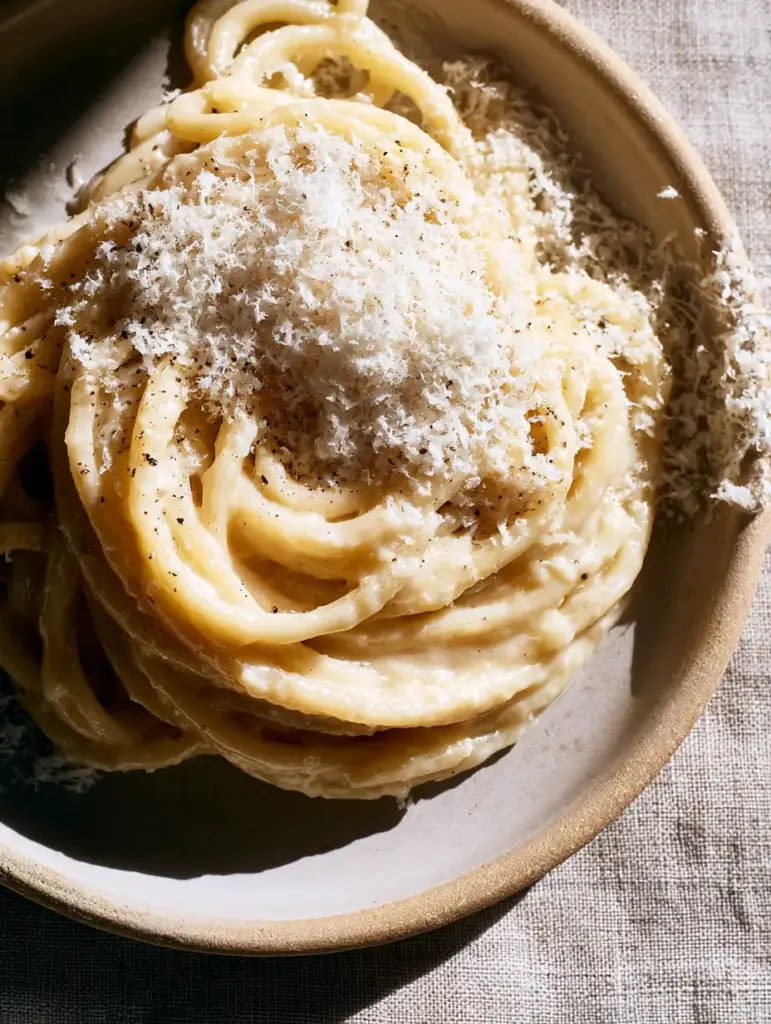
- Perfectly Al Dente: The thick spaghetti provides a robust, chewy texture that holds the weight of the Pecorino sauce beautifully.
- Glossy Ivory Emulsion: A shimmering, creamy coating made exclusively from cheese and starchy pasta water.
- Bold Textures: Coarse-cracked black pepper embedded in the sauce provides a striking visual contrast and a floral heat.
- Cloud-Like Garnish: Finished with a heavy dusting of fluffy, finely grated Pecorino Romano that looks like freshly fallen snow.
Vital Components for an Ivory Emulsion
Thick Spaghetti or Tonnarelli: 1 lb (450g) of high-quality, bronze-die extruded pasta is essential. The rough surface of the thick spaghetti is what allows the sauce to grip the noodle rather than sliding off to the bottom of the plate.
Pecorino Romano: 2 cups (180g) of finely, fluffily grated cheese creates the base of our cream. This sheep’s milk cheese is salty and tangy; ensure it is grated on the finest setting of your grater to ensure it melts instantly into the emulsion.
Whole Black Peppercorns: 2 tsp (4g) of whole peppercorns will be toasted and cracked. Toasting the pepper releases essential oils, transforming a simple spice into a complex, aromatic foundation for the dish.
Pasta Water (The Liquid Gold): 1.5 cups (350ml) of reserved boiling water acts as the structural glue. Because we use less water to boil the pasta, the starch concentration is higher, which is the secret to a sauce that never breaks.
Fine Sea Salt: 1 tbsp (15g) for the pasta water. While Pecorino is salty, the pasta itself must be seasoned from the inside out during the boiling process to achieve a balanced flavor profile.
Specialized Tools for the Perfect Twirl
To achieve the macro-shot perfection seen in professional food photography, you need a few specific tools. A Microplane or fine grater is non-negotiable for creating those fluffy mounds of cheese. A large heavy-bottomed skillet provides the surface area needed for the “mantecatura” (the vigorous tossing) that creates the emulsion.
You will also want a stainless steel mortar and pestle or a heavy pan to coarsely crack the toasted peppercorns. Finally, a rustic white ceramic plate and a pair of kitchen tweezers or a carving fork will help you achieve that iconic twirled nest look on your neutral linen backdrop.
The Technique Behind the Silk-Like Sauce
Toasting and Cracking the Pepper
Place your whole peppercorns in a dry skillet over medium heat. Shake the pan frequently until you smell a deep, woody aroma and see the first wisps of smoke. Immediately move them to a mortar and pestle and crush them into coarse, jagged pieces that will provide both flavor and a beautiful visual speckling.
Boiling the Thick Spaghetti
Bring a large pot of water to a boil, but use about half the amount of water you normally would. Add the sea salt and the pasta, cooking it until it is about 2 minutes away from being “al dente.” We want the pasta to finish its cooking process directly in the sauce to maximize starch release.
Creating the “Pecorino Paste”
While the pasta boils, place your finely grated cheese in a small bowl. Slowly whisk in a few tablespoons of the warm pasta water until a thick, smooth paste forms. This “tempering” of the cheese is the professional secret to preventing the Pecorino from clumping when it hits the hot pan.
Executing the Mantecatura
Transfer the undercooked spaghetti directly into the skillet with the cracked pepper and a splash of pasta water. Toss vigorously over medium-low heat. Remove the pan from the heat entirely—this is crucial—and stir in the cheese paste. Continue to toss and stir until you see a glistening moisture and a thick, glossy, ivory-colored coating forming around every strand.
Pro Secrets for a Flawless Finish
- Temperature Control: Never add the cheese paste while the pan is over active heat, or the proteins in the cheese will seize and create clumps.
- The Grate Factor: Use the smallest holes on your grater; the cheese should look like “snow” to ensure it dissolves into the emulsion.
- Starch is King: If the sauce looks too dry or “tacky,” add a tablespoon of pasta water at a time until the glistening moisture returns.
- Plating for the Camera: Use a carving fork to twirl the pasta into a tight nest in the center of the plate, then immediately top with an extra dusting of fluffy cheese.
Preserving Your Pasta Creations
Authentic Italian pasta recipes like Cacio e Pepe are best enjoyed immediately while the emulsion is at its silkiest. If you have leftovers, store them in an airtight container for up to 2 days. To reheat, avoid the microwave; instead, place the pasta in a skillet with a splash of water and a knob of butter over very low heat, tossing constantly to reform the creaminess.
What to Serve Alongside Your Roman Feast
Because this dish is incredibly rich and savory, it pairs perfectly with a crisp, acidic side dish. A simple arugula salad with lemon vinaigrette provides a refreshing counterpoint to the peppery Pecorino sauce. If you are hosting a larger gathering, consider starting with a vibrant antipasto platter to wake up the palate.
For those who love the Roman classics, you might also enjoy exploring our authentic carbonara recipe which uses a similar emulsion technique but adds the richness of egg yolks and guanciale. If you’re looking for something lighter for a summer lunch, a fresh caprese-inspired dish is a wonderful alternative.
Common Cacio e Pepe Queries
No, pre-grated cheese often contains anti-caking agents like potato starch that prevent it from melting properly. For a glossy, silk-like sauce, you must grate a block of Pecorino Romano yourself using a fine grater.
In authentic Roman cooking, no cream or butter is used. The creaminess is achieved entirely through the scientific reaction between finely grated cheese and the concentrated starch in the reserved pasta water.
The glossiness comes from the ‘mantecatura’—the process of vigorously tossing the pasta with starchy water and cheese. The starch acts as a bridge, binding the fat from the cheese to the water into a stable, shiny emulsion.
Clumping usually happens when the pan is too hot. Pecorino Romano is sensitive to high heat; always remove your skillet from the burner before adding the cheese paste to ensure a smooth emulsion.
Pecorino Romano is naturally very salty. If your dish is over-salted, try using less salt in the pasta boiling water next time, as the cheese provides most of the necessary seasoning.
Authentic Italian Pasta Recipes: Cacio e Pepe Card
Authentic Italian Pasta Recipes: The Ultimate Creamy Cacio e Pepe
Ingredients
Equipment
Method
- Toast whole peppercorns in a dry skillet over medium heat until fragrant. Coarsely crush in a mortar and pestle.
- Finely grate the Pecorino Romano using a Microplane until you have fluffy mounds of cheese.
- Boil the thick spaghetti in salted water (use less water than usual for extra starch) until 2 minutes before al dente.
- Reserve 1.5 cups (350ml) of the starchy pasta water before draining.
- Whisk a small amount of pasta water into the grated cheese to form a smooth paste.
- Add pasta to the skillet with cracked pepper and a splash of water. Remove from heat and toss in the cheese paste until a glossy ivory emulsion forms.
Notes
Use bronze-cut pasta for a better sauce grip.
A Taste of Rome in Your Kitchen
Mastering authentic Italian pasta recipes is a journey through texture and technique. This Cacio e Pepe represents the pinnacle of that journey, turning three simple ingredients into a masterpiece of culinary science. The thick spaghetti, the coarse pepper, and the cloud of Pecorino come together to create a sensory experience that is as beautiful to look at as it is to eat.
If you enjoyed making this silk-like pasta, please leave a comment below and let us know how your emulsion turned out! Don’t forget to share your creations on Pinterest and tag us so we can see your beautiful rustic plating. Happy cooking!