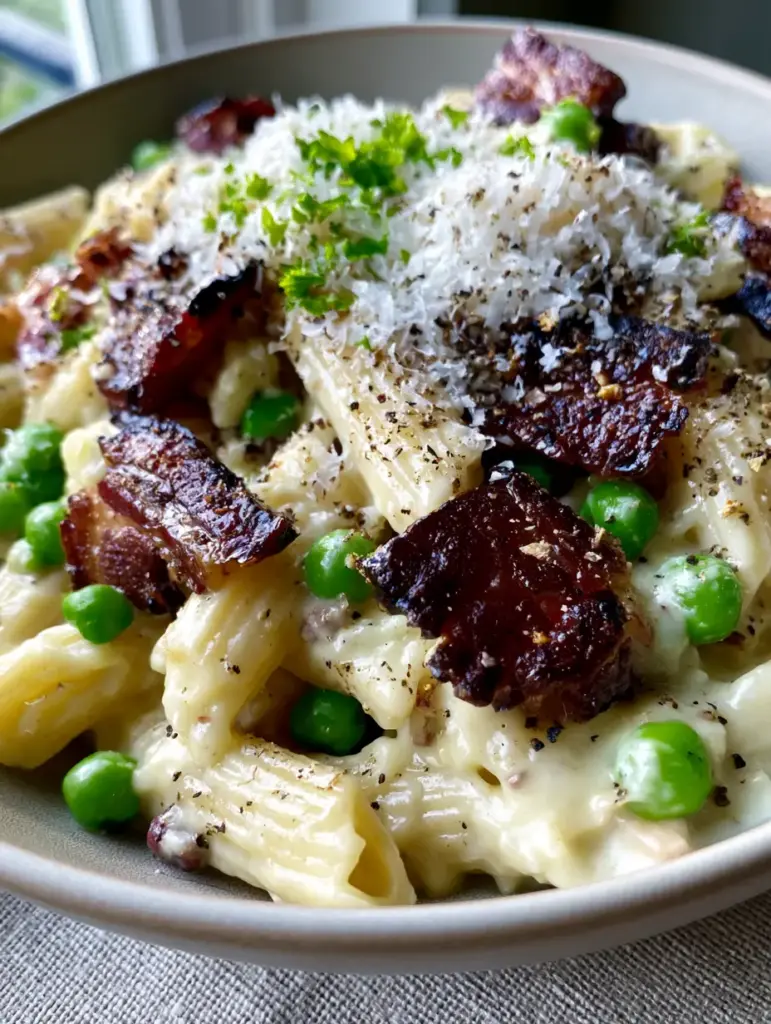
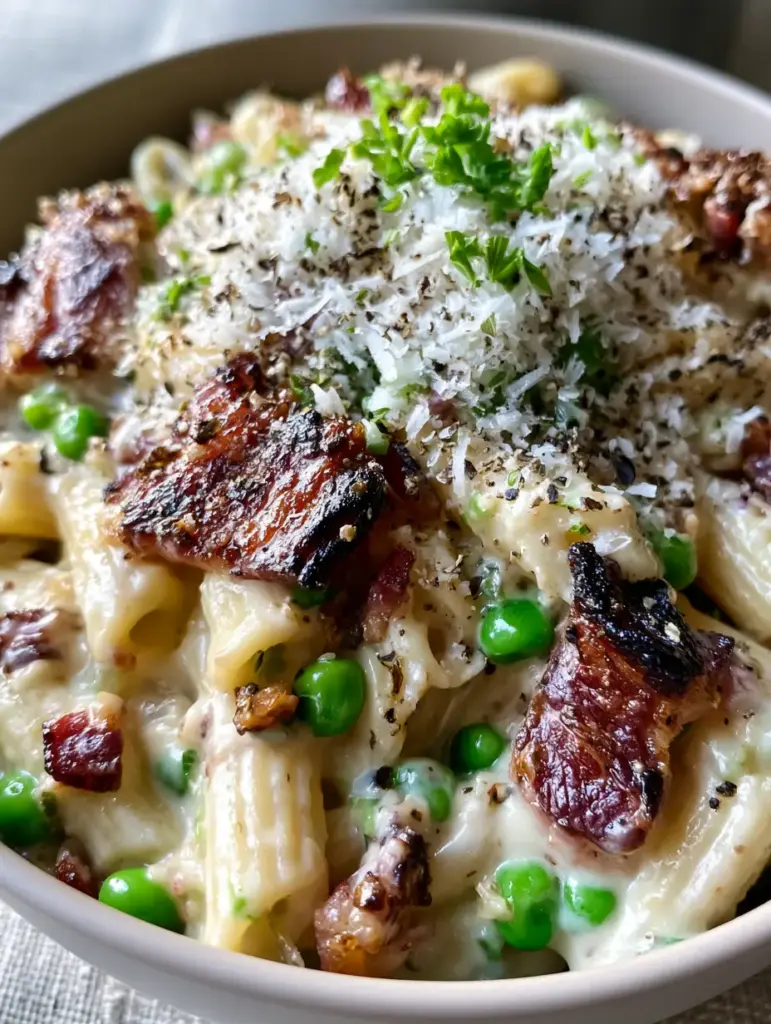
The perfect Bacon and Pea Pasta is more than just a meal; it is a masterclass in textural contrast and flavor balancing. Imagine ridges of perfectly al dente penne pasta, each one meticulously drenched in a thick, glossy, ivory-colored velvet cream sauce that clings to every groove. This dish isn’t just about the cream; it’s about the interplay between the “popping” sweetness of emerald green peas and the salty, deep mahogany crunch of thick-cut bacon lardons.
In this guide, we are going to reconstruct this classic comfort dish using professional culinary techniques that ensure your final plate looks exactly like a high-end editorial spread. We are moving beyond the basic “mac and cheese” style and into a refined, restaurant-quality experience where the sauce is emulsified to a mirror-like sheen and the bacon provides a smoky, charred finish that cuts through the richness of the Pecorino Romano.
The Anatomy of the Ultimate Bacon and Pea Pasta
To achieve the visual and sensory heights described in our recipe blueprint, we must focus on three core pillars: the emulsification of the cream, the rendering of the pork fat, and the preservation of the vegetables’ chlorophyll. Here is what makes this specific version of Bacon and Pea Pasta stand out:
- The Sauce: An ivory-colored velvet cream sauce that uses a reduction of heavy cream and starchy pasta water to achieve a glossy, thick consistency without the need for flour or thickeners.
- The Bacon: Oversized, thick-cut lardons that are rendered slowly to release fat, then seared at high heat to create mahogany charred crispy edges.
- The Peas: Plump, vibrant emerald sweet peas that are steamed just until tender to ensure they retain their bright color and “pop” texture.
- The Finish: A snowy mound of micro-planed Pecorino Romano cheese and large, coarse flakes of freshly cracked black pepper for a sharp, pungent bite.
Essential Ingredients for a Glossy Velvet Finish
Every ingredient in this Bacon and Pea Pasta serves a specific culinary purpose. We have selected these items to match the “Extreme macro” visual requirements of a professional food shoot while delivering maximum flavor density.
1 lb (450g) Penne Rigate: The ridges (rigate) are essential for trapping the velvet sauce, ensuring that the pasta isn’t just sitting in liquid but is fully integrated into the dish.
8 oz (225g) Thick-Cut Bacon: Look for “slab” bacon or extra-thick slices so you can cut them into 1/2-inch lardons; this provides the “oversized” look and significant chew found in elite pasta dishes.
1.5 cups (225g) Frozen Sweet Peas: Frozen peas are often superior to fresh for this recipe because they are flash-frozen at peak ripeness, preserving that emerald green color we need for the visual contrast.
1 cup (240ml) Heavy Cream (Double Cream): The high fat content is non-negotiable for achieving the “glossy” and “thick” texture described in the visual prompt; lower fat milks will split or remain too thin.
1 cup (100g) Pecorino Romano, Micro-planed: Using a micro-plane creates a “snowy mound” of cheese that melts instantly into the sauce upon contact but looks stunning as a garnish.
2 tbsp (30g) Unsalted Butter: Added at the very end (a technique called monter au beurre), the butter provides the final mirror-like shine to the ivory sauce.
1 tsp (2g) Coarse Cracked Black Pepper: We want large flakes, not fine powder, to provide both a visual “speckled” appearance and a sudden burst of heat.
1/4 cup (10g) Fresh Parsley, Finely Minced: This provides the “bright green” garnish that cuts through the monochromatic ivory and mahogany tones of the dish.
Foundational Tools for Professional Results
To recreate the “Extreme macro” textures of this dish, your standard kitchen tools need to be up to the task. Achieving the right sear on the bacon and the right aeration in the cheese requires specific equipment.
- Heavy-Bottomed Skillet or Dutch Oven: Necessary for heat retention to get those charred mahogany edges on the bacon without burning the fat.
- Micro-plane Grater: This is the only way to achieve the “snowy mound” texture for the Pecorino Romano.
- Pasta Pot and Colander: For boiling the penne; remember to keep a small measuring cup nearby to reserve the “liquid gold” pasta water.
- Silicon Spatula: Essential for scraping every bit of the thick glossy sauce from the pan onto the pasta.
Step-by-Step Instructions to Culinary Excellence
Preparing the Thick-Cut Bacon Lardons
Start by slicing your thick-cut bacon into 1/2-inch (1.25cm) batons. Place them in a cold skillet and turn the heat to medium-low. This “cold start” allows the fat to render out slowly, ensuring the bacon becomes crispy throughout rather than just burnt on the outside.
Once the fat has rendered and the bacon is swimming in its own liquid gold, increase the heat to medium-high. Watch for the Visual Cue: the edges of the bacon should transform from translucent pink to a deep, dark mahogany. Once they are charred and crispy, remove them with a slotted spoon and set them aside on a paper towel, but keep 2 tablespoons of that bacon fat in the pan.
Achieving the Perfect Al Dente Penne
While the bacon renders, bring a large pot of heavily salted water to a boil. Add the penne rigate and cook for exactly 2 minutes less than the package directions. This is the secret to a true creamy bacon pasta—the pasta must finish cooking in the sauce to absorb the flavors.
Before draining, reserve 1 cup (240ml) of the starchy pasta water. This water contains the starches released by the wheat, which acts as a natural emulsifier to bind our heavy cream and bacon fat into a cohesive, velvet-smooth liquid.
Building the Ivory Velvet Cream Sauce
In the same skillet used for the bacon, over medium heat, pour in the heavy cream and the reserved pasta water. Use a whisk to scrape up any “fond” (the brown bits) left from the bacon—this is where the deep flavor lives. Bring the mixture to a gentle simmer, not a rolling boil.
Add the unsalted butter and half of the Pecorino Romano. Whisk constantly until the sauce thickens enough to coat the back of a spoon. You are looking for a Sensory Cue: the sauce should look like liquid silk and have a distinct glossy sheen under your kitchen lights.
The Final Assembly and The “Green Pop”
Add the undercooked penne and the emerald green peas directly into the simmering sauce. Toss vigorously for 60-90 seconds. The heat will steam the peas until they are plump and vibrant while the pasta ridges draw in the cream. If the sauce becomes too thick, add a splash more pasta water.
Fold in the charred bacon lardons at the very last second to ensure they retain their “crunch” against the “glistening texture” of the sauce. This creates the textural landscape described in our Midjourney prompt.
Expert Tips for Success
- Don’t Overcook the Peas: To keep them “vibrant emerald green,” they only need about 2 minutes of residual heat. Any longer and they will turn a dull army-olive color.
- Pepper Precision: Use a pepper mill on the coarsest setting or crush whole peppercorns with a heavy skillet to get those distinct “black pepper flakes” that pop in the macro photo.
- Cheese Temperature: Never add the Pecorino to a boiling sauce; it will clump. The sauce should be at a gentle simmer to allow the cheese to melt into a “velvet” consistency.
- The “Gloss” Factor: If your sauce looks matte or dry, it needs more fat. A final knob of cold butter stirred in right before serving is the professional’s secret to a photo-ready finish.
Storage, Reheating, and Freezing
Like most cream-based dishes, this Bacon and Pea Pasta is best enjoyed immediately. However, if you have leftovers, they can be stored in an airtight container in the refrigerator for up to 3 days. We do not recommend freezing this dish, as the cream sauce will likely “break” or separate upon thawing, losing that signature velvet texture.
To Reheat: Do not use the microwave if possible, as it will oily-fy the sauce. Instead, place the pasta in a small skillet over low heat. Add 1-2 tablespoons of milk or water and stir gently until the sauce re-emulsifies and becomes glossy again.
What to Serve With This Decadent Pasta
Because this dish is incredibly rich and savory, you’ll want to pair it with sides that offer acidity or a crisp, fresh crunch. A bright caprese salad with balsamic glaze provides the perfect acidic counterpoint to the heavy cream.
If you’re looking for something more substantial for a summer gathering, consider serving this alongside a bowl of Mexican street corn or a light Mediterranean pasta salad to provide a variety of textures on the table. For a spicy twist, you could even offer a side of spicy rattlesnake pasta for those who want a bit of heat alongside the creamy peas.
Frequently Asked Questions
You can use other shapes like Fusilli or Orecchiette, but ridged Penne Rigate is best because the grooves are specifically designed to trap and hold the thick velvet cream sauce.
Yes, frozen sweet peas are actually preferred for this recipe as they retain their vibrant emerald green color and plump texture better than most store-bought fresh peas when steamed in the sauce.
Start the thick-cut bacon lardons in a cold skillet to render the fat slowly, then finish on medium-high heat until the edges turn a deep mahogany color.
Pecorino Romano is ideal because of its sharp, salty profile. Using a micro-plane grater is essential to achieve the light, airy ‘snowy mound’ visual described.
Ensure you are using full-fat heavy cream and reserved starchy pasta water. The starch from the water and the fat from the cream/butter must emulsify over a simmer to achieve that thick, glossy finish.
The Signature Bacon and Pea Pasta Recipe
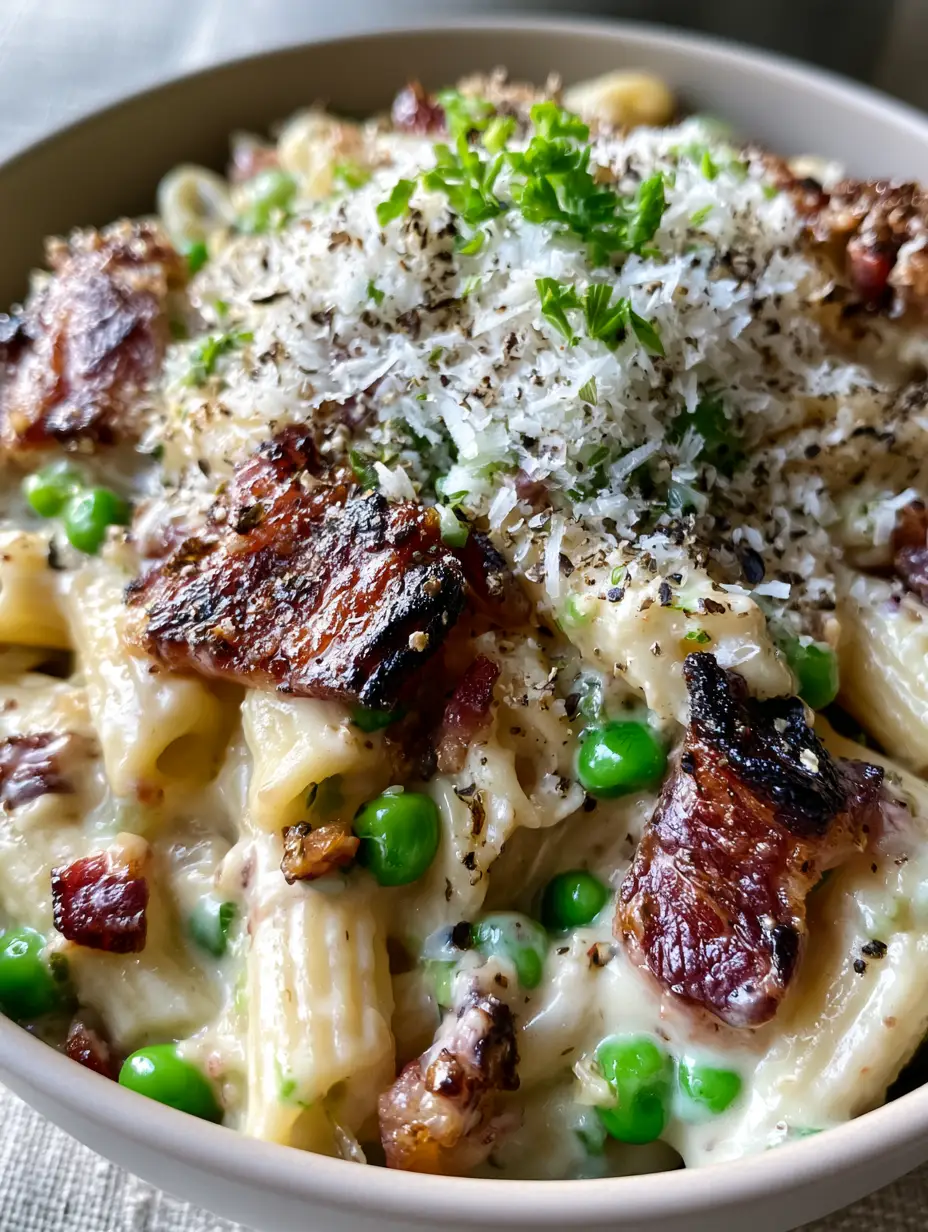
Bacon and Pea Pasta with Velvety Cream Sauce and Crispy Lardons
Ingredients
Equipment
Method
- Start bacon lardons in a cold skillet over medium-low heat. Cook until fat renders, then increase heat to medium-high until edges are charred mahogany and crispy.
- Cook penne in salted water until 2 minutes before al dente. Reserve 1 cup (240ml) of pasta water before draining.
- In the bacon skillet, whisk heavy cream, reserved pasta water, and butter. Simmer until the sauce is glossy and thick enough to coat a spoon.
- Toss penne and peas into the sauce for 90 seconds. Fold in bacon lardons at the final moment.
- Plate in shallow bowls and top with a snowy mound of Pecorino, black pepper flakes, and minced parsley.
Notes
The reserved pasta water is the key to a glossy, emulsified velvet sauce.
Closing & Call to Action
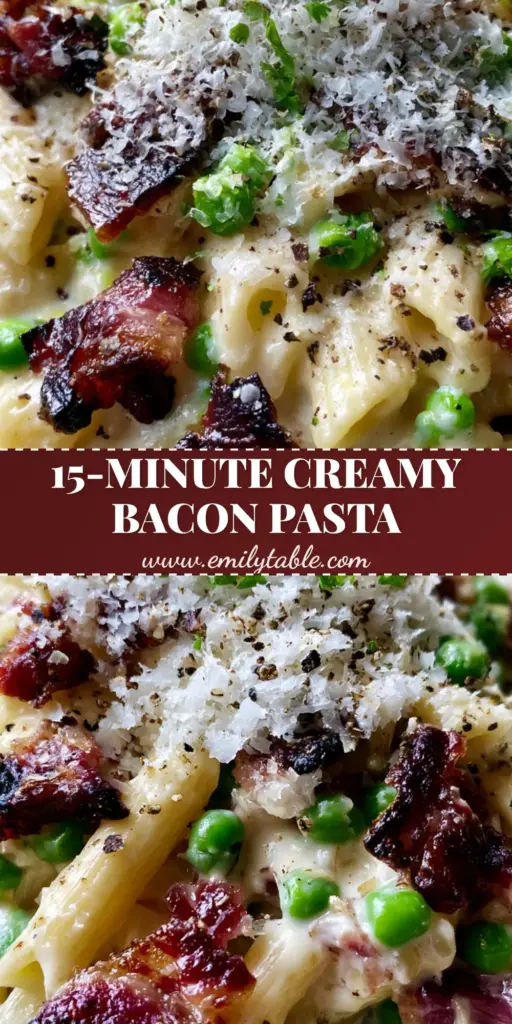
This Bacon and Pea Pasta is the ultimate intersection of high-end culinary technique and home-cooked comfort. By focusing on the mahogany char of the bacon and the ivory gloss of the sauce, you’ve created a dish that is as visually stunning as it is delicious. Whether you are cooking for a weeknight treat or a special dinner party, this recipe is guaranteed to impress.
If you enjoyed this recipe, please leave a comment below and let us know how your sauce turned out! Don’t forget to follow us on Pinterest for more visually-driven recipe inspiration and share your creations with the hashtag #EmilyTable. Your support helps us continue to develop professional-grade recipes for home cooks everywhere!