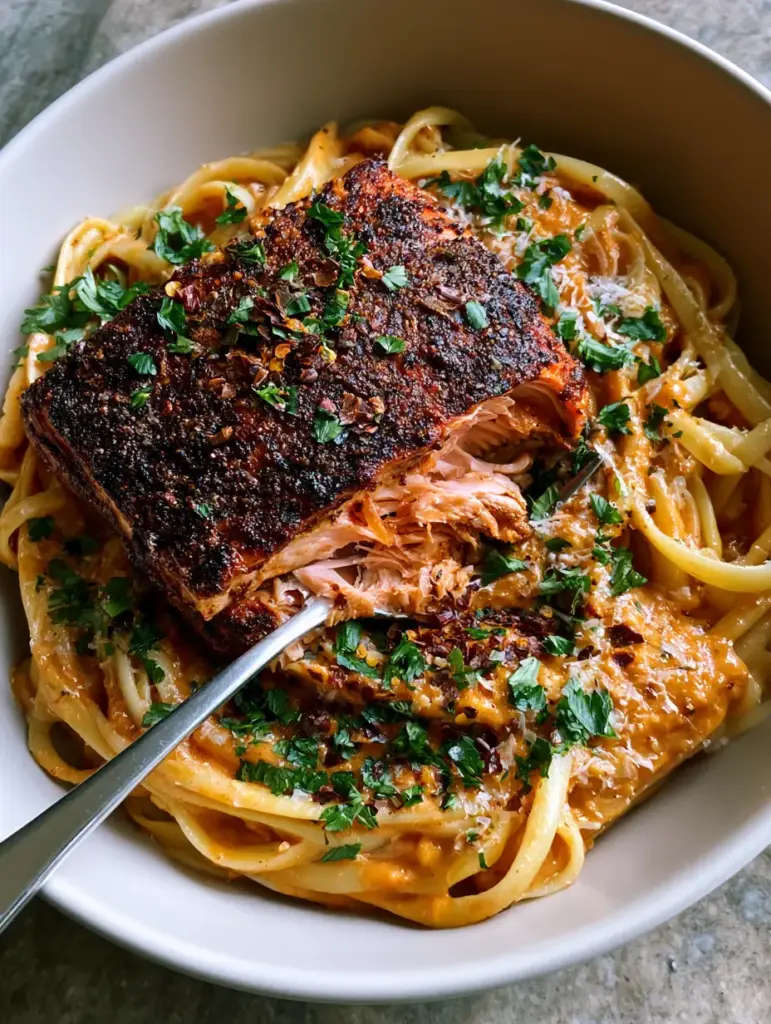
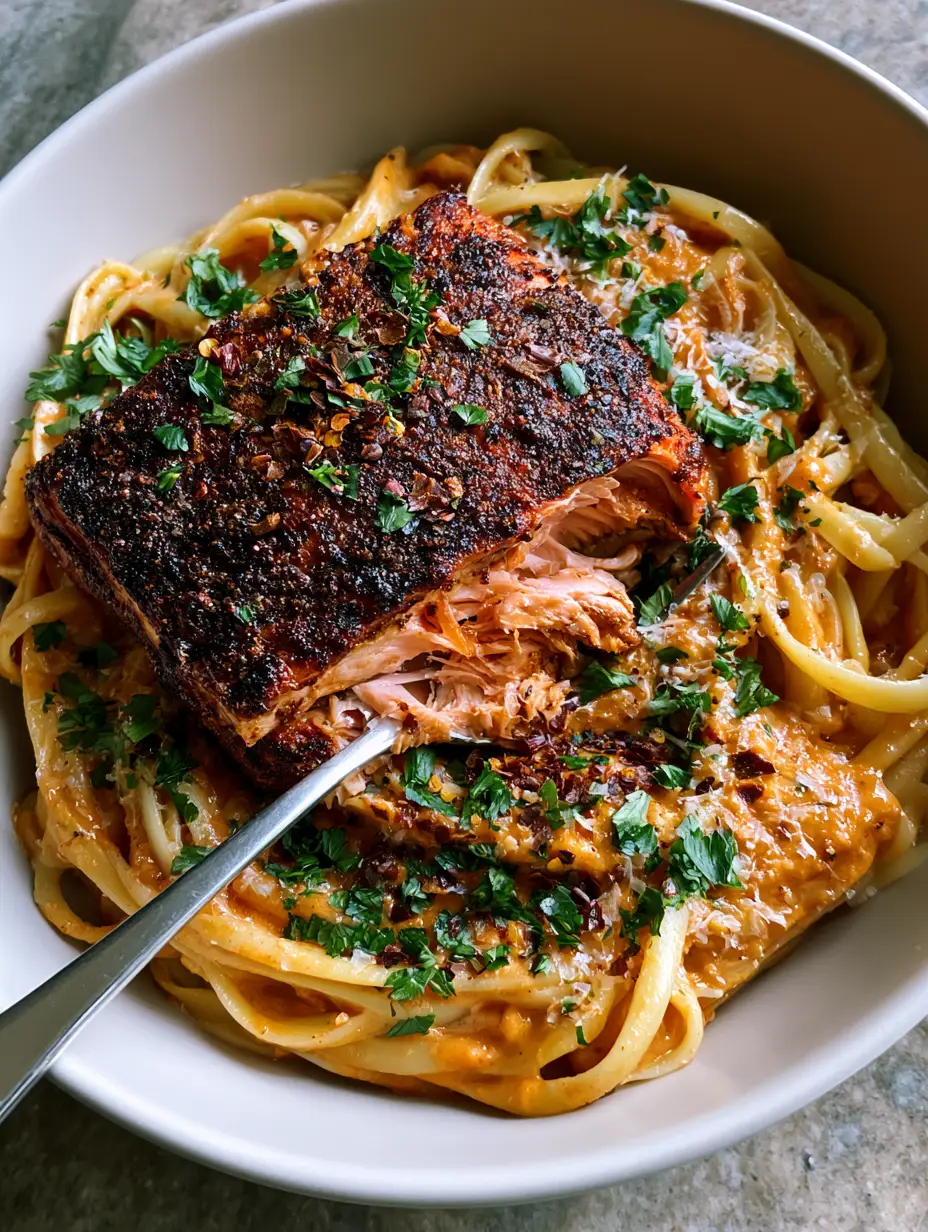
There is a specific visual magic that happens when a perfectly seared, dark-crusted Atlantic salmon fillet meets a bed of glossy, orange-tinted cream sauce. This Blackened Cajun salmon pasta isn’t just a meal; it is a multi-sensory experience that combines the smoky heat of the Bayou with the refined elegance of a classic cream pasta. If you have ever scrolled through social media and stopped dead in your tracks at a photo of flaky pink salmon resting atop swirling fettuccine, this is the exact recipe you have been looking for.
Achieving that iconic “blackened” look without burning the fish requires a balance of high-heat technique and a robust spice blend. In this guide, we are going to dive deep into the culinary science of the Maillard reaction, the art of the parmesan emulsion, and the secrets to keeping your salmon succulent and steaming on the inside while maintaining a crispy, textured crust on the outside. Get ready to transform your kitchen into a high-end bistro.
Why This Creamy Cajun Seafood Pasta Works
- The Texture Contrast: You get the crunch of the blackened spice crust, the buttery flake of the Atlantic salmon, and the al dente “snap” of the fettuccine noodles.
- Visual Depth: The vibrant orange-hued cream sauce provides a stunning backdrop for the dark spices and the pop of finely chopped fresh flat-leaf parsley.
- Balanced Heat: While the dried red chili flakes and Cajun seasoning provide a kick, the heavy cream and grated parmesan cheese mellow the spice for a smooth finish.
- Restaurant Quality at Home: By mastering the searing technique, you achieve a level of flavor complexity usually reserved for professional kitchens.
Essential Ingredients for the Perfect Blackened Salmon Crust
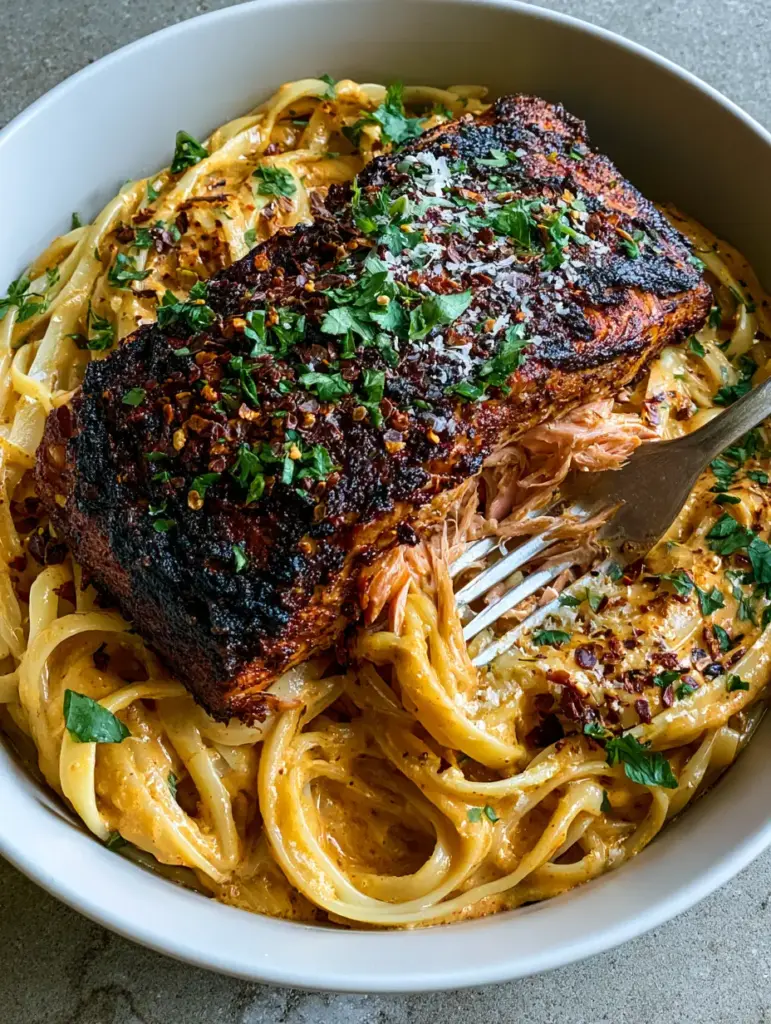
To achieve the dark, crispy, textured blackened spice crust described in our visual blueprint, you need specific dry spices that can withstand high heat. This isn’t just about heat; it is about creating a savory bark that protects the moist pink layers of the salmon meat underneath.
Atlantic Salmon Fillets: You want thick-cut fillets, approximately 6-8 ounces (170-225g) each. Thick fillets are essential because they allow the exterior to blacken deeply while the interior remains steaming and pink.
Cajun Spice Rub: A blend of smoked paprika, garlic powder, onion powder, dried thyme, dried oregano, and cayenne pepper. The sugars in the paprika and garlic powder caramelize under heat to create that signature dark crust.
High-Smoke Point Oil: Use avocado oil or grapeseed oil for searing. These oils can handle the intense heat required for blackening without breaking down or smoking excessively in your kitchen.
Unsalted Butter (15g or 1 tbsp): We add a touch of butter at the very end of the searing process. This adds a nutty richness and helps the spices adhere to the fish for that textured, crispy finish.
Foundations of the Glossy Orange-Hued Cream Sauce
The base of our Blackened Cajun salmon pasta is a thick, velvety sauce that clings to every strand of fettuccine. This isn’t a thin broth; it is a structured emulsion that requires specific dairy ratios.
Dried Fettuccine (225g or 8oz): Fettuccine is the ideal vessel here because its wide surface area carries the heavy cream sauce perfectly. Always cook it 1-2 minutes less than the package directions to ensure it stays al dente.
Heavy Cream (240ml or 1 cup): Also known as double cream, this provides the fat content necessary to suspend the Cajun spices and create that glossy, orange tint. Lower-fat milks will likely curdle when mixed with the acidic elements of the spice blend.
Grated Parmesan Cheese (45g or 1/2 cup): Use a micro-plane to grate your cheese finely. This ensures it melts instantly into the sauce, providing saltiness and helping the liquid thicken into a coat-the-back-of-a-spoon consistency.
Aromatic Base: Freshly minced garlic and a small amount of tomato paste are the secret “invisible” ingredients. The tomato paste is what provides that specific orange hue and a deep umami undertone.
The Essential Kitchen Toolkit
To replicate the authentic social media food photography look, your tools matter as much as your ingredients. Achieving a “succulent Atlantic salmon fillet” requires even heat distribution.
Cast Iron Skillet: This is non-negotiable for the blackened salmon. Cast iron retains heat better than any other surface, allowing you to sear the fish quickly without the pan temperature dropping.
Stainless Steel Tongs: You need these to flip the salmon gently. A silver fork, as seen in the visual prompt, is used for flaking the fish at the table, but tongs keep the fillet intact during the high-heat cooking phase.
Micro-plane Grater: This tool is essential for the “dusting of micro-planed parmesan cheese” mentioned in the visual blueprint. It creates a snow-like texture that melts beautifully.
Large Pasta Pot: You need plenty of salted water to ensure the fettuccine has room to move, preventing the strands from sticking together before they hit the sauce.
Step 1: Preparing the Salmon for the Sear
Start by patting your salmon fillets completely dry with paper towels. Any moisture on the surface of the fish will create steam, which prevents the “dark, crispy, textured blackened spice crust” from forming.
Once dry, coat the top and sides of the fillets generously with your Cajun spice blend. Press the spices into the flesh with the palm of your hand to ensure they stick. Do not be afraid of a heavy coating; this is what creates the “blackened” effect.
Let the seasoned salmon sit at room temperature for about 10 minutes. This allows the salt in the rub to penetrate the meat, ensuring the “moist, steaming pink layers” are seasoned all the way through, not just on the surface.
Step 2: Mastering the High-Heat Blackening Technique
Heat your cast iron skillet over medium-high heat until a drop of water flicked onto the surface dances and evaporates instantly. Add your high-smoke point oil and swirl to coat the bottom of the pan.
Lay the salmon fillets in the pan, seasoned side down. You should hear a loud, aggressive sizzle immediately. Sear for 3-4 minutes without moving the fish. This stillness is vital for the formation of the crust.
Carefully flip the fillet. The top should now be dark, textured, and incredibly aromatic. Add a knob of butter to the pan and spoon it over the crispy crust for the final minute of cooking. Remove the salmon from the pan while the center is still slightly translucent pink; it will finish cooking through residual heat.
Step 3: Crafting the Orange-Tinted Cajun Cream Sauce
In the same pan (after wiping out any excess burnt spices), melt a tablespoon of butter and sauté your minced garlic until fragrant. Add a teaspoon of tomato paste and whisk it into the butter until it turns a deep rust color.
Pour in the heavy cream and bring to a gentle simmer. As the cream heats up, it will pick up the residual Cajun flavors from the pan, turning into that “thick, glossy, orange-hued cream sauce” we are aiming for. If you enjoy this flavor profile, you might also love our creamy Cajun sausage cavatappi.
Whisk in the grated parmesan cheese in small handfuls. Continue stirring until the sauce is smooth and thick enough to coat a spoon. If the sauce becomes too thick, add a splash of reserved pasta water to loosen it up, just like we do in our lemon ricotta pasta recipe.
Step 4: The Final Assembly and Emulsion
Drop your al dente fettuccine directly into the simmering cream sauce. Use tongs to swirl the noodles, ensuring every strand is coated in the orange-tinted liquid. The starch from the pasta will help the sauce bind to the noodles.
Taste the pasta and adjust the seasoning with cracked black pepper and a pinch of salt if needed. The Cajun seasoning on the salmon is salty, so be conservative with the salt in the sauce itself.
If the sauce looks a bit dull, a tiny squeeze of fresh lemon juice can brighten the flavors, a technique used frequently in our garlic lemon pasta. However, keep it minimal to maintain the savory Cajun profile.
Expert Tips for the Perfect Social Media Reveal
- The Fork Flake: To get the look from the Midjourney prompt, use a silver fork to gently pry open one corner of the salmon fillet right before serving. This shows off the “steaming pink layers” and proves the fish is perfectly cooked.
- The “Micro-Planed” Dusting: Don’t just dump the cheese on. Hold the micro-plane high above the bowl and grate the parmesan so it falls like light snow over the dish.
- Parsley Precision: Finely chop your flat-leaf parsley and pat it dry before sprinkling. Wet parsley clumps together; dry parsley scatters evenly for that professional look.
- Pre-Warm the Bowl: To keep the cream sauce glossy for longer, warm your matte white bowl in the oven or with hot water before plating. A cold bowl will cause the fat in the cream to seize up quickly.
Storage and Reheating Guidelines
Seafood pasta is always best enjoyed fresh, as the cream sauce can become oily when reheated. However, if you have leftovers, store the salmon and pasta in separate airtight containers in the refrigerator for up to 2 days.
To reheat, place the pasta in a skillet with a splash of milk or cream over low heat. Stir constantly until the sauce becomes glossy again. Reheat the salmon separately in a toaster oven or air fryer at 300°F (150°C) just until warmed through to preserve the crispy crust.
We do not recommend freezing this Blackened Cajun salmon pasta. The heavy cream and the delicate texture of the Atlantic salmon do not hold up well to the freezing and thawing process, often resulting in a grainy sauce and mushy fish.
What to Serve With This Bold Pasta Dish
Because this dish is rich and spicy, it pairs beautifully with light, acidic, or cooling side dishes. A simple arugula salad with a lemon vinaigrette helps cut through the weight of the heavy cream.
For a full Cajun-inspired feast, you could serve this alongside a platter of Cajun shrimp and steak alfredo for a surf-and-turf buffet. Alternatively, crusty French bread is essential for mopping up any leftover orange sauce at the bottom of the bowl.
If you are looking for a lighter pasta alternative for another night, our tomato ricotta pasta offers a similar creaminess but with a brighter, garden-fresh profile that balances the intensity of Cajun spices.
Frequently Asked Questions
Yes, but you must thaw it completely and pat it extremely dry with paper towels. Any excess moisture will prevent the spices from sticking and will steam the fish rather than searing it.
Blackening comes from the caramelization of spices (like paprika) in a hot cast iron skillet. Use high-heat oil and don’t move the fish for 3-4 minutes to allow the textured crust to form properly.
It has a moderate kick from the cayenne and chili flakes, but the heavy cream and parmesan cheese in the pasta provide a cooling balance that makes the heat manageable for most palates.
Reheat it gently in a skillet over low heat with a splash of milk or cream to bring the glossy emulsion back to life. Avoid the microwave, which can cause the sauce to separate.
The orange tint comes from a combination of the Cajun spices in the pan and the addition of a small amount of tomato paste, which creates a deep, vibrant hue when emulsified with heavy cream.
The Complete Blackened Cajun Salmon Pasta Recipe
Blackened Cajun Salmon Pasta: The Ultimate Creamy Seafood Comfort Food
Ingredients
Equipment
Method
- Pat salmon dry and coat heavily with Cajun seasoning. Press spices into the meat to form a thick layer.
- Sear in a hot cast iron skillet with oil for 3-4 minutes per side until a dark, crispy crust forms and the interior is pink and flaky.
- Sauté garlic and tomato paste in butter until fragrant and deep orange.
- Whisk in heavy cream and parmesan until the sauce is glossy and thick.
- Toss cooked fettuccine in the sauce, plate in a bowl, top with the salmon fillet, and garnish with parsley, chili flakes, and extra parmesan.
Notes
Ensure the cream is at room temperature to prevent curdling when added to the pan.
Closing & Call to Action
Mastering the Blackened Cajun salmon pasta is a rite of passage for any home cook who loves bold flavors and restaurant-quality presentation. The contrast of the dark, spicy crust against the succulent pink salmon and the velvety orange sauce creates a dish that is as beautiful to look at as it is to eat. Whether you are cooking for a special date night or just treating yourself to a gourmet midweek meal, this recipe never fails to impress.
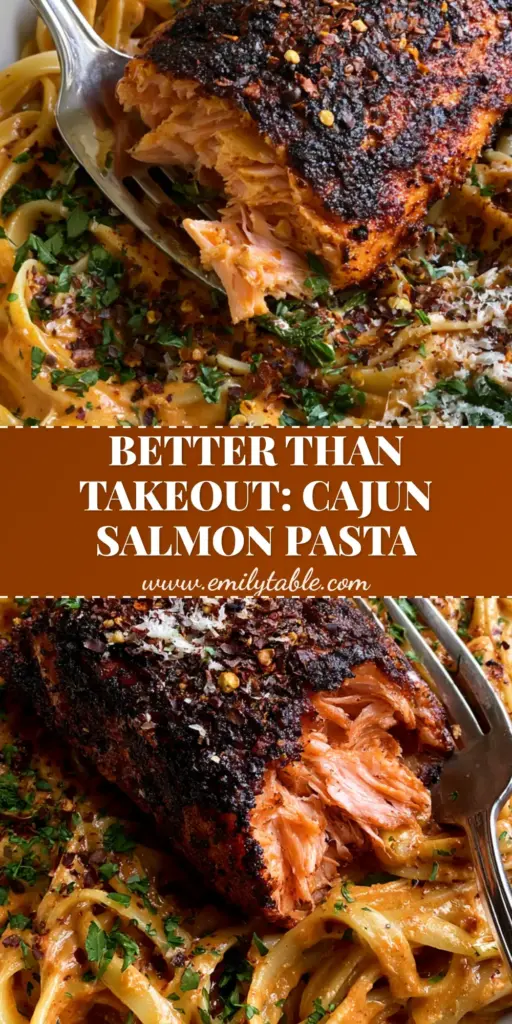
If you enjoyed this recipe, please leave a comment below and let us know how your salmon crust turned out! Don’t forget to follow Emily_Table on Pinterest and pin the image below to save this recipe for your next dinner party. Tag us in your photos—we love seeing those steaming pink layers and glossy fettuccine swirls!