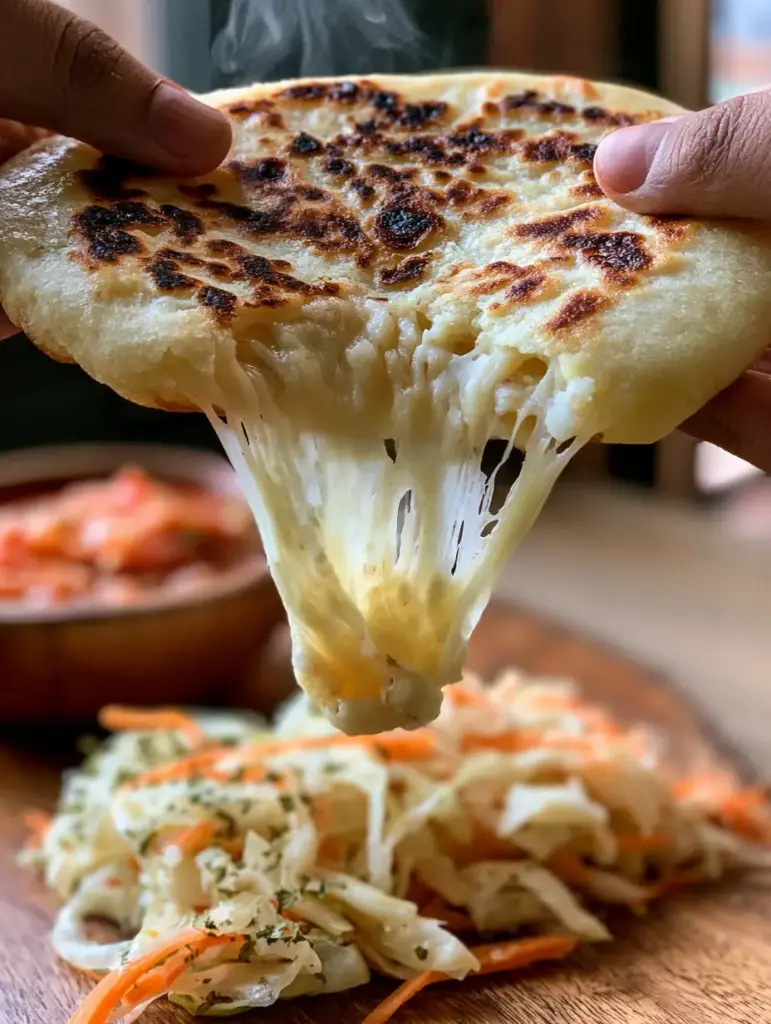
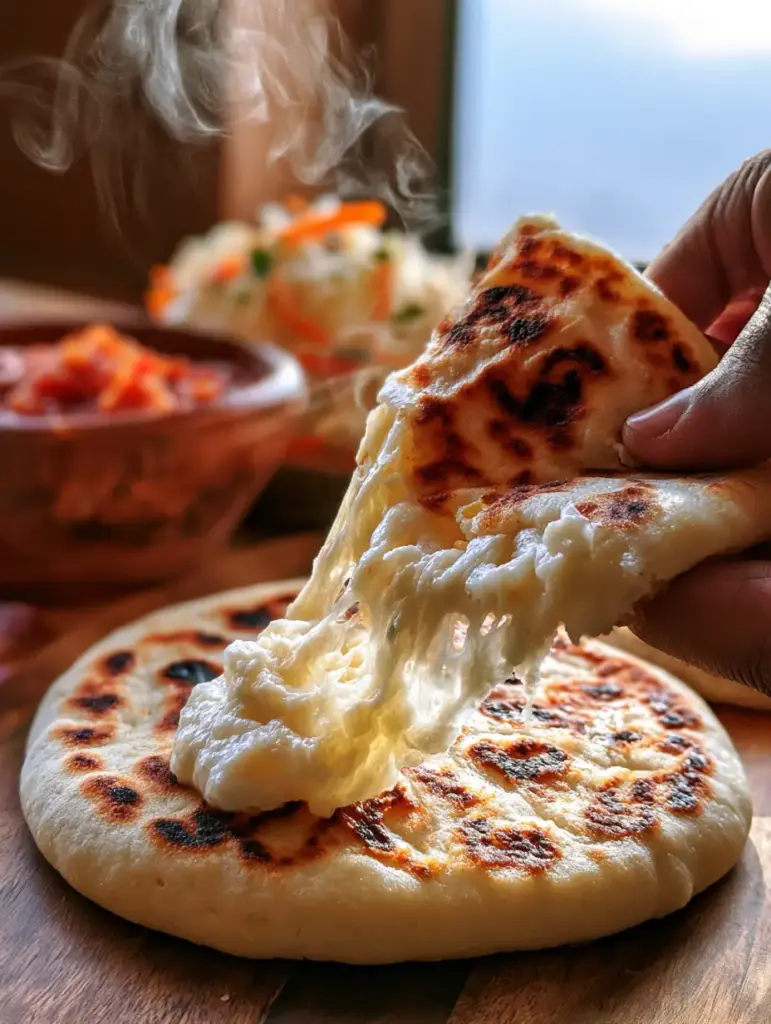
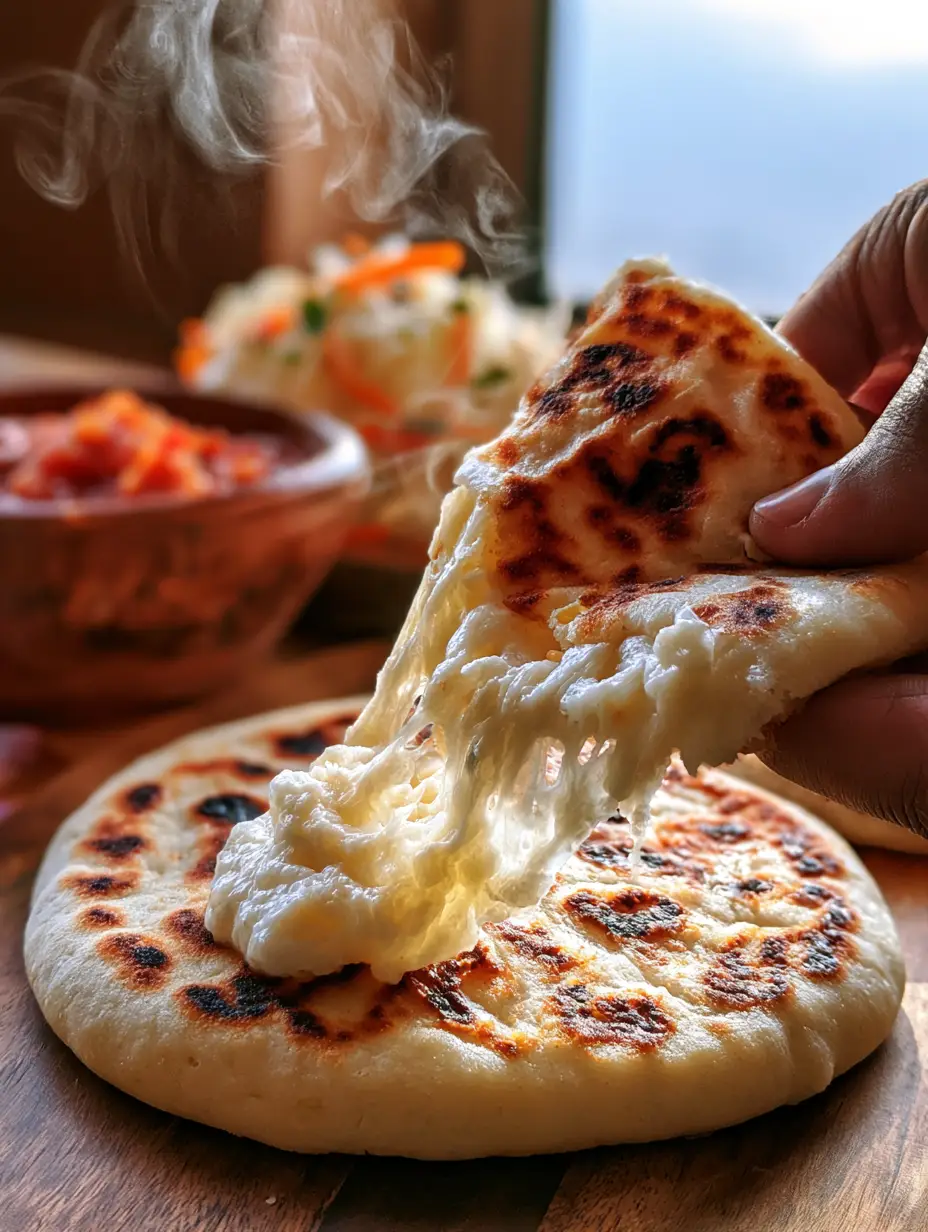
There is nothing quite like the sensory experience of a fresh pupusas recipe being served straight from a sizzling griddle. Imagine a thick, pillowy corn masa disk, toasted to perfection with distinct golden-brown charred spots that offer a slight crunch before yielding to a soft, steaming interior. As you pull the dough apart with your hands, a massive, gooey, and incredibly stretchy river of melted white quesillo cheese creates the ultimate focal point.
This authentic Salvadoran pupusas recipe captures the heart of Central American street food, bringing that rustic pupuseria experience into your home kitchen. From the rising steam to the vibrant crunch of the pickled cabbage slaw, every element is designed to hit those traditional flavor profiles. Served on a rustic wooden plate, these pupusas aren’t just a meal; they are a masterclass in texture and culinary heritage.
To truly master the pupusas recipe, one must appreciate the balance between the earthy toasted corn and the sharp, acidic bite of the accompanying curtido. The smooth, crack-free dough is the hallmark of a skilled cook, ensuring that every ounce of cheese stays trapped inside until the very first bite. Whether you are a seasoned chef or a home cook looking for a new weekend project, this guide will walk you through the science of the perfect masa and the art of the cheese pull.
Why This Authentic Pupusas Recipe Works
- Visual Texture Perfection: We utilize specific hydration techniques to ensure a smooth, intact masa dough with zero cracks, mirroring the professional look of a traditional pupuseria.
- The Ultimate Cheese Pull: By using authentic Salvadoran quesillo, we achieve that iconic, massive stretchy center that stays melted and gooey even as the pupusas cool slightly.
- Foundationally Sound Flavors: The recipe includes a meticulously balanced curtido with orange carrot slivers and dried oregano flakes, providing the necessary acidity to cut through the rich corn dough.
- Scientifically Accurate Searing: We provide specific cues for achieving those distinct charred golden-brown spots on a griddle, ensuring a toasted exterior without drying out the center.
Essential Elements for the Perfect Stuffed Masa
To recreate the visual and textural success of this pupusas recipe, each ingredient serves a specific structural purpose. You cannot achieve the “no-crack” masa without the right hydration, nor can you get the authentic flavor without the specific spices in the slaw.
Masa Harina: 3 cups (360g). This nixtamalized corn flour is the structural backbone of the dish, providing the earthy aroma and soft, pliable texture necessary for stuffing.
Warm Water: 2 1/2 cups (600ml). Using warm water specifically helps to bloom the corn flour, resulting in a more elastic dough that resists cracking during the hand-forming process.
Kosher Salt: 1 tsp (6g). This foundational seasoning enhances the natural sweetness of the corn and ensures the dough isn’t bland against the rich cheese filling.
Quesillo Cheese: 2 cups (225g), shredded. This traditional Salvadoran cheese is high-moisture and low-acid, which is what creates that massive, stretchy cheese pull seen in our visual blueprint.
Vegetable Oil: 2 tbsp (30ml). A small amount of oil is used on the hands during shaping to create a moisture barrier, ensuring the dough remains perfectly smooth and intact.
Green Cabbage: 1/2 head (approx. 400g), finely shredded. This forms the base of the curtido, providing a crunchy, fresh contrast to the warm, soft pupusas.
Carrots: 1 large (100g), grated into thin slivers. The carrots add a pop of orange color and a subtle sweetness to the fermented slaw.
Dried Oregano Flakes: 1 tsp (2g). This is the signature aromatic of Salvadoran curtido, offering an earthy, herbal note that defines the dish’s flavor profile.
White Vinegar: 1/2 cup (120ml). The acidity in the vinegar “picksles” the cabbage quickly, creating the vibrant, sharp taste required for a traditional pairing.
Roma Tomatoes: 3 large (approx. 300g). These are simmered down to create a thin, vibrant red Salvadoran salsa that is served warm over the pupusas.
Professional Tools for the Salvadoran Griddle
While you don’t need a commercial kitchen to execute this pupusas recipe, a few specific tools will help you achieve the visual cues of the “golden-brown griddle sear marks.” A heavy-cast iron griddle or comal is preferred because it retains heat evenly, allowing for those beautiful charred spots without hot spots.
You will also want a wide, flat spatula for flipping, as the pupusas are delicate when first placed on the heat. A rustic wooden plate is the traditional way to serve these, as the wood absorbs excess moisture, preventing the bottom of the corn dough from becoming soggy from the rising steam.
The Science of the Perfect Pupusa Dough
Hydrating the Masa Harina
In a large mixing bowl, combine the masa harina and salt. Slowly pour in the warm water while mixing with your hand. The goal is a consistency similar to soft Play-Doh; it should be moist enough to hold together but not so sticky that it clings to your fingers. If the dough feels gritty, add water one tablespoon at a time.
The Kneading Process
Knead the dough for at least 3-5 minutes. This step is crucial for “smooth and intact” results. Kneading ensures that every particle of corn flour is fully hydrated, which prevents the dough from cracking when you begin the stuffing process. Let the dough rest, covered with a damp cloth, for 10 minutes to stabilize.
Stuffing and Shaping for a Seamless Finish
Creating the Masa Cup
Lightly oil your hands with vegetable oil. Take a golf-ball-sized portion of dough (approx. 60g) and roll it into a perfectly smooth sphere. Using your thumbs, indent the center and pinch the edges to create a small cup or bowl shape. The walls should be of even thickness to ensure uniform cooking.
The Cheese Seal
Place a generous tablespoon of shredded quesillo in the center. Carefully fold the edges of the dough over the cheese, pinching them together at the top to seal the ball completely. Gently flatten the ball between your palms until it is about 1/2 inch thick, rotating as you press to keep it circular and free of cracks.
Achieving the Perfect Golden-Brown Sear
The Comal Method
Heat a cast-iron griddle over medium-high heat. You want the surface to be hot enough that a drop of water dances and evaporates instantly. Do not overcrowd the pan. Place the pupusas on the dry or very lightly oiled surface.
Visual and Sensory Cues
Sear the first side for about 3-4 minutes. You are looking for distinct, charred golden-brown spots to appear. You will hear a light sizzling sound as the moisture in the dough evaporates. Flip the pupusa and cook for another 3 minutes. At this point, the pupusa may slightly puff up from the rising steam inside—this is the sign that your cheese is perfectly melted and gooey.
Preparing the Vibrant Curtido and Salsa Roja
The Pickled Slaw (Curtido)
In a large bowl, toss the shredded cabbage, grated carrots, and dried oregano flakes. Pour over the vinegar, 1/2 cup of water, and a pinch of salt. Massage the vegetables with your hands for a minute to soften the cabbage. For the best flavor, let this sit for at least 30 minutes before serving with your pupusas recipe.
The Thin Red Salsa
Boil the tomatoes with a quarter of an onion and a clove of garlic until the skins burst. Blend the mixture until completely smooth, then simmer in a small saucepan with a pinch of salt until it reaches a thin, pourable consistency. The salsa should be vibrant red and served warm to complement the hot pupusas.
Expert Tips for Pupuseria Success
- The Oil Barrier: Always keep your hands lightly oiled when shaping. This is the secret to the “no cracks” visual described in our blueprint.
- Cheese Selection: If you cannot find Salvadoran quesillo, a 50/50 blend of whole-milk mozzarella and Monterey Jack provides a similar stretch and flavor profile.
- Temperature Control: If your pupusas are browning too fast but the cheese hasn’t melted, drop the heat to medium. The steam needs time to build inside the masa.
- Resting the Dough: Never skip the 10-minute rest period for the masa. It allows the starches to fully absorb the water, making the dough much easier to handle.
The Best Pairings for Salvadoran Pupusas
While this pupusas recipe is a complete meal on its own, it pairs beautifully with other vibrant textures. If you are serving a crowd, consider adding a side of creamy Mexican street corn to lean into those toasted corn notes. For a lighter contrast, a fresh Caprese salad or a crunchy taco salad provides a refreshing break from the rich, melted cheese.
If you enjoy the fusion of bold spices, you might even serve these alongside a zesty Cowboy Caviar or a classic macaroni salad for a backyard gathering. The versatility of the corn masa makes it a wonderful companion to many summer side dishes.
Frequently Asked Questions
No, you must use masa harina (nixtamalized corn flour). Regular cornmeal will not hold together and lacks the characteristic flavor and texture of an authentic pupusa.
Yes! In fact, curtido tastes better after sitting for at least 30 minutes, or even overnight, allowing the flavors of the oregano and vinegar to penetrate the cabbage.
Look for distinct golden-brown charred spots on both sides. The pupusa will also slightly puff up in the center, indicating the steam has melted the cheese inside.
If you can’t find Salvadoran quesillo, a mixture of whole-milk shredded mozzarella and Monterey Jack is the best substitute for that signature stretchy cheese pull.
The secret is proper hydration and oiling your hands. Knead the masa until it feels like soft Play-Doh, and keep a small bowl of oil nearby to coat your palms while shaping the dough.
Authentic Salvadoran Pupusas with Quesillo and Curtido
Pupusas Recipe: The Ultimate Guide to Authentic Salvadoran Stuffed Tortillas
Ingredients
Equipment
Method
- Combine shredded cabbage, grated carrots, oregano, and vinegar in a bowl. Massage for 1 minute and set aside to pickle.
- Mix masa harina, salt, and warm water. Knead for 3-5 minutes until smooth and Play-Doh-like. Rest for 10 minutes.
- Oil hands, form a masa ball, indent into a cup, fill with cheese, and seal. Flatten gently into a disk.
- Cook on a hot griddle for 3-4 minutes per side until golden-brown charred spots appear and cheese is melted.
Notes
If quesillo is unavailable, use whole-milk mozzarella for the best stretch.
Bring the Pupuseria to Your Kitchen
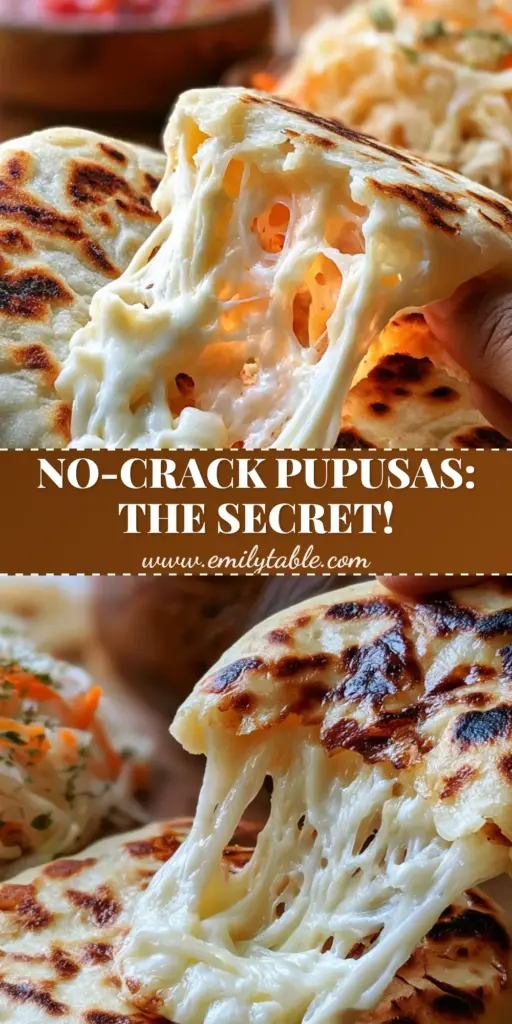
Mastering this pupusas recipe is a rewarding journey into the heart of Salvadoran culture. The combination of the toasted corn, the legendary cheese pull, and the acidic crunch of the curtido creates a balanced flavor profile that is hard to beat. This dish is best enjoyed fresh, with steam still rising from the center as you pull it apart.
If you loved making these, please leave a comment below and share your results! Don’t forget to follow Emily_Table on Pinterest for more authentic recipes and culinary inspiration. Pin this recipe to your “International Favorites” board so you can find it whenever the craving for authentic street food strikes!