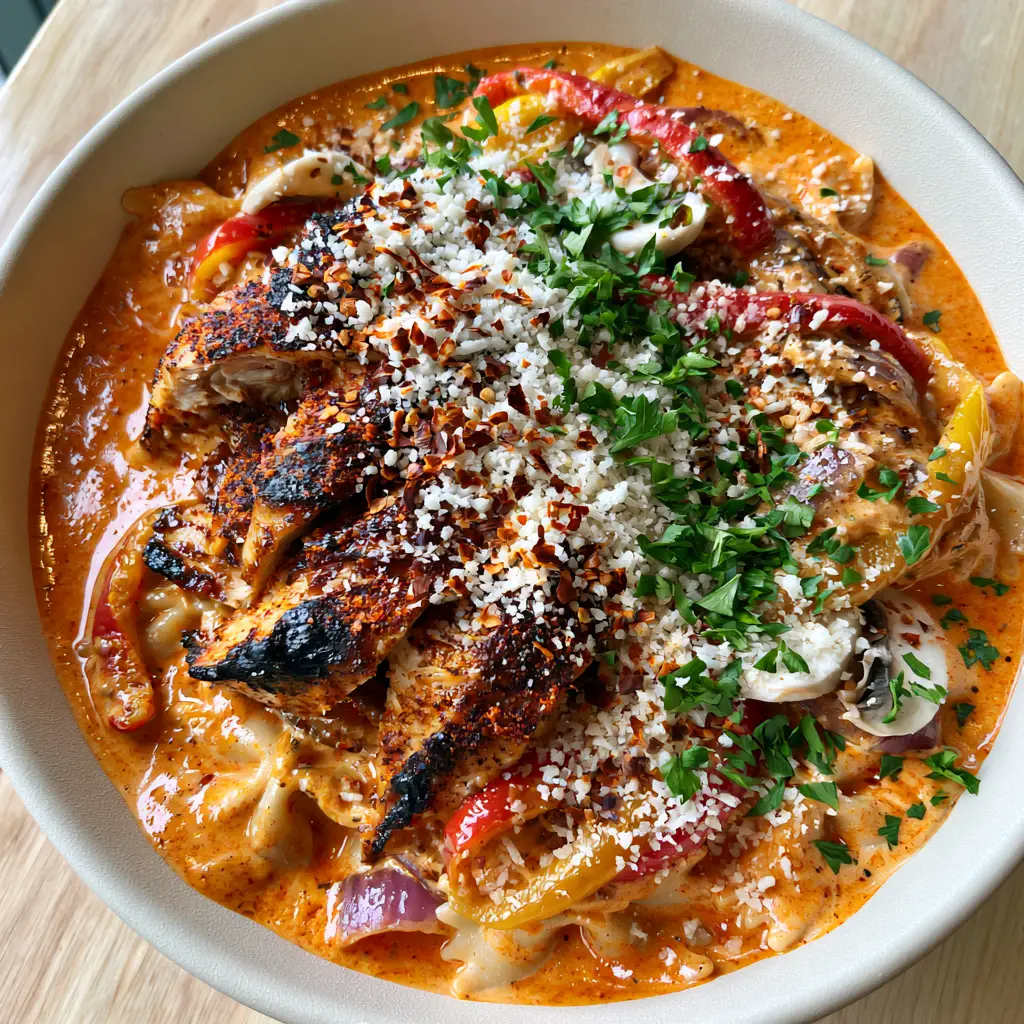
If you have ever stepped foot inside a Cheesecake Factory, you know the magnetic pull of their Louisiana Chicken Pasta. The cheesecake factory cajun creamy pasta is a masterclass in texture, featuring a vibrant orange-red sauce that clings to every fold of bowtie pasta, topped with chicken that boasts a perfect, spice-crusted char.
Reproducing this iconic dish at home requires more than just mixing cream and spices; it is about the forensic application of heat and emulsion. We are going to recreate that velvety, glossed finish and the deep, savory notes of sautéed peppers and mushrooms that make this meal a legendary comfort food staple.
In this guide, we will break down the science of the “cajun sear” and how to achieve a restaurant-quality emulsified sauce that never breaks. Get ready to transform your kitchen into a high-end bistro with this visually stunning and palate-thumping recipe.
Why This Homemade Cajun Creamy Pasta Beats the Restaurant Version
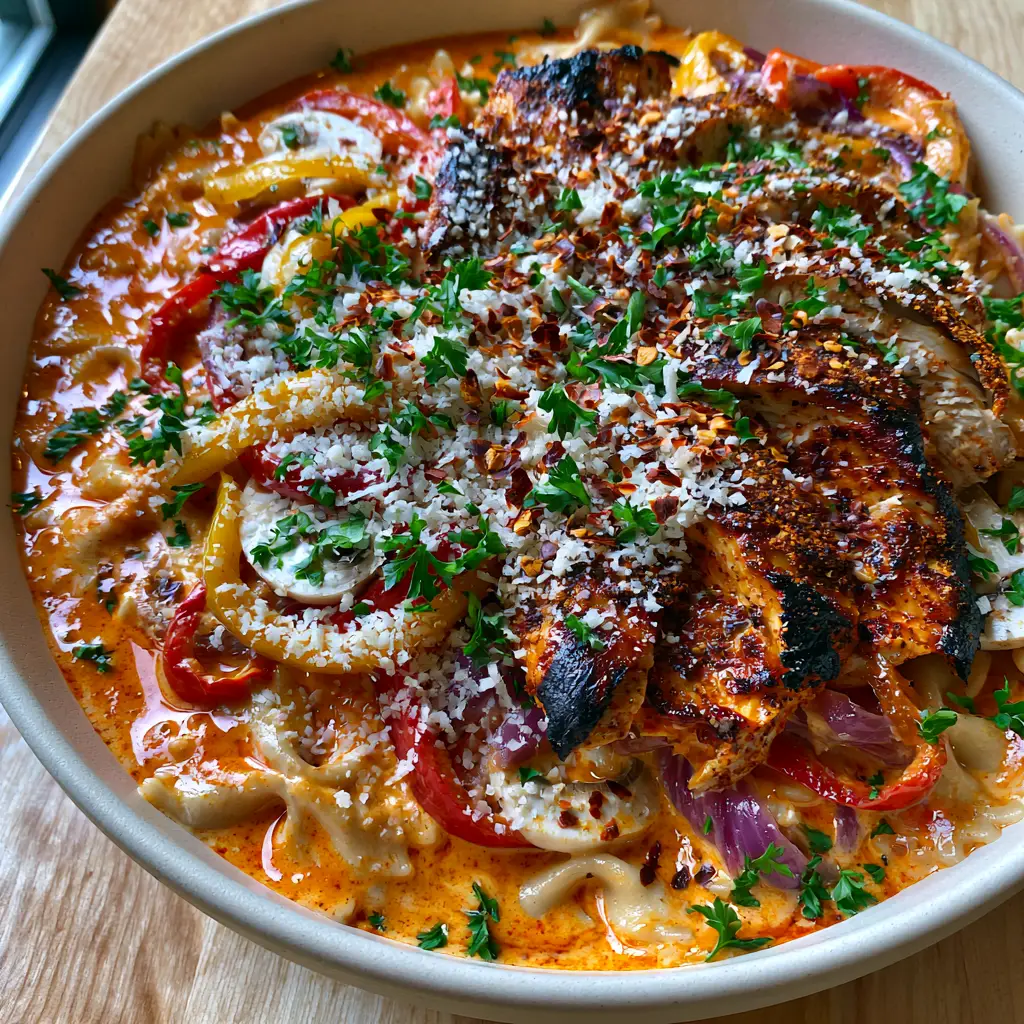
- Visual Precision: We are targeting a specific vibrant orange-red hue in the sauce, accented by the bright greens of fresh parsley and the stark white of finely grated parmesan.
- Texture Contrast: By searing the chicken at high heat, we create a charred exterior that protects a juicy, tender interior, providing a rhythmic contrast to the al dente bowtie pasta.
- Emulsified Excellence: Unlike watery home versions, this sauce uses a specific reduction technique to ensure a “velvety” mouthfeel that coats the back of a spoon—and every piece of pasta—perfectly.
- Custom Heat Levels: While the original is bold, making the cheesecake factory cajun creamy pasta at home allows you to calibrate the red pepper flake intensity to your exact preference.
The Anatomy of a Perfect Copycat: Essential Ingredients
Every element in this list serves a dual purpose: architectural stability for the sauce and forensic visual accuracy to the original dish. We don’t skip the small stuff here.
1 lb (450g) Bowtie (Farfalle) Pasta: The “bow” shape is non-negotiable, as the center pinch provides a chewy texture while the wings catch the heavy cajun cream. Cook this strictly al dente to ensure it doesn’t turn mushy when tossed in the hot sauce.
1.5 lbs (680g) Boneless Skinless Chicken Breasts: We want thick, hefty slices that can withstand a hard sear. The chicken provides the protein backbone and the smoky charred edges described in our visual blueprint.
2 tbsp (30g) Cajun Spice Rub: A high-quality blend of paprika, garlic powder, onion powder, and cayenne is vital. This rub creates the “dark golden-brown charred edges” mentioned in the visual prompt.
1 cup (240ml) Heavy Cream: This is the foundation of the velvety orange sauce. Its high fat content allows it to reduce without curdling, creating that thick, glossy finish.
1/2 cup (120ml) Chicken Broth: Used to deglaze the pan, this liquid picks up the “fond” (the brown bits) from the chicken and peppers, deepening the sauce’s color and flavor profile.
Bell Peppers & Onions: We use 1 large red bell pepper and 1 large yellow bell pepper, sliced into strips, along with 1 medium red onion. These provide the sweetness and vibrant color pops that define the dish’s aesthetic.
8 oz (225g) White Mushrooms: Sliced mushrooms add an earthy, umami depth and a soft texture that complements the snap of the peppers. If you enjoy this earthy profile, you might also love our creamy garlic tomato pasta.
Garnish Essentials: Finely grated Parmesan cheese, dried red pepper flakes, and fresh chopped parsley. These are the final “visual dustings” that elevate the dish from a meal to a work of art.
The Culinary Tools for Success
To achieve the specific handheld smartphone photo aesthetic—where the sauce is glossy and the chicken is perfectly sliced—you need the right gear. A heavy-bottomed stainless steel or cast iron skillet is preferred over non-stick to achieve that authentic char on the chicken and peppers.
You will also need a sharp chef’s knife for clean, uniform slices of peppers and mushrooms. A wide, shallow matte white ceramic bowl is the best vessel for serving, as it allows the colors of the cheesecake factory cajun creamy pasta to pop against the neutral background.
Step-by-Step Evolution of the Dish
Mastering the Cajun Chicken Sear
Pat the chicken breasts completely dry with paper towels; moisture is the enemy of a good sear. Dredge the chicken heavily in the Cajun spice rub, pressing it into the meat to ensure every millimeter is covered.
Heat 2 tbsp (30ml) of neutral oil in your skillet over medium-high heat until it shimmers. Lay the chicken in and do not move it for 5-6 minutes. You are looking for a deep, dark golden-brown crust—the “cajun spice rub” should look toasted and dark, providing that signature charred edge. Flip and cook until the internal temperature reaches 165°F (74°C), then rest the meat for 5 minutes before slicing into thick strips.
Sautéing the Vegetable Medley
In the same pan, add another 1 tbsp (15g) of butter. Toss in the sliced red and yellow bell peppers, red onions, and mushrooms. The goal here is “softened but vibrant.”
Sauté for 6-8 minutes until the onions are translucent and the mushrooms have released their moisture and turned golden. The red and yellow strips should be pliable but still hold their shape, providing that packed-in-vegetable look seen in the original cheesecake factory cajun creamy pasta.
The Science of the Velvety Orange Sauce
Deglaze the skillet with the chicken broth, scraping up all the blackened bits from the chicken. Pour in the heavy cream and whisk in 1 tbsp (15g) of tomato paste—this is the secret to achieving that “vibrant orange-red” color.
Simmer the sauce over medium heat for 4-5 minutes. You want the water to evaporate so the fats can emulsify, resulting in a sauce that looks “thick, glossy, and velvety.” If the sauce feels too thick, add a splash of reserved pasta water to loosen it while maintaining the gloss.
The Final Assembly and Plating
Toss the al dente bowtie pasta into the sauce, ensuring every ridge is coated. Fold in the sautéed vegetables. Place the pasta into a shallow bowl and layer the thick chicken slices on top.
Finish with a “heavy dusting” of finely grated parmesan, a “generous scatter” of parsley, and a pinch of red pepper flakes. This layering ensures the chicken remains the star while the sauce creates a lush foundation. For a different protein profile with similar spices, check out our blackened cajun salmon pasta.
Expert Tips for a Professional Finish
- The Pasta Water Trick: Always save 1/2 cup (120ml) of starchy pasta water. If your cream sauce reduces too far and starts to look oily, a splash of this water will re-emulsify the sauce instantly.
- Rest Your Chicken: Never slice the chicken immediately after it leaves the pan. Resting allows the juices to redistribute, ensuring the chicken looks “juicy” in your final photo rather than dry.
- Control the Color: If your sauce is looking too pale, add a tiny pinch of smoked paprika. It enhances the orange hue without making the sauce overly spicy.
- Cold Butter Finish: For an extra restaurant-style gloss, whisk in a tablespoon of cold butter right before serving. This is a classic French technique called monter au beurre.
Storage and Reheating Strategies
This cheesecake factory cajun creamy pasta is best served fresh to maintain the emulsified sauce texture. However, leftovers can be stored in an airtight container for up to 3 days.
When reheating, do not use the microwave on high power, as the cream sauce will break and become oily. Instead, place the pasta in a skillet over low heat with a splash of milk or cream. Gently toss until the sauce becomes velvety again and the chicken is warmed through.
What to Serve with Cajun Creamy Pasta
This dish is incredibly rich and bold, so it pairs best with light, acidic sides. A simple arugula salad with a lemon vinaigrette helps cut through the heavy cream. If you are looking for other creamy inspirations, you might enjoy our creamy lemon ricotta pasta or perhaps a cajun sausage cavatappi pasta for a different textural experience.
For a full restaurant-style feast, serve with garlic bread to mop up every last drop of that vibrant orange sauce. If you prefer a bit of surf-and-turf action, consider pairing this with elements from our cajun shrimp and steak alfredo.
Frequently Asked Questions
Yes, you can swap bowtie for penne or cavatappi. However, bowtie pasta is traditional for this specific dish because its shape is perfect for holding onto the thick cream sauce.
Ensure the chicken is patted dry, heavily coated in dry spices, and seared in a very hot skillet with oil. Do not move the chicken for several minutes to allow the crust to form.
The secret is adding a small amount of tomato paste and a high-quality cajun seasoning with plenty of paprika. The tomato paste emulsifies with the heavy cream to create that vibrant orange-red hue.
It has a medium kick due to the Cajun seasoning and red pepper flakes. You can easily control the heat by reducing the amount of cayenne or pepper flakes used in the sauce.
Avoid boiling the sauce on high heat. Use a gentle simmer and ensure you are using heavy cream rather than milk. Whisking in a splash of starchy pasta water at the end helps keep the emulsion stable.
Cheesecake Factory Cajun Creamy Pasta Recipe Card
Cheesecake Factory Cajun Creamy Pasta: The Ultimate Copycat Louisiana Chicken Pasta
Ingredients
Equipment
Method
- Boil bowtie pasta in salted water until al dente. Reserve 1/2 cup pasta water before draining.
- Coat chicken in Cajun rub. Sear in a hot skillet with oil for 5-6 minutes per side until charred edges form. Slice into thick strips.
- In the same skillet, sauté peppers, onions, and mushrooms until softened and golden.
- Deglaze with broth, then add cream and tomato paste. Simmer until thick, glossy, and vibrant orange.
- Toss pasta and vegetables in the sauce. Top with chicken, parmesan, parsley, and red pepper flakes.
Notes
Don't skip the tomato paste; it provides the signature orange-red color.
Closing & Call to Action
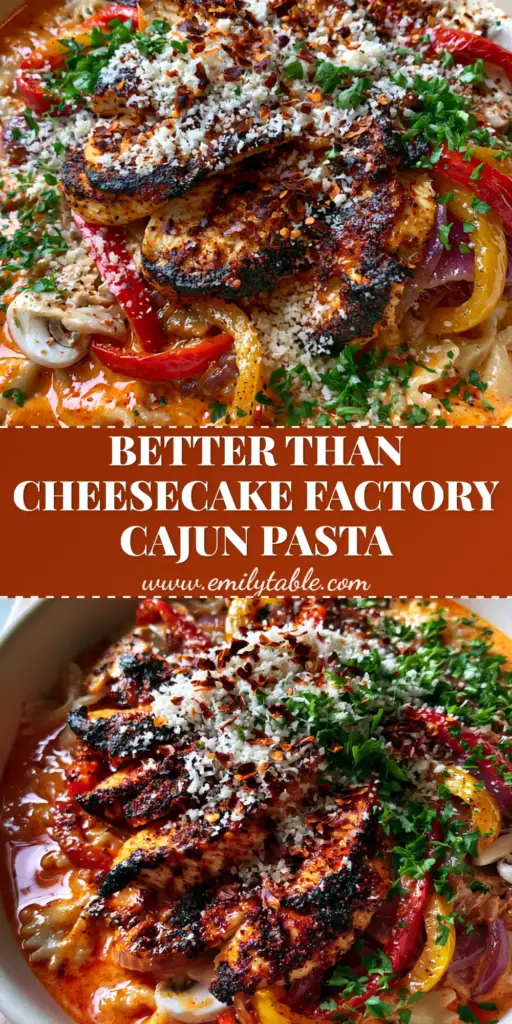
Bringing the magic of the cheesecake factory cajun creamy pasta into your own kitchen is a rewarding culinary feat. By focusing on the sear of the chicken and the emulsion of the cream sauce, you have created a dish that is visually identical to the restaurant favorite and arguably better in flavor. The combination of charred spices, velvety sauce, and fresh peppers is a guaranteed crowd-pleaser.
Did you manage to get that perfect orange glow in your sauce? Let us know in the comments below! If you loved this recipe, please share it with your friends and follow us on Pinterest for more restaurant-quality copycat recipes. Don’t forget to tag us in your food photos!