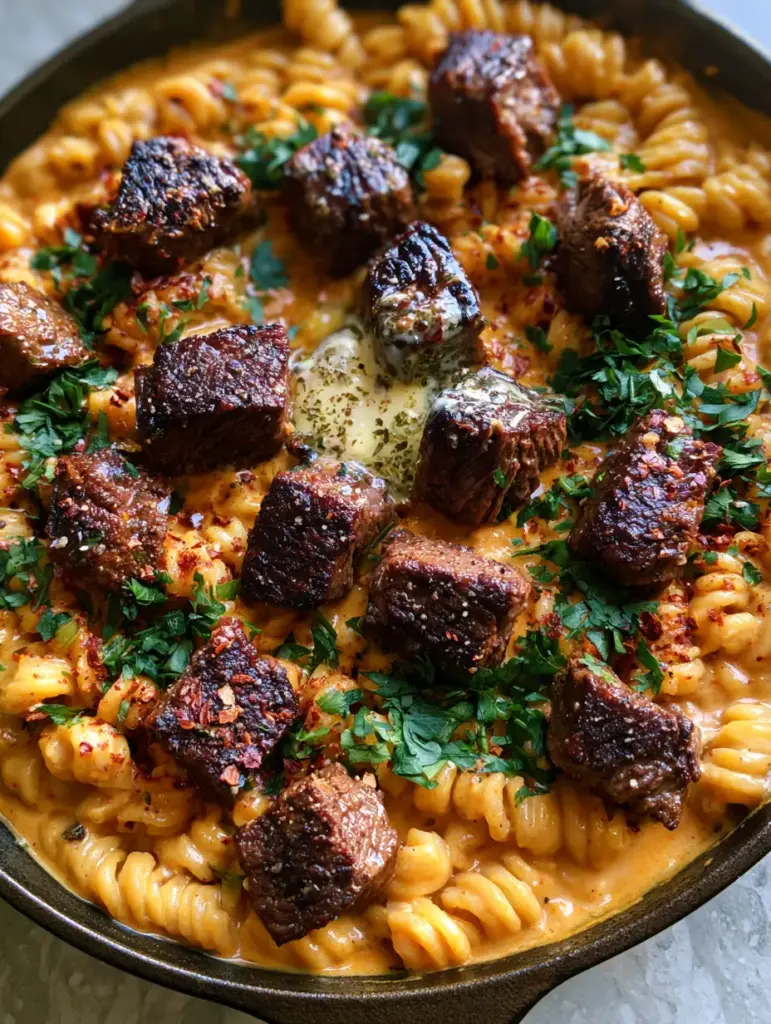
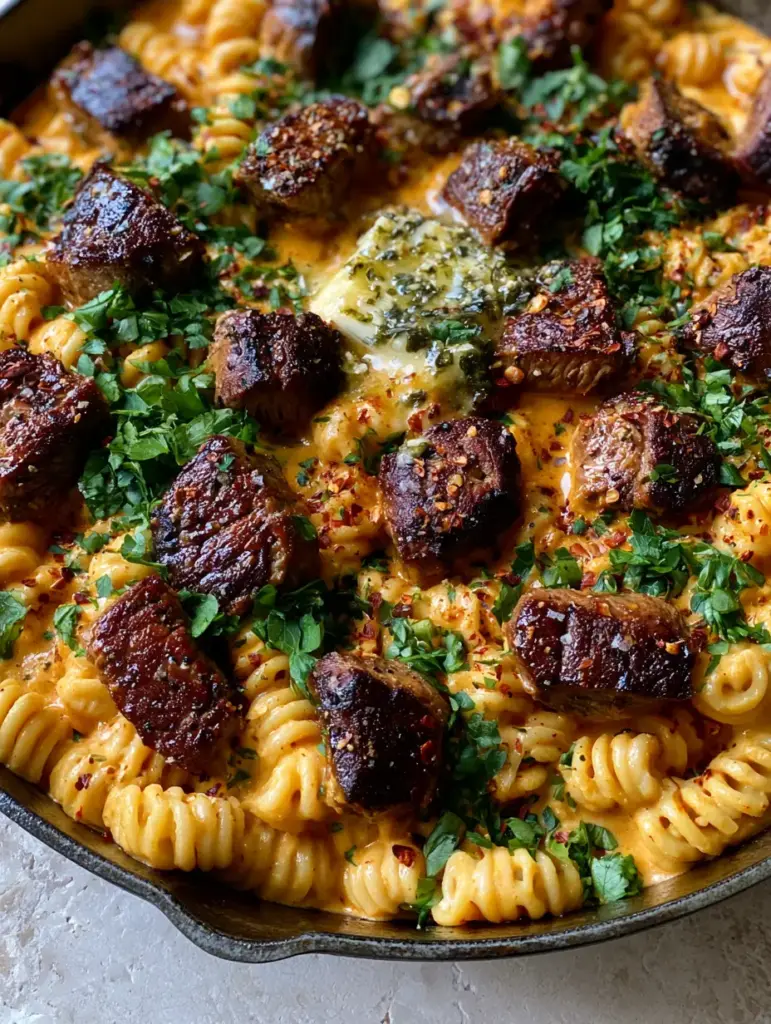
Cajun Butter Steak Pasta is the ultimate marriage of rustic comfort and restaurant-quality elegance, designed specifically for those who crave bold, fiery flavors and tender, juicy beef. Imagine a cast iron skillet piled high with al dente radiatori pasta, each unique ridge and ruffle expertly coated in a thick, velvety cream sauce that glows with a vibrant orange hue.
The centerpiece of this dish is the collection of thick-cut steak bites, seared to a perfect mahogany crust that locks in every drop of savory juice. As you serve it, a crown of garlic herb butter melts slowly over the warm steak, creating a glossy, decadent sheen that mingles with the freshly chopped parsley and crushed red pepper flakes.
This recipe isn’t just about feeding a family; it is a sensory experience designed to mimic the high-end appeal of a gourmet steakhouse. From the sizzle of the beef hitting the hot iron to the way the sauce clings to every curve of the pasta, every detail has been refined to ensure visual and culinary perfection.
Why You Will Love This Indulgent Skillet Pasta
- Unmatched Texture Mapping: The al dente radiatori pasta is selected specifically because its radiator-like shape creates maximum surface area for the thick cajun cream sauce to cling to.
- Professional Mahogany Sear: We use specific high-heat techniques in a cast iron skillet to achieve that deep, dark crust on the steak bites described in the visual blueprint.
- Layered Flavor Profiles: Between the homemade Cajun spice blend and the finishing pat of garlic herb butter, this dish hits every note from savory and salty to spicy and aromatic.
- Visually Stunning Presentation: The contrast between the orange-tinted sauce, the dark seared steak, and the vibrant green parsley makes this a true showstopper for any dinner table.
The Anatomy of Flavor: Ingredients and Essential Substitutions
Radiatori Pasta: 1 lb (454g). This ruffled shape is non-negotiable for achieving the “sauce-clinging” look; however, if you cannot find it, fusilli or campanelle are excellent alternatives that offer similar ridges.
Sirloin or Ribeye Steak: 1.5 lbs (680g). Look for thick-cut steaks with good marbling, which ensures the steak bites remain tender and juicy even after a high-heat sear in the skillet.
Heavy Cream: 2 cups (475ml). This provides the “velvety, orange-tinted” base for our sauce, reacting with the spices to create a thick, stable emulsion that won’t break under heat.
Cajun Seasoning: 3 tbsp (24g). A blend of smoked paprika, cayenne, garlic powder, and onion powder gives the sauce its signature kick and warm color.
Unsalted Butter: 4 tbsp (56g). Divided between the searing process and the final herb butter topping, this provides the “glossy sheen” essential for the final presentation.
Fresh Garlic: 4 cloves (12g). Minced finely, garlic acts as the aromatic backbone for both the cream sauce and the finishing herb butter.
Fresh Flat-Leaf Parsley: 1/2 cup (15g). The vibrant green garnish provides a necessary visual pop and a fresh, herbaceous counterpoint to the heavy, spicy sauce.
Crushed Red Pepper Flakes & Black Pepper: 1 tsp each (2g). These are essential for the “dusting” and “cracked” finish described in the visual blueprint, adding controlled heat and texture.
Beef Broth or Pasta Water: 1/2 cup (120ml). This foundational “invisible” ingredient helps thin the sauce to the perfect consistency if it becomes too thick during the simmering stage.
High-Smoke Point Oil: 2 tbsp (30ml). Use avocado or grapeseed oil for searing the steak; this ensures you reach the necessary temperature for a crust without burning the fat.
Essential Kitchen Tools for the Perfect Sear
To achieve the rustic look of the Cajun Butter Steak Pasta, a 12-inch (30cm) cast iron skillet is the preferred vessel. The heavy iron retains heat better than stainless steel, which is critical for developing the mahogany crust on the beef bites.
You will also need a large pot for boiling the pasta to a perfect al dente state. A sturdy pair of tongs is essential for flipping individual steak bites to ensure even browning on all sides without crowding the pan.
Developing the Mahogany Crust: A Step-by-Step Guide
Preparing the Radiatori Foundations
Bring a large pot of heavily salted water to a rolling boil. Add 1 lb (454g) of radiatori pasta and cook for approximately 8-9 minutes, or until just shy of your desired tenderness.
It is crucial to keep the pasta “al dente” because it will continue to cook slightly once tossed in the hot cream sauce. Reserve 1 cup (240ml) of the starchy pasta water before draining; this is your insurance policy for a silky sauce.
Mastering the High-Heat Steak Sear
Pat your 1.5 lbs (680g) of steak cubes completely dry with paper towels. Season them generously with cracked black pepper and a portion of the Cajun spice blend, ensuring each side is coated.
Heat your cast iron skillet over medium-high heat with 2 tbsp (30ml) of oil until it begins to shimmer and smoke slightly. Add the steak bites in a single layer, ensuring they do not touch; you may need to work in batches to avoid steaming the meat.
Leave the steak undisturbed for 2-3 minutes to develop that dark mahogany crust. Flip the pieces and sear for another 2 minutes, then remove them from the skillet and set aside on a plate to rest.
Building the Thick Cajun Cream Sauce
In the same skillet (don’t wash it—those brown bits are flavor gold!), lower the heat to medium and add 2 tbsp (28g) of butter. Stir in the minced garlic and remaining Cajun seasoning, toasting them for 60 seconds until fragrant.
Pour in 2 cups (475ml) of heavy cream, using a wooden spoon to scrape the bottom of the pan. Allow the sauce to simmer gently for 4-5 minutes until it reduces slightly and takes on a thick, velvety texture and a deep orange tint.
The Final Emulsion and Garnish
Add the cooked radiatori pasta directly into the skillet with the sauce. Toss vigorously to ensure every ridge of the pasta is filled with the Cajun cream, adding a splash of pasta water if the sauce becomes too tight.
Place the seared steak bites back on top of the pasta. Immediately add a cold pat of garlic herb butter to the center of the steak bites, allowing the heat to create a glossy, melting effect as you prepare to serve.
Finish the dish by heavily garnishing with 1/2 cup (15g) of freshly chopped parsley, a generous dusting of crushed red pepper flakes, and an extra turn of cracked black pepper.
Expert Tips for Culinary Success
- The “Dry Steak” Rule: If your steak bites are damp, they will steam instead of sear. Always pat them dry to ensure you get the dark mahogany crust shown in the professional photography.
- Temperature Control: Ensure the heavy cream is at room temperature before adding it to the skillet to prevent the sauce from breaking or curdling.
- Resting the Meat: Let the steak rest for at least 5 minutes before adding it back to the pasta. This allows the juices to redistribute, ensuring every bite is succulent.
- Sauce Consistency: If the sauce looks too thin, let it simmer for an extra 2 minutes. If it’s too thick, the reserved pasta water will bring it back to a velvety sheen instantly.
Preserving the Flavor: Storage and Reheating
This Cajun Butter Steak Pasta is best enjoyed immediately, as cream-based sauces can lose their silkiness upon cooling. However, if you have leftovers, store them in an airtight container in the refrigerator for up to 3 days.
When reheating, avoid the microwave if possible, as it can cause the steak to become rubbery and the sauce to oily. Instead, place the pasta in a skillet over low heat with a tablespoon of milk or water, stirring gently until the cream emulsifies again.
Perfect Pairings and Table Settings
To balance the heat and richness of the Cajun Butter Steak Pasta, consider serving it with a crisp green salad or roasted seasonal vegetables. For those who love a full Cajun-inspired spread, this dish pairs beautifully alongside a creamy cajun sausage pasta for a multi-protein feast.
If you are looking for a lighter seafood alternative to serve at the same time, our blackened cajun salmon pasta offers a similar spice profile with a different protein base. For a classic steakhouse vibe, you might also enjoy the surf-and-turf experience of a cajun shrimp and steak alfredo pasta.
If you prefer a simpler garlic-forward side, a side of toasted baguette goes perfectly with the extra sauce from a creamy garlic butter pasta.
Frequently Asked Questions
While possible, you won’t achieve the same dark mahogany sear. A cast iron skillet is highly recommended for its superior heat retention.
The orange tint comes from the high quality smoked paprika and cayenne in the Cajun seasoning emulsifying with the white heavy cream.
It has a noticeable kick from the Cajun spices and red pepper flakes, but you can control the heat by reducing the amount of cayenne or chili flakes used.
Ribeye or Sirloin are best because they have enough fat to stay juicy during the high-heat searing process required for a mahogany crust.
Radiatori has multiple ridges and ruffles that act like small scoops, trapping the thick Cajun cream sauce much more effectively than smooth pasta shapes.
Master the Cajun Butter Steak Pasta Recipe
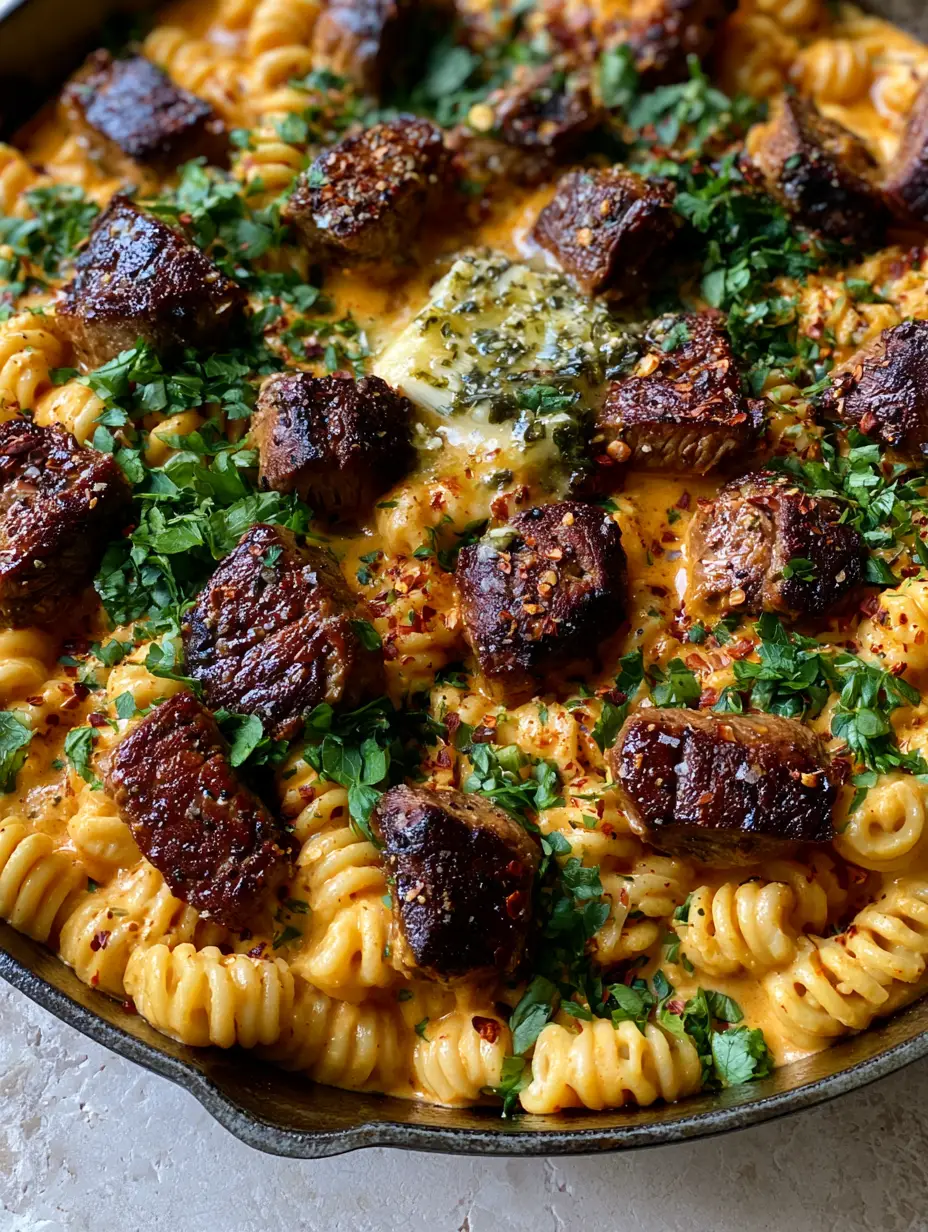
Cajun Butter Steak Pasta with Garlic Herb Glaze
Ingredients
Equipment
Method
- Cook radiatori in salted water until al dente. Reserve 1 cup of pasta water, then drain.
- Season dried steak cubes with Cajun spices. In a hot cast iron skillet with oil, sear steak bites until a dark mahogany crust forms. Remove and let rest.
- In the same skillet, melt butter and sauté garlic. Stir in heavy cream and remaining Cajun spices. Simmer until thick and orange-tinted.
- Toss pasta in the sauce until coated. Top with steak bites and a pat of garlic herb butter. Garnish with parsley and chili flakes.
Notes
Use room temperature cream to prevent the sauce from breaking.
Closing Thoughts on this Skillet Masterpiece
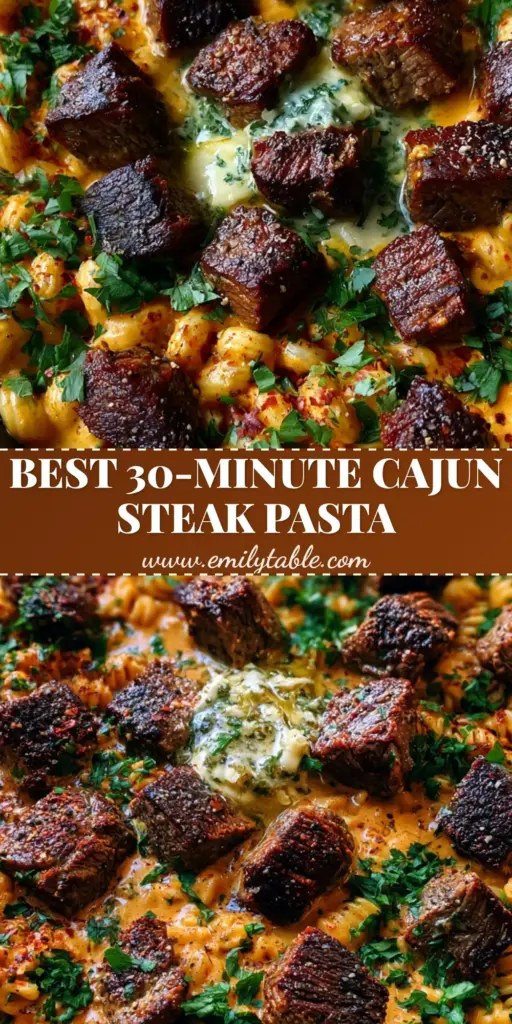
This Cajun Butter Steak Pasta is more than just a meal; it is a testament to how simple ingredients, when treated with professional technique, can create a world-class dining experience. The combination of the mahogany-seared steak and the velvety radiatori is a texture lover’s dream.
We invite you to try this recipe tonight and see the difference that high-quality searing and sauce emulsification can make. If you enjoyed this dish, please leave a comment below and share your results! Don’t forget to follow us on Pinterest for more inspired kitchen creations.