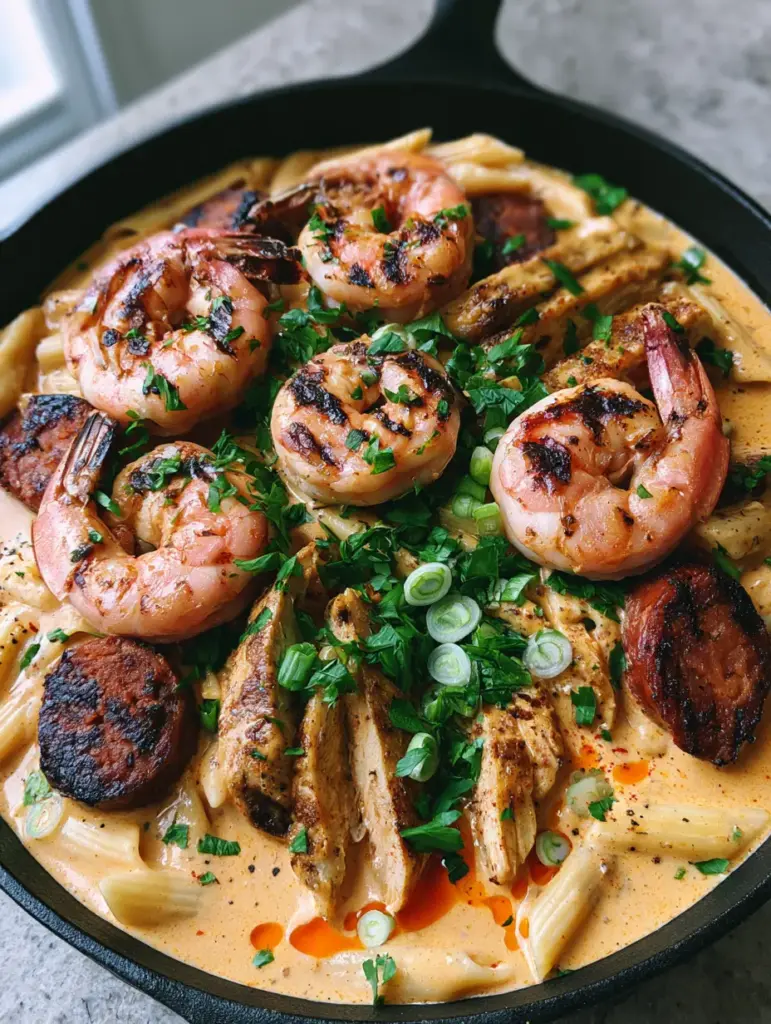
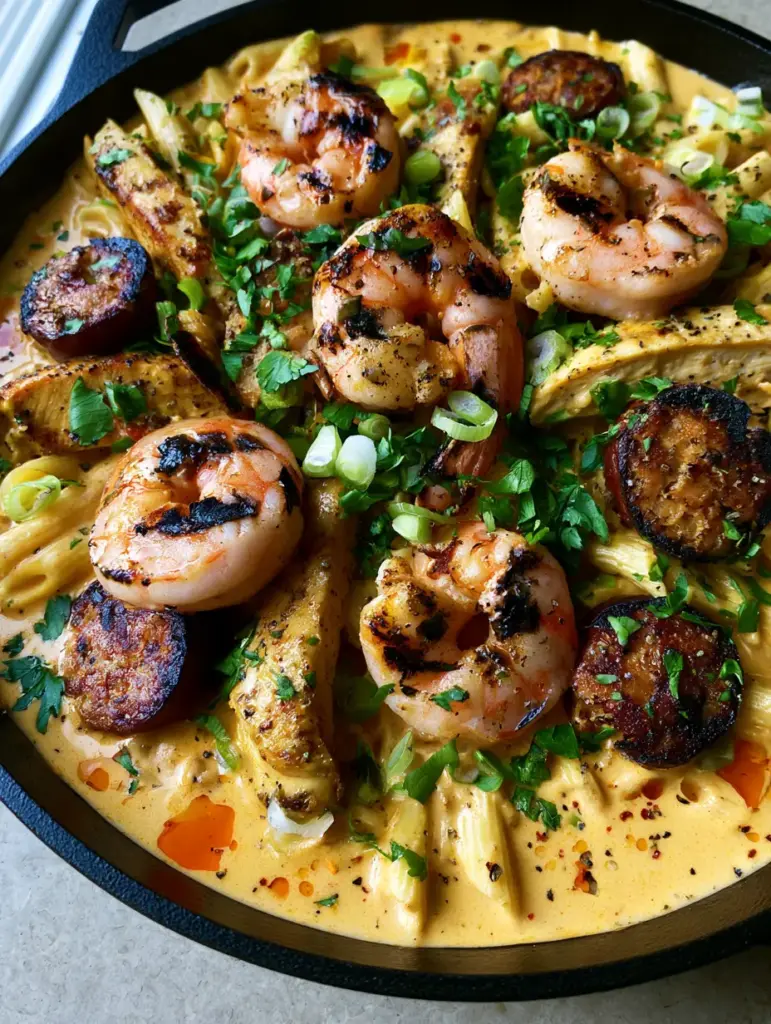
The Cajun jambalaya pasta is the ultimate intersection of Louisiana soul and Italian comfort. Imagine a shallow, matte black cast iron skillet overflowing with al dente penne, each tube perfectly coated in a thick, velvety sunset-orange cream sauce. This isn’t just a meal; it’s a visual and sensory explosion featuring succulent pink shrimp with dark sear marks, golden-brown chicken strips, and rounds of smoky andouille sausage charred to perfection. If you have been searching for that elusive restaurant-quality kick combined with a rich, decadent finish, this recipe is your definitive guide.
Every bite of this Cajun jambalaya pasta offers a complexity of flavors, from the earthy heat of cracked black pepper and red cayenne to the bright freshness of scallions and flat-leaf parsley. Looking at the glistening droplets of orange-tinted chili oil on the surface, you can almost taste the smoky depth of the spices. This dish is designed to be as beautiful on your table as it is delicious on your palate, mimicking the authentic food photography of a high-end bistro.
Why This Creamy Cajun Masterpiece Works
- The Triple Threat Protein: By combining seared shrimp, chicken breast, and smoky andouille, we create a layered flavor profile that mimics traditional jambalaya but elevates it with varied textures.
- Visual Contrast: The bright green scallions and parsley pop against the deep, sunset-orange sauce, making it a “hero” dish for any dinner party or family gathering.
- Perfect Sauce Emulsion: Using heavy cream and high-quality Cajun spices creates a thick, clingy sauce that won’t pool at the bottom of the bowl, ensuring every penne noodle is a flavor bomb.
- Cast Iron Magic: Preparing this in a cast iron skillet allows for the high-heat searing necessary to get those crispy, charred edges on the sausage and chicken.
The Flavor Foundation: Essential Ingredients and Substitutions
To achieve the specific visual and flavor profile of this Cajun jambalaya pasta, the quality of your ingredients is paramount. Each element serves a structural and aesthetic purpose in the final skillet.
Penne Rigate Pasta: 1 lb (450g) of penne is the ideal vehicle because the ridges (rigate) catch the thick cream sauce. Ensure it is cooked strictly al dente to maintain a structural “bite” against the creamy sauce.
Large Shrimp: 1 lb (450g) of large, peeled and deveined shrimp. When seared over high heat, they turn a vibrant pink and develop those dark, succulent grill marks that look so appetizing in a classic creamy Cajun pasta recipe.
Chicken Breast: 1 lb (450g) of boneless, skinless chicken breast sliced into thin strips. These should be seasoned heavily to ensure they achieve a golden-brown crust while remaining juicy inside.
Andouille Sausage: 12 oz (340g) of smoky andouille, sliced into thick rounds. This is the heartbeat of the dish, providing the charred edges and rendering the flavorful oil that tints the sauce.
Heavy Cream: 2 cups (480ml) of full-fat heavy cream. This is non-negotiable for achieving the “sunset-orange” velvety texture described in our visual blueprint.
Cajun Seasoning & Cayenne: 2 tbsp (30g) of your favorite blend plus 1/2 tsp (2.5g) red cayenne. This provides the “flecks” of red and black spice visible throughout the sauce.
Fresh Herbs & Aromatics: A heavy scattering of flat-leaf parsley and thin rings of scallions. These aren’t just garnishes; they provide a necessary acidic lift to the rich, heavy cream base.
Tools Required for Professional Results
Having the right equipment ensures you can achieve the “authentic food photography” look of this recipe. A matte black cast iron skillet is highly recommended for its heat retention and aesthetic appeal.
You will also need a large pasta pot to boil your penne, a high-quality chef’s knife for those thin scallion rings, and a pair of stainless steel tongs to flip the shrimp and chicken precisely to achieve those perfect sear marks. A heavy-bottomed skillet is essential to prevent the cream sauce from scorching as it thickens to its signature sunset hue.
Step-By-Step: Mastering the Cajun Skillet
1. Searing the Smoky Andouille and Golden Chicken
Heat 1 tbsp (15ml) of neutral oil in your cast iron skillet over medium-high heat. Add the andouille sausage rounds in a single layer. Let them sit undisturbed for 2-3 minutes until the edges are crispy and charred, then flip.
Remove the sausage but leave the rendered orange-tinted fat in the pan. Add your chicken strips, seasoned with a pinch of Cajun spice. Cook until they are deeply golden-brown on both sides, ensuring they reach an internal temperature of 165°F (74°C). This process builds the flavor base for your Cajun jambalaya pasta.
2. Grilling the Plump Succulent Shrimp
Wipe the skillet if needed, or use the remaining flavorful oil. Place your shrimp in the hot pan. You are looking for a quick sear—about 1-2 minutes per side. They should turn pink and opaque with visible dark sear marks. Remove them immediately so they stay plump and succulent, avoiding a rubbery texture.
3. Building the Sunset-Orange Cream Sauce
Lower the heat to medium and add a splash of chicken broth or white wine to deglaze the pan, scraping up all those flavorful brown bits. Pour in the 2 cups (480ml) of heavy cream and whisk in the remaining Cajun seasoning, red cayenne, and cracked black pepper.
Simmer the sauce until it reduces slightly and takes on that thick, velvety, sunset-orange appearance. The tiny droplets of orange-tinted chili oil will begin to rise to the surface, signaling the sauce is ready for the pasta.
4. The Final Assembly and Garnish
Toss the al dente penne directly into the sauce. Add the chicken and sausage back into the skillet, tossing gently to coat every noodle. Arrange the seared shrimp on top to keep those grill marks visible.
Finish with a heavy scattering of chopped flat-leaf parsley, thin rings of scallions, and an extra pinch of red chili flakes. The result should look exactly like a professional food photo, with glistening sauce and vibrant green accents.
Expert Culinary Tips for the Ultimate Texture
- The Pasta Water Secret: Reserve 1/2 cup (120ml) of starchy pasta water before draining. If your sauce becomes too thick, a splash of this liquid will help maintain a glossy, velvety consistency.
- Don’t Overcrowd the Pan: When searing the proteins, work in batches if necessary. Overcrowding leads to steaming rather than searing, which will prevent those beautiful charred edges on your sausage.
- Tempering the Cream: If you are worried about the cream curdling, let it sit at room temperature for 15 minutes before adding it to the hot skillet.
- Balance the Heat: If the sauce is too spicy, add a teaspoon of brown sugar or a squeeze of lemon juice to balance the cayenne and black pepper.
Storage, Reheating, and Freezing Advice
This Cajun jambalaya pasta is best served fresh from the skillet, but leftovers are a treat. Store in an airtight container in the refrigerator for up to 3 days. When reheating, the cream sauce will naturally thicken; add a tablespoon of milk or water before microwaving or heating on the stovetop to restore the creamy texture.
We do not recommend freezing this dish, as the heavy cream sauce can break and become grainy upon thawing. If you must freeze it, do so without the shrimp, as their texture degrades significantly in the freezer.
What to Serve with Cajun Jambalaya Pasta
To complement the richness of this dish, consider serving it with a light, crisp side. A simple green salad with a citrus vinaigrette works wonders. Alternatively, you might enjoy this alongside other Southern-inspired favorites like Cajun sausage pasta or even a side of Cajun dirty spaghetti for a true bayou feast.
If you love the flavor profile of this recipe but want something even faster, check out our one-pot Cajun chicken pasta for a weeknight-friendly version. For those who prefer a different pasta shape, our creamy Cajun spaghetti offers a similar flavor experience with a different noodle texture.
Frequently Asked Questions
Yes, you can control the heat by reducing the amount of red cayenne and choosing a ‘mild’ Cajun seasoning blend. The heavy cream naturally tempers much of the spice.
You can, but the sauce will be thinner and more prone to breaking. For that specific sunset-orange, velvety thickness, heavy cream is highly recommended.
Ensure your cast iron skillet is very hot (just starting to smoke) and pat the shrimp completely dry with paper towels before adding them to the pan.
If you can’t find andouille, use a spicy smoked kielbasa or Spanish chorizo to maintain that essential smoky flavor and charred texture.
Penne rigate is best because its ridges and hollow center catch the thick cream sauce. Linguine or fettuccine also work well for a silkier mouthfeel.
The Complete Cajun Jambalaya Pasta Recipe
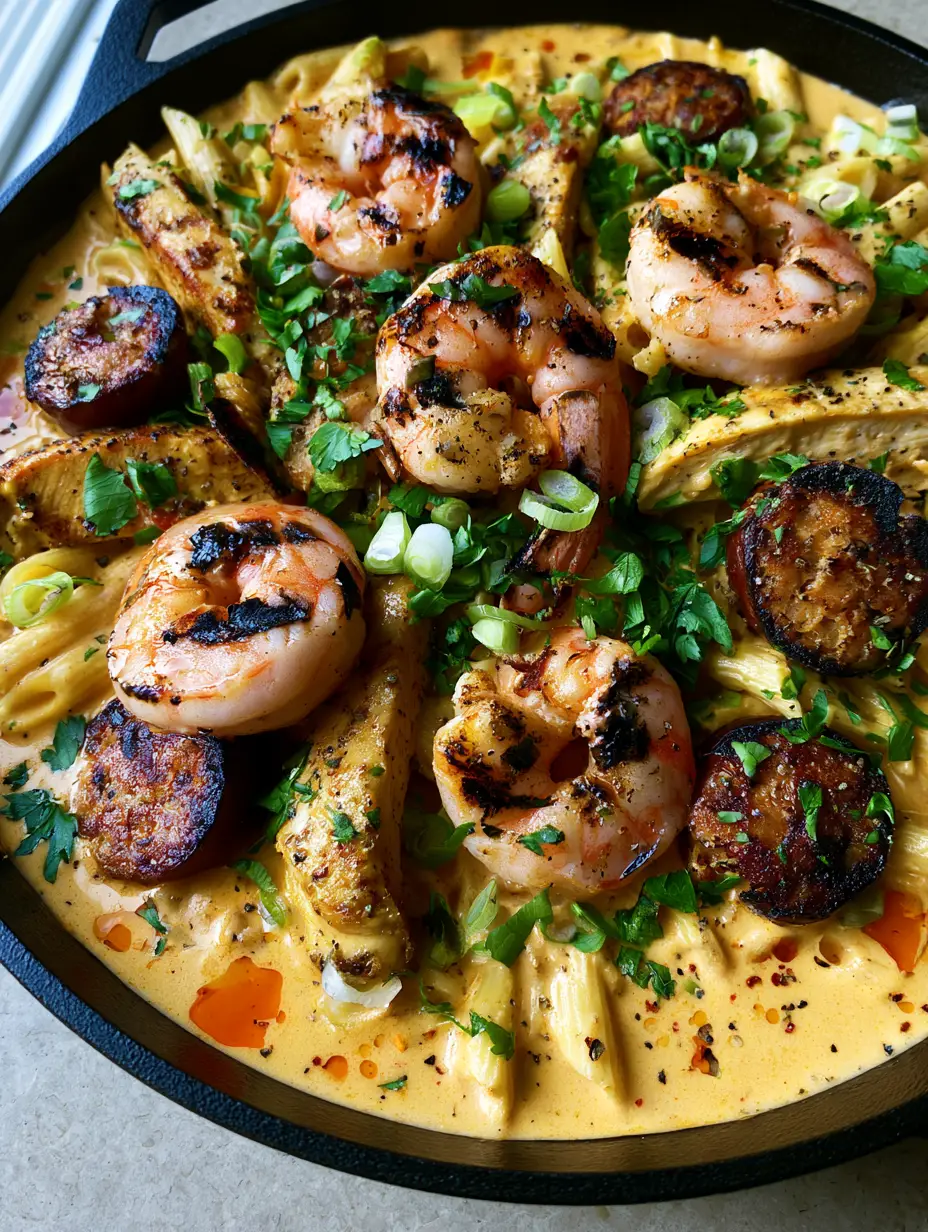
Cajun Jambalaya Pasta with Creamy Shrimp, Chicken, and Andouille
Ingredients
Equipment
Method
- In a cast iron skillet over medium-high heat, sear andouille rounds until charred on edges. Remove and sear chicken strips in the same fat until golden-brown and cooked through.
- Add shrimp to the hot skillet, searing for 1-2 minutes per side until pink and plump with visible grill marks. Remove and set aside.
- Deglaze the pan, then pour in heavy cream, Cajun seasoning, and cayenne. Simmer until the sauce is thick, velvety, and sunset-orange with visible spice flecks.
- Toss al dente penne into the sauce. Fold in chicken and sausage, then top with seared shrimp. Garnish heavily with parsley, scallions, and red chili flakes.
Notes
Ensure the skillet is very hot before adding shrimp to get those dark sear marks without overcooking.
Closing & Call to Action
Mastering the Cajun jambalaya pasta is a surefire way to bring the bold, vibrant spirit of New Orleans into your home kitchen. Between the charred andouille and the velvety orange sauce, this dish is a testament to how simple ingredients can create a visually stunning and flavor-packed masterpiece. If you enjoyed this recipe, please leave a comment below and let us know how your skillet turned out! Don’t forget to share your creations and follow us on Pinterest for more culinary inspiration.