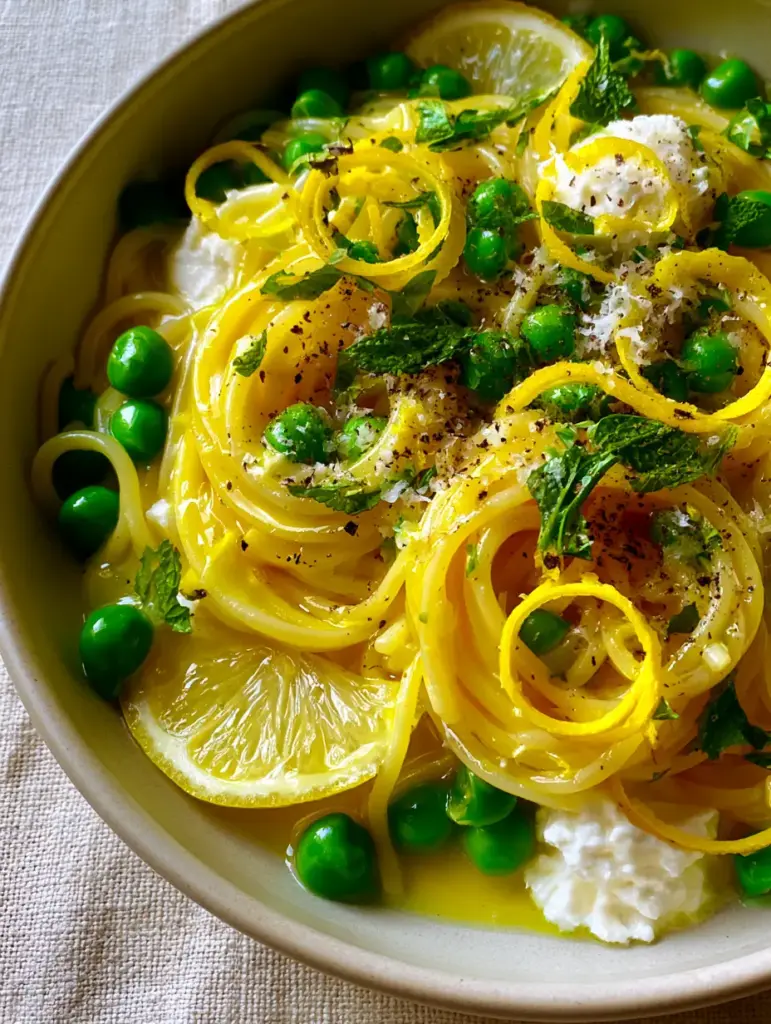
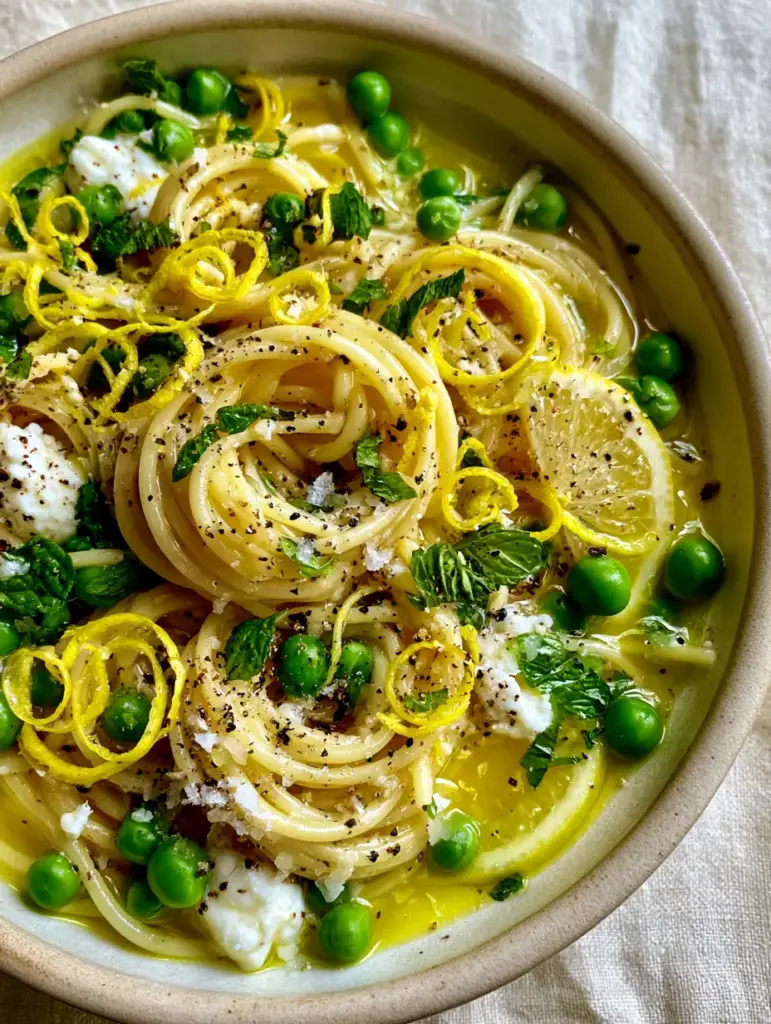
When the first signs of spring emerge, there is no dish more celebratory than this spring pea and lemon pasta. It captures the essence of the season in a single shallow ceramic bowl, combining the snap of fresh greenery with the high-octane brightness of citrus. The visual appeal is undeniable: vibrant emerald peas nestled against glossy, electric yellow spaghetti, all punctuated by clouds of snow-white ricotta.
This isn’t just a meal; it is a sensory experience designed to bridge the gap between winter’s comfort and summer’s lightness. The sauce is a silk-like emulsion that clings to every strand of al dente pasta, creating a translucent sheen that reflects the soft, diffused daylight of a spring afternoon. Whether you are hosting a garden lunch or a quiet weeknight dinner, this recipe delivers a restaurant-quality aesthetic with home-cooked soul.
By mastering the balance of acid, fat, and starch, you can transform simple pantry staples into a masterpiece. Every forkful offers a contrast of textures, from the firm bite of the spaghetti to the pop of the plump peas and the cooling creaminess of the ricotta dollops. Let’s dive into the culinary science and artistic plating that makes this dish a viral-worthy centerpiece.
The Allure of Vibrant Seasonal Textures
- Glossy Emulsion: The sauce achieves an electric yellow hue and a silky, translucent finish through a precise lemon-butter emulsion.
- Textural Contrast: Plump, bright emerald green spring peas provide a sweet “pop” against the tender, al dente spaghetti.
- Creamy Accents: Small, soft dollops of white ricotta cheese add a cooling element and a rich, velvety mouthfeel.
- Aromatic Garnish: Long curls of lemon zest and a fine mint chiffonade provide high-frequency herbal notes and visual elegance.
- Finishing Details: A generous dusting of cracked black pepper and flaky sea salt creates the final layer of seasoning and visual grit.
Essential Ingredients for This Vibrant Spring Pasta
To achieve the specific visual and flavor profile of this spring pea and lemon pasta, ingredient quality is paramount. Each component serves a functional role in building the “electric” yellow sauce and the “bright emerald” highlights.
1 pound (454g) Spaghetti: Choose a high-quality bronze-cut pasta; the rough surface is essential for the glossy lemon-butter sauce to cling effectively. It provides the structural foundation for the elegant twirl described in our visual blueprint.
2 cups (300g) Fresh Spring Peas: If possible, use freshly shelled English peas for that authentic “plump and bright green” look. They offer a superior snap and sweetness that frozen varieties can struggle to match.
1/2 cup (115g) Unsalted High-Fat Butter: The fat in the butter carries the lemon flavor and creates the silky, translucent emulsion. Using unsalted butter allows you to control the seasoning precisely with flaky sea salt at the end.
3 Large Organic Lemons: You will need the juice for the sauce, long curls of zest for the garnish, and thin half-moons for visual layering. Organic lemons are preferred as we are using a significant amount of the zest.
1/2 cup (125g) Whole Milk Ricotta: Look for a high-quality, “basket-style” ricotta that is thick enough to hold its shape in small dollops. This provides the “creamy white” contrast seen in the macro shot.
1/4 cup (10g) Fresh Mint Leaves: Mint is the secret weapon that elevates the peas; the chiffonade cut ensures the herb is distributed evenly without overpowering the palate. It provides the finishing “emerald” herbal touch.
2 cloves (10g) Fresh Garlic: Finely minced garlic provides a foundational aromatic layer that rounds out the sharp acidity of the lemon. It should be cooked gently to avoid browning, keeping the sauce electric yellow.
1 tsp (2g) Cracked Black Pepper & 1 tsp (5g) Flaky Sea Salt: These are not just seasonings; they are visual garnishes that provide texture and “sparkle” under diffused light.
Tools Required for a Restaurant-Quality Presentation
Achieving the elegant “macro shot” look requires more than just good ingredients; you need the right tools to manipulate textures. A microplane or a channel knife is essential for creating those “long, delicate curls” of lemon zest that sit atop the pasta.
A large stainless steel skillet or wide saucier is better than a pot for finishing the pasta. The wide surface area allows the lemon-butter emulsion to coat the spaghetti evenly and prevents the peas from being crushed. Finally, use a pair of long kitchen tweezers or a carving fork to achieve that professional “elegant twirl” in a shallow matte ceramic bowl.
Step-by-Step: Crafting the Perfect Spring Pea and Lemon Pasta
Achieving the Perfect Al Dente Foundation
Bring a large pot of water to a rolling boil and season it heavily with salt—it should taste like the sea. Add the 1 pound (454g) of spaghetti and cook for 2 minutes less than the package directions. This ensures the pasta remains al dente, providing the necessary structure for the sauce to emulsify without the noodles becoming mushy.
Before draining, reserve at least 2 cups (480ml) of the starchy pasta water. This “liquid gold” is the secret to a translucent, glossy sauce. Drain the pasta and set aside, ensuring you do not rinse it, as the starch is vital for the next step.
Building the Electric Yellow Emulsion
In a large skillet over medium-low heat, melt 1/2 cup (115g) of butter until it begins to foam. Add the minced garlic and the thin lemon half-moons, sautéing for only 60 seconds until the garlic is fragrant but still pale. The goal is to infuse the fat without browning it, maintaining that electric yellow aesthetic.
Whisk in 1/2 cup (120ml) of fresh lemon juice and 1/2 cup (120ml) of the reserved pasta water. Increase the heat slightly and whisk vigorously until the liquid transforms into a silky, translucent emulsion. This is the base for our creamy lemon ricotta pasta profile, though here we keep it lighter by using the butter-water technique.
Integrating the Peas and Finishing the Sauce
Add the 2 cups (300g) of spring peas to the simmering sauce. Cook for only 2-3 minutes; you want them to be tender but still “plump and bright emerald green.” Overcooking will turn them a dull olive color, which ruins the visual recipe blueprint.
Add the al dente spaghetti to the skillet. Use tongs to toss the pasta continuously, adding more pasta water as needed, 1/4 cup (60ml) at a time. Watch for the visual cue: the sauce should coat each strand in a vibrant, glossy sheen that looks almost electric under the light. This technique is similar to how you would finish a mafaldine pasta limone for maximum flavor absorption.
Plating for the Visual Blueprint
Twirl a generous portion of pasta into a shallow matte ceramic bowl using a carving fork. Ensure the peas and lemon half-moons are scattered evenly throughout the twirl. Using a small spoon, place five or six small dollops of fresh white ricotta around the pasta.
Garnish with the long curls of lemon zest and the fresh mint chiffonade. Finish with a generous dusting of cracked black pepper and a sprinkle of flaky sea salt. The light should catch the highlights of the sauce, creating the authentic food blog aesthetic described in the prompt.
Professional Tips for the Ultimate Pasta Limone Texture
- Cold Butter Finishing: For an even glossier sauce, whisk in two tablespoons of cold butter right before adding the pasta to the pan. This creates a “monter au beurre” effect that is incredibly silky.
- The Mint Timing: Never cook the mint. Adding the chiffonade at the very last second ensures the herb stays bright green and aromatic rather than wilting into a dark brown mess.
- Zesting Strategy: Zest your lemons before juicing them. It is nearly impossible to get long, elegant curls from a squeezed lemon half.
- Pasta Water Quality: If your pasta water isn’t cloudy enough, you can whisk a teaspoon of cornstarch into it to mimic the starch levels needed for a perfect creamy lemon garlic pasta texture.
Storing and Refreshing Your Leftover Pasta
This spring pea and lemon pasta is best served immediately to maintain the “glossy” appearance. However, leftovers can be stored in an airtight container in the refrigerator for up to 3 days. The pasta will naturally absorb the sauce as it sits, so it will lose its translucent sheen.
To reheat, add the pasta to a skillet with a splash of water or a tablespoon of butter. Heat gently over medium-low, tossing constantly until the sauce loosens and becomes glossy again. Do not microwave if possible, as this can cause the butter to break and the ricotta to become grainy.
What to Pair with This Zesty Seasonal Dish
This pasta is a star on its own, but it pairs beautifully with light proteins. A side of blackened cajun salmon (served on the side) offers a spicy contrast to the lemon’s acidity. Alternatively, a crisp green salad with a light vinaigrette complements the mint and peas perfectly.
If you are looking for a more decadent meal, you might consider starting with a small portion of roasted tomato and garlic ricotta pasta to contrast the bright citrus notes with deep, roasted umami flavors. For a heartier spring feast, grilled asparagus or roasted baby carrots are excellent vegetable sides.
Frequently Asked Questions About Lemon Pea Pasta
To keep the visual aesthetic, replace the butter with a high-quality vegan butter stick and use a dollop of almond-based ricotta or cashew cream.
Yes, you can use frozen peas. To maintain the ‘bright emerald green’ look, add them directly to the sauce from the freezer and cook for only 2 minutes until just heated through.
The electric yellow color comes from a high ratio of lemon zest and quality butter emulsified with starchy pasta water. Avoid browning the garlic to keep the colors vibrant.
Stack the mint leaves, roll them tightly like a cigar, and use a sharp knife to cut very thin ribbons. This prevents bruising and keeps the garnish looking fresh.
This usually happens if the sauce wasn’t emulsified properly. Ensure you are whisking the butter and pasta water over heat, and toss the pasta vigorously to release more starch.
The Official Recipe for Spring Pea and Lemon Pasta
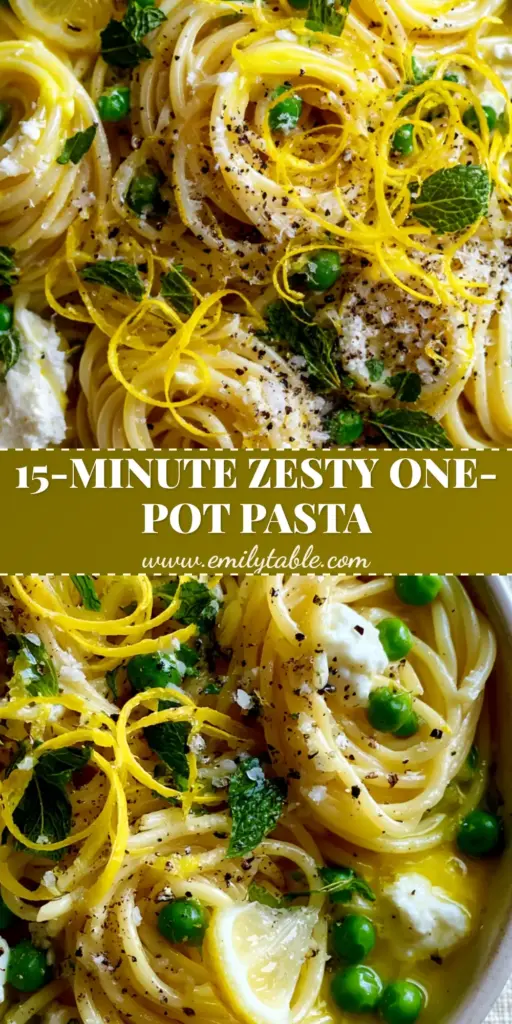
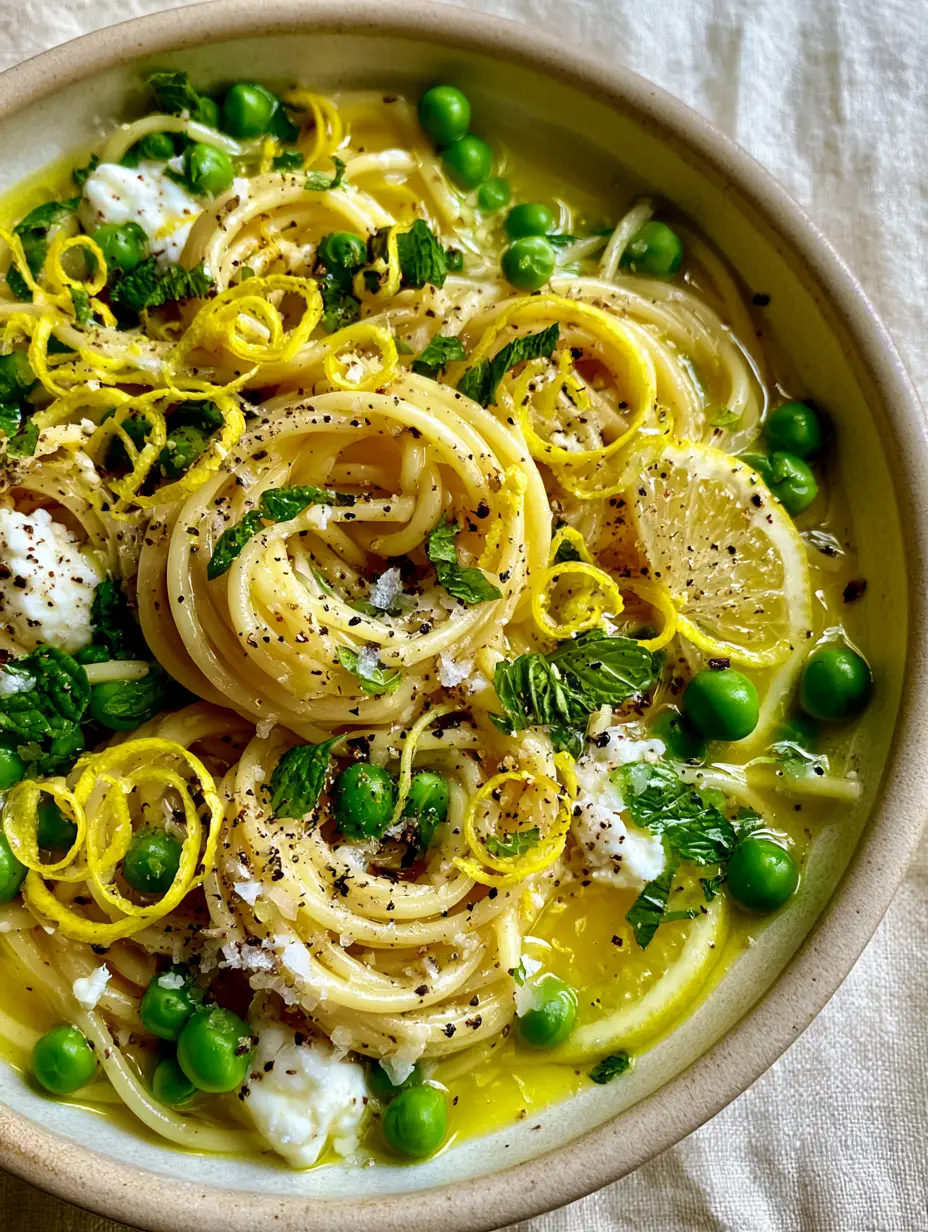
Spring Pea and Lemon Pasta with Creamy Ricotta and Mint
Ingredients
Equipment
Method
- Cook spaghetti in heavily salted water until 2 minutes before al dente. Reserve 2 cups of pasta water.
- Melt butter in a large skillet. Sauté minced garlic and lemon half-moons for 60 seconds without browning.
- Whisk in lemon juice and 1/2 cup pasta water until a glossy, electric yellow sauce forms.
- Toss in the spring peas and simmer for 2 minutes until bright emerald green.
- Add pasta to the skillet, tossing vigorously and adding more pasta water until glossy and translucent.
- Plate with ricotta dollops, lemon zest curls, mint chiffonade, pepper, and sea salt.
Notes
Do not skip the reserved pasta water; it is the only way to get the glossy, electric yellow sauce.
Bring the Taste of Spring to Your Table
This spring pea and lemon pasta is the ultimate testament to the power of seasonal cooking. By focusing on the visual cues—the electric yellow sauce, the emerald peas, and the snowy ricotta—you create a dish that is as beautiful as it is delicious. The combination of citrus zing and herbal freshness is guaranteed to brighten any dining table.
If you enjoyed this vibrant recipe, please leave a comment below and let us know how your emulsion turned out! Don’t forget to sign up for our newsletter for more seasonal inspirations and share your creations by tagging Emily_Table on Pinterest.